 Lives of Scripture
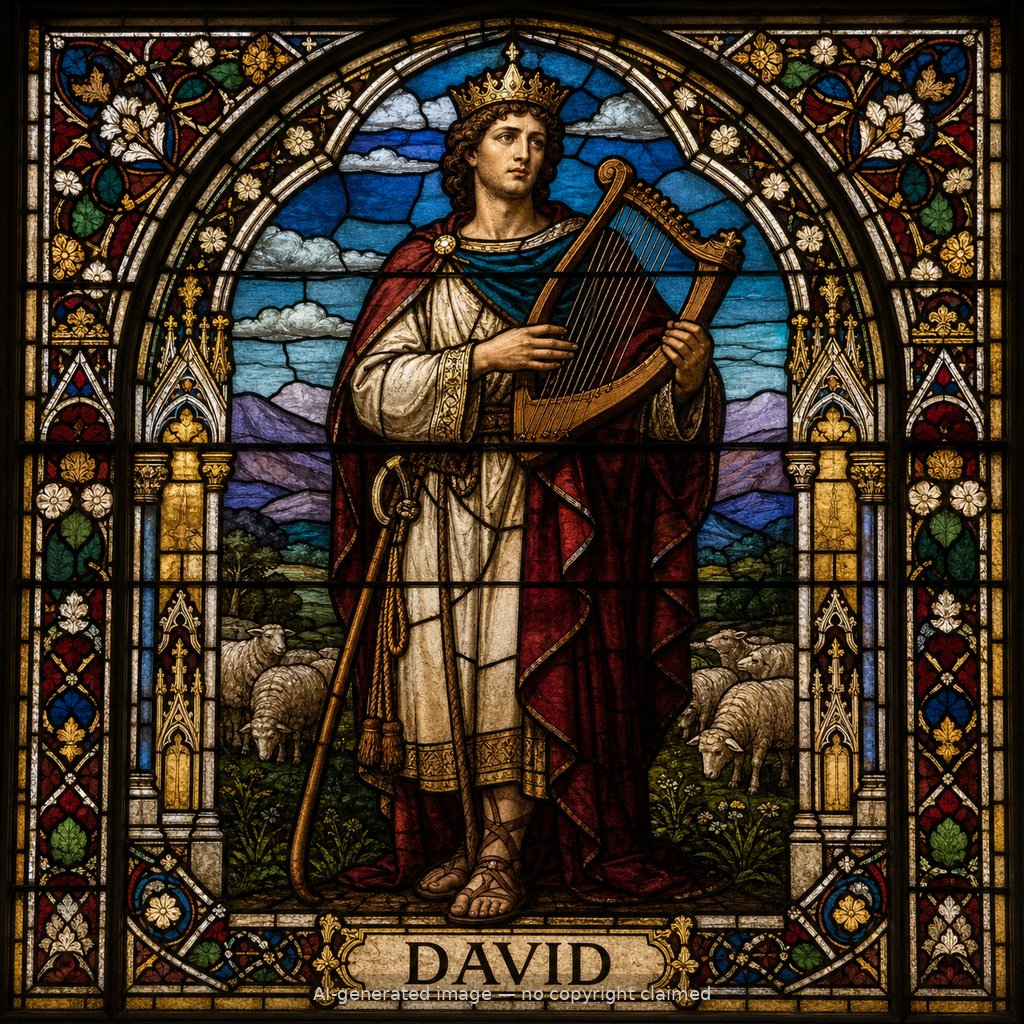
David (M)
First named in 1 Samuel 16-31
David was the youngest of Jesse's sons, a shepherd anointed king by Samuel while his older brothers were passed over and Saul still reigned — God explaining that He looks at the heart, not outward appearance (1 Samuel 16:1-13). He rose to prominence by killing Goliath, then spent years as a fugitive before becoming king over Judah, then all Israel (1 Samuel 17; 19-31; 2 Samuel 5:1-5). God made an unconditional covenant with David, promising his throne established forever — later fulfilled in Christ (2 Samuel 7:12-16; Luke 1:32-33). Scripture does not soften what came next: while his army was at war, David saw Bathsheba bathing, sent for her, and slept with her; when she became pregnant, he arranged her husband Uriah's death to cover it up (2 Samuel 11). The prophet Nathan confronted him, and David's response in Psalm 51 is one of Scripture's clearest models of repentance; God forgave him, but the child died, and Nathan said the sword would never depart from his house (2 Samuel 12:1-14). It did not: Amnon raped his half-sister Tamar, Absalom murdered Amnon in revenge, then led a rebellion that nearly cost David the throne and ended in Absalom's death, mourned bitterly by David (2 Samuel 13-18). Late in his reign, David also proudly counted Israel's fighting men, bringing a plague on the nation (2 Samuel 24). Despite these failures, David is remembered as a man after God's own heart — not blameless, but never defending his sin once confronted (Psalm 51).
Thought for Today
God promised David a son whose throne would never end, a promise Luke says came true in Jesus, born of David's own family line to reign forever. May we trust God's promises the way David did, even the ones we won't live to see fulfilled.
References: 1 Samuel 16-31; 2 Samuel; 1 Kings 1-2; 1 Chronicles 21
Genealogy
Connections
- Ancestor of Christ (Matthew 1:6)
- Prophesied of Christ (Acts 2:29-31)
- Jesse (M) — begot → David (M)
- David (M) — begot → Solomon (M)
- David (M) ↔ married ↔ Bathsheba (F)
- David (M) — begot → Amnon (M)
- David (M) — begot → Chileab (M)
- David (M) — begot → Absalom (M)
- David (M) — begot → Adonijah (M)
- David (M) — begot → Shephatiah (M)
- David (M) — begot → Ithream (M)
- David (M) — begot → Shammua (M)
- David (M) — begot → Shobab (M)
- David (M) — begot → Nathan (M)
- David (M) — begot → Ibhar (M)
- David (M) — begot → Elishua (M)
- David (M) — begot → Nepheg (M)
- David (M) — begot → Japhia (M)
- David (M) — begot → Elishama (M)
- David (M) — begot → Eliada (M)
- David (M) — begot → Eliphelet (M)
- David (M) — begot → Tamar (F)
- David (M) — begot → Eliphelet (M)
- David (M) — begot → Nogah (M)
- David (M) — begot → Jerimoth (M)
- David (M) ↔ married ↔ Michal (F)
- David (M) ↔ married ↔ Abigail (F)
- David (M) ↔ married ↔ Ahinoam (F)
- David (M) ↔ married ↔ Maacah (F)
- David (M) ↔ married ↔ Haggith (F)
- David (M) ↔ married ↔ Abital (F)
- David (M) ↔ married ↔ Eglah (F)
- Samuel (M) — mentored → David (M)
Samuel anointed David as Saul's successor while David was still a shepherd boy, at God's direction.
1 Samuel 16:1-13
- Jonathan (M) ↔ collaborated with ↔ David (M)
Jonathan and David formed a covenant friendship; Jonathan repeatedly protected David from Saul at his own risk and forfeited his claim to the throne.
1 Samuel 18:1-4; 1 Samuel 20
- Nathan (M) — confronted → David (M)
Nathan delivered God's covenant promise that David's throne would be established forever, then later confronted him with a parable exposing his adultery with Bathsheba and murder of Uriah.
2 Samuel 7:1-16; 2 Samuel 12:1-14
- Gad (M) — advised → David (M)
Gad directed David during his fugitive years, then later delivered God's three-fold offer of judgment after David's sinful census.
1 Samuel 22:5; 2 Samuel 24:11-19
Places
- Bethlehem — the shepherd boy of this town, anointed king here by Samuel
1 Samuel 16:1; 1 Samuel 16:13
- Hebron — anointed king of Judah here and reigned seven years before taking Jerusalem
2 Samuel 2:4; 2 Samuel 2:11
- Jerusalem — captured this city from the Jebusites and made it his capital
2 Samuel 5:6-9
- Kingdom of Israel — reigned over all Israel from Hebron and then Jerusalem
2 Samuel 5:3-5