 Lives of Scripture
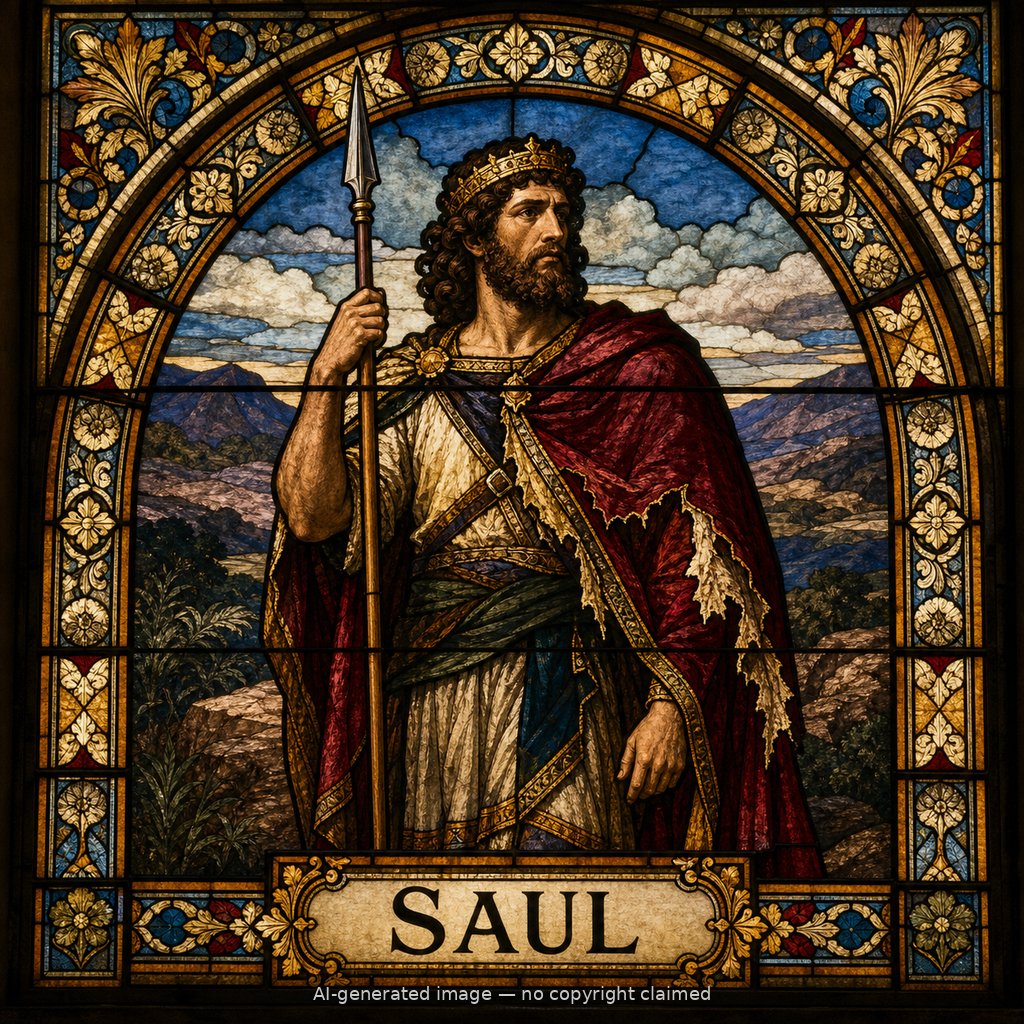
Saul (M)
First named in 1 Samuel 9:2-27
Saul, a Benjamite chosen for his stature, became Israel's first king when the people demanded a king "like all the nations" — itself, God told Samuel, a rejection of His own kingship (1 Samuel 8:4-9; 9:1-10:1). Saul won real early victories, rescuing Jabesh-gilead and defeating the Philistines (1 Samuel 11; 14:47-48). But he disobeyed God twice: offering a sacrifice himself instead of waiting for Samuel at Gilgal, then sparing King Agag and the best Amalekite plunder after being told to destroy them completely (1 Samuel 13:8-14; 15:1-23). Confronted, Saul defended himself rather than repenting, and Samuel told him obedience mattered more than sacrifice — the kingdom would be torn from him. From then on Saul spiraled: tormented, he grew jealous of David, the shepherd secretly anointed to replace him, and tried repeatedly to kill him even after David spared him twice (1 Samuel 18-26). With Samuel dead and God silent, Saul consulted a medium at En-dor, the very practice he had banned, and heard only confirmation of his coming defeat (1 Samuel 28). He died by his own sword at Gilboa rather than be captured, his body later recovered by the men of Jabesh-gilead, who remembered his one great rescue of their city (1 Samuel 31). His son Jonathan died beside him, having chosen loyalty to David over his own claim to the throne (1 Samuel 20; 31:2). Saul's story is Scripture's clearest warning that outward qualification for leadership is no substitute for a heart that stays obedient to God.
Thought for Today
Saul looked every inch a king -- tall, strong, chosen by lot -- yet disobeyed God twice and spent his last years hunting the shepherd secretly anointed to replace him. Jesus is the king whose heart never needed watching, the true King Saul's whole reign only pointed past.
References: 1 Samuel 9:2-27; 1 Samuel 10:11-26; 1 Samuel 11:4-15; 1 Samuel 13:1-22; 1 Samuel 14:1-52; 1 Samuel 15:1-35; 1 Samuel 16:1-23; 1 Samuel 17:2-58; 1 Samuel 18:1-30; 1 Samuel 19:1-24; 1 Samuel 20:25-33; 1 Samuel 21:7-11; 1 Samuel 22:6-22; 1 Samuel 23:7-28; 1 Samuel 24:1-22; 1 Samuel 25:44; 1 Samuel 26:1-25; 1 Samuel 27:1-4; 1 Samuel 28:3-25; 1 Samuel 29:3-5; 1 Samuel 31:2-12; 2 Samuel 1:1-24; 2 Samuel 2:4-15; 2 Samuel 3:1-14; 2 Samuel 4:1-10; 2 Samuel 5:2; 2 Samuel 6:16-23; 2 Samuel 7:15; 2 Samuel 9:1-9; 2 Samuel 12:7; 2 Samuel 16:5-8; 2 Samuel 19:17-24; 2 Samuel 21:1-14; 2 Samuel 22:1; 1 Chronicles 5:10; 1 Chronicles 8:33; 1 Chronicles 9:39; 1 Chronicles 10:2-13; 1 Chronicles 11:2; 1 Chronicles 12:1-29; 1 Chronicles 13:3; 1 Chronicles 15:29; 1 Chronicles 26:28; Psalms 18:0; Psalms 52:0; Psalms 54:0; Psalms 57:0; Psalms 59:0; Acts 13:21
Genealogy
Connections
- Kish (M) — begot → Saul (M)
- Saul (M) — begot → Jonathan (M)
- Saul (M) — begot → Abinadab (M)
- Saul (M) — begot → Malchi-shua (M)
- Saul (M) — begot → Merab (F)
- Saul (M) — begot → Michal (F)
- Saul (M) — begot → Ish-bosheth (M)
- Saul (M) — begot → Armoni (M)
- Saul (M) — begot → Mephibosheth (M)
- Saul (M) ↔ married ↔ Ahinoam (F)
- Samuel (M) — anointed → Saul (M)
Samuel anointed Saul as Israel's first king at God's direction, then later announced that God had rejected him as king for his disobedience.
1 Samuel 10:1; 1 Samuel 15:10-29
Places
- Gibeah — Israel's first king, who ruled from this, his hometown
1 Samuel 10:26; 1 Samuel 15:34
- Kingdom of Israel — Israel's first king, over the tribes before the kingdom divided
1 Samuel 15:26