 Lives of Scripture
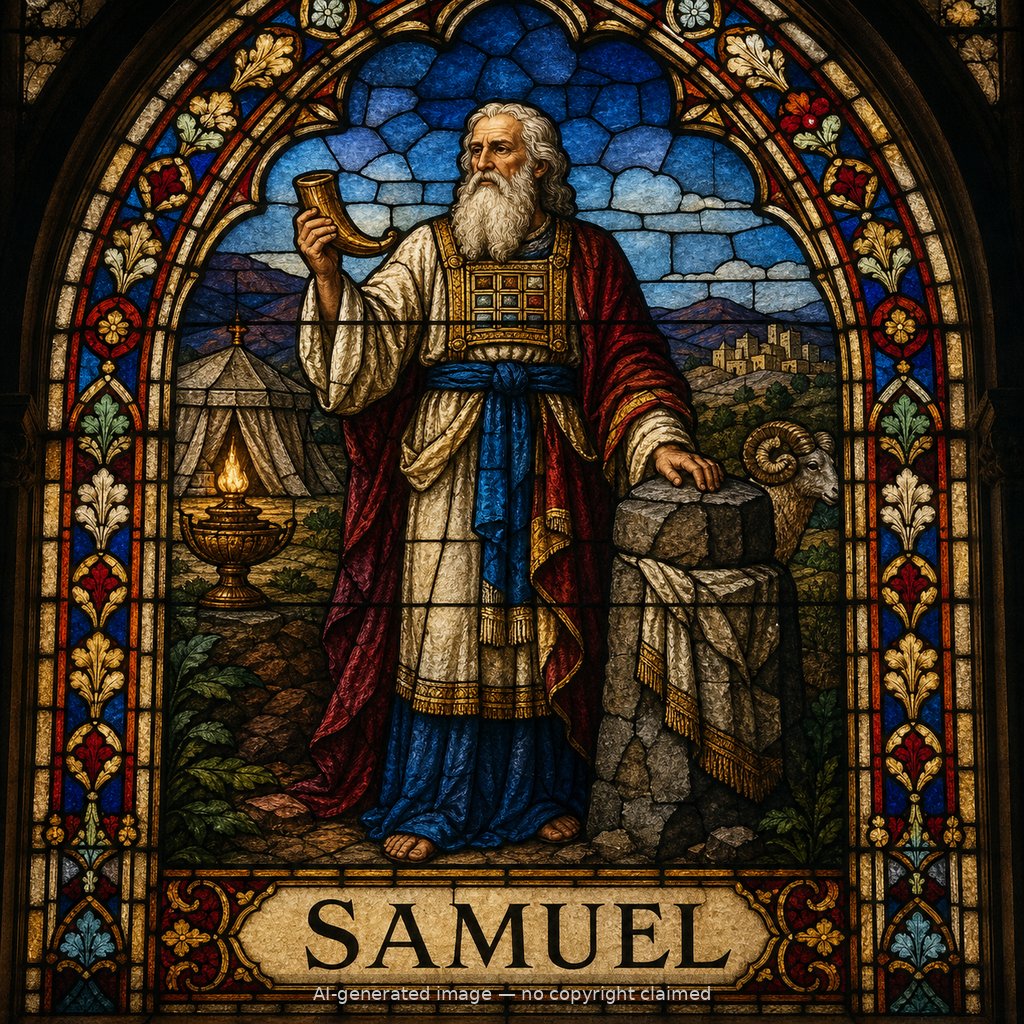
Samuel (M)
First named in 1 Samuel 1-3
Samuel was born to Hannah, a barren woman who prayed with such anguish at Shiloh that the priest Eli mistook her for drunk, and who vowed any son God gave her would be given back to serve the LORD for life (1 Samuel 1:1-20). Once weaned, Samuel was brought to Shiloh to live and serve under Eli, visited only once a year (1 Samuel 1:24-28; 2:19). As a boy, Samuel heard the LORD calling his name at night, and after mistaking the voice for Eli three times, was told to answer, 'Speak, LORD, for Your servant is listening' — his first message was judgment against Eli's own household, which Samuel faithfully delivered (1 Samuel 3:1-18). He was recognized as a prophet whose word never failed, leading Israel to victory over the Philistines and judging Israel for life (1 Samuel 3:19-20; 7:3-17). In old age, with his sons perverting justice as judges, Israel demanded a king 'like all the nations' — really a rejection of God's kingship — and Samuel anointed Saul anyway at God's direction (1 Samuel 8; 10:1). Samuel confronted Saul's disobedience twice, decisively when Saul spared King Agag against God's command, prompting the rebuke 'to obey is better than sacrifice' (1 Samuel 13:8-14; 15:10-29). At Bethlehem, Samuel anointed the least likely of Jesse's sons, David, after God told him not to judge by outward appearance, 'for the LORD looks at the heart' (1 Samuel 16:1-13). Samuel stands at the hinge of Israel's history, anointing its first two kings.
Thought for Today
Samuel listened for God's voice at night and learned to say, 'Speak, I'm listening.' May we listen for God too, in quiet moments and in his word.
References: 1 Samuel 1-3; 1 Samuel 7-12; 1 Samuel 15-16; 1 Samuel 28:3-19
Genealogy
Connections
- Elkanah (M) — begot → Samuel (M)
- Hannah (F) — bore → Samuel (M)
- Samuel (M) — begot → Joel (M)
- Samuel (M) — begot → Abijah (M)
- Samuel (M) — mentored → David (M)
Samuel anointed David as Saul's successor while David was still a shepherd boy, at God's direction.
1 Samuel 16:1-13
- Samuel (M) — anointed → Saul (M)
Samuel anointed Saul as Israel's first king at God's direction, then later announced that God had rejected him as king for his disobedience.
1 Samuel 10:1; 1 Samuel 15:10-29
Places
- Bethel — judged Israel on the yearly circuit through this town
1 Samuel 7:16
- Gilgal — judged Israel on the yearly circuit that included this town
1 Samuel 7:16
- Mizpah — gathered Israel here to repent, and Israel routed the Philistines
1 Samuel 7:5-11
- Ramah
- Shiloh — grew up ministering before the LORD here and first heard God's voice
1 Samuel 3:1-10