 Lives of Scripture
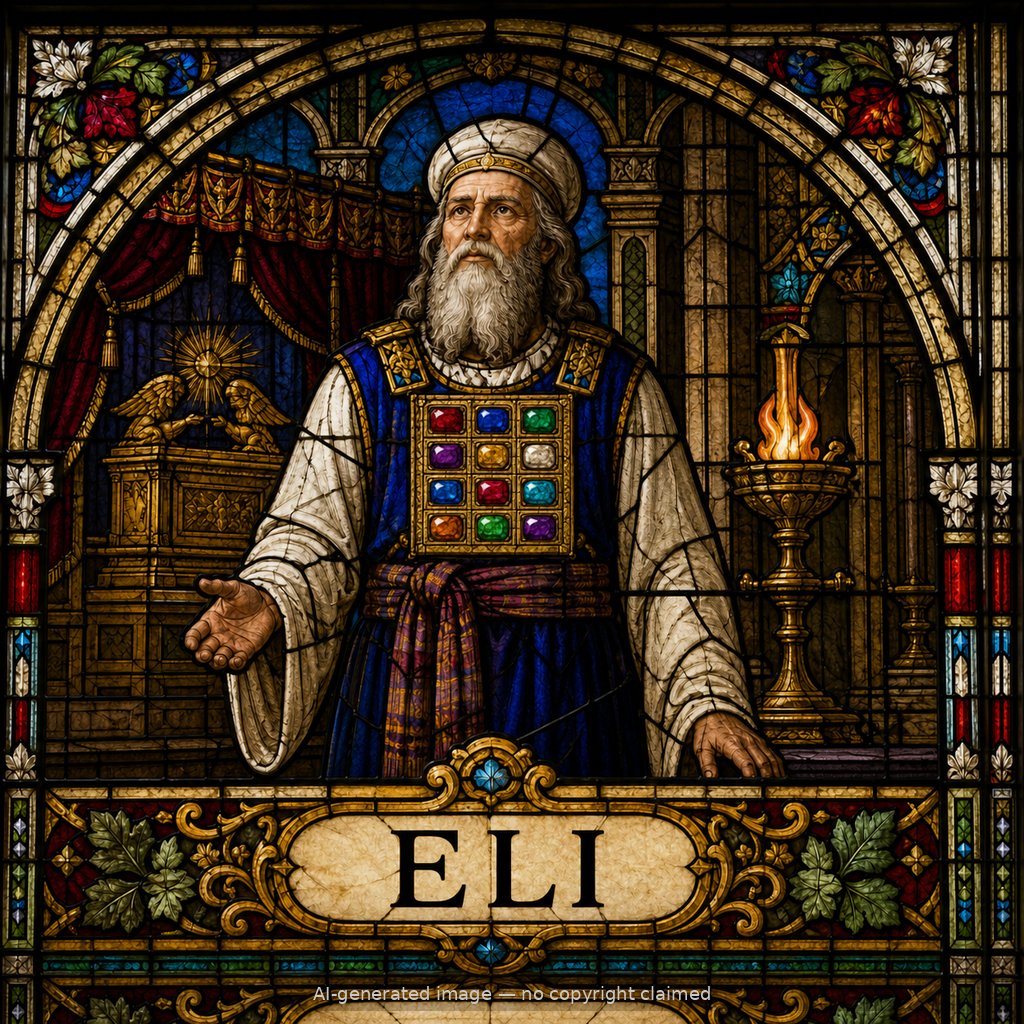
Eli (M)
First named in 1 Samuel 1:3-25
Eli served as Israel's high priest and judge at Shiloh, where he first appears mistaking Hannah's silent, anguished prayer for drunkenness, then blessing her request for a son (1 Samuel 1:12-17). When Hannah's son Samuel was weaned, she brought him to serve under Eli at the tabernacle, and Eli effectively raised him (1 Samuel 1:24-28; 2:11). But Eli's own sons, Hophni and Phinehas, were corrupt priests who took the best portions of offerings by force and committed immorality with women serving at the tabernacle entrance; Eli rebuked them verbally but never removed them from office, and Scripture faults him for honoring his sons above God (1 Samuel 2:12-17, 22-25, 29). A man of God warned Eli that his sons would die on the same day and his priestly line would lose its privileged place, a judgment God repeated directly to the boy Samuel one night, confirming to Eli it would not be revoked (1 Samuel 2:27-36; 3:11-14). When the Philistines defeated Israel, captured the ark of the covenant, and killed both Hophni and Phinehas, a messenger ran to tell Eli; the news of the ark's capture, more than his sons' deaths, made the ninety-eight-year-old Eli fall backward off his seat, breaking his neck (1 Samuel 4:12-18).
Thought for Today
Eli knew his sons were corrupt priests and rebuked them, but never removed them from office, and God held him responsible for honoring his sons above God Himself. Jesus calls for a loyalty that doesn't quietly look away from what we know is wrong, even in the people closest to us.
References: 1 Samuel 1:3-25; 1 Samuel 2:11-27; 1 Samuel 3:1-16; 1 Samuel 4:4-18; 1 Samuel 14:3; 1 Kings 2:27
Genealogy
Connections
Places
- Shiloh — high priest and judge at the sanctuary here
1 Samuel 1:9; 1 Samuel 4:18