 Lives of Scripture
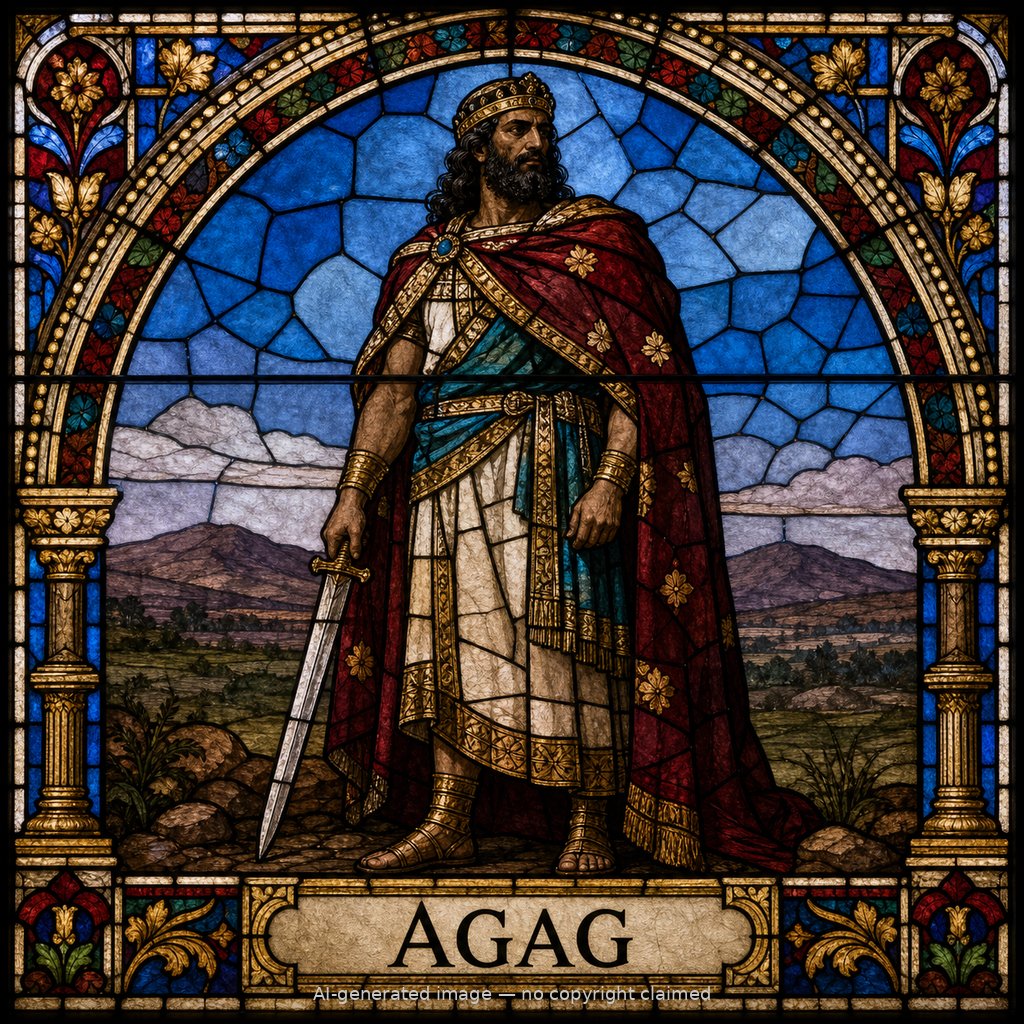
Agag (M)
First named in 1 Samuel 15:8-33
Agag was king of the Amalekites when Saul was commanded through Samuel to "utterly destroy" Amalek -- man, woman, child, and livestock -- as judgment for Amalek's ancient attack on Israel during the exodus (1 Samuel 15:2-3). Saul defeated Amalek but spared Agag alive and kept the best of the sheep and oxen, claiming later that the animals were meant for sacrifice (15:8-9, 15). Samuel confronted Saul with the famous rebuke, "to obey is better than sacrifice" (15:22), and declared that because Saul had rejected the LORD's word, the LORD had rejected him as king (15:23, 26). Samuel then summoned Agag, who came before him "cheerfully," saying, "Surely the bitterness of death is past" -- evidently believing himself safe (15:32). Samuel answered, "As your sword has made women childless, so shall your mother be childless among women," and he himself killed Agag before the LORD at Gilgal (15:33). Agag's brief appearance carries lasting weight: centuries later, Haman in the book of Esther is identified as "the Agagite" (Esther 3:1), and Jewish tradition has long read Haman's plot against the Jews as this same Amalekite hostility resurfacing -- making Saul's incomplete obedience here a shadow reaching far beyond his own reign.
Thought for Today
Agag believed his death sentence had passed him by, but justice still came due. Jesus alone can say the bitterness of death is behind us, once for all.
References: 1 Samuel 15:8-33