 Lives of Scripture
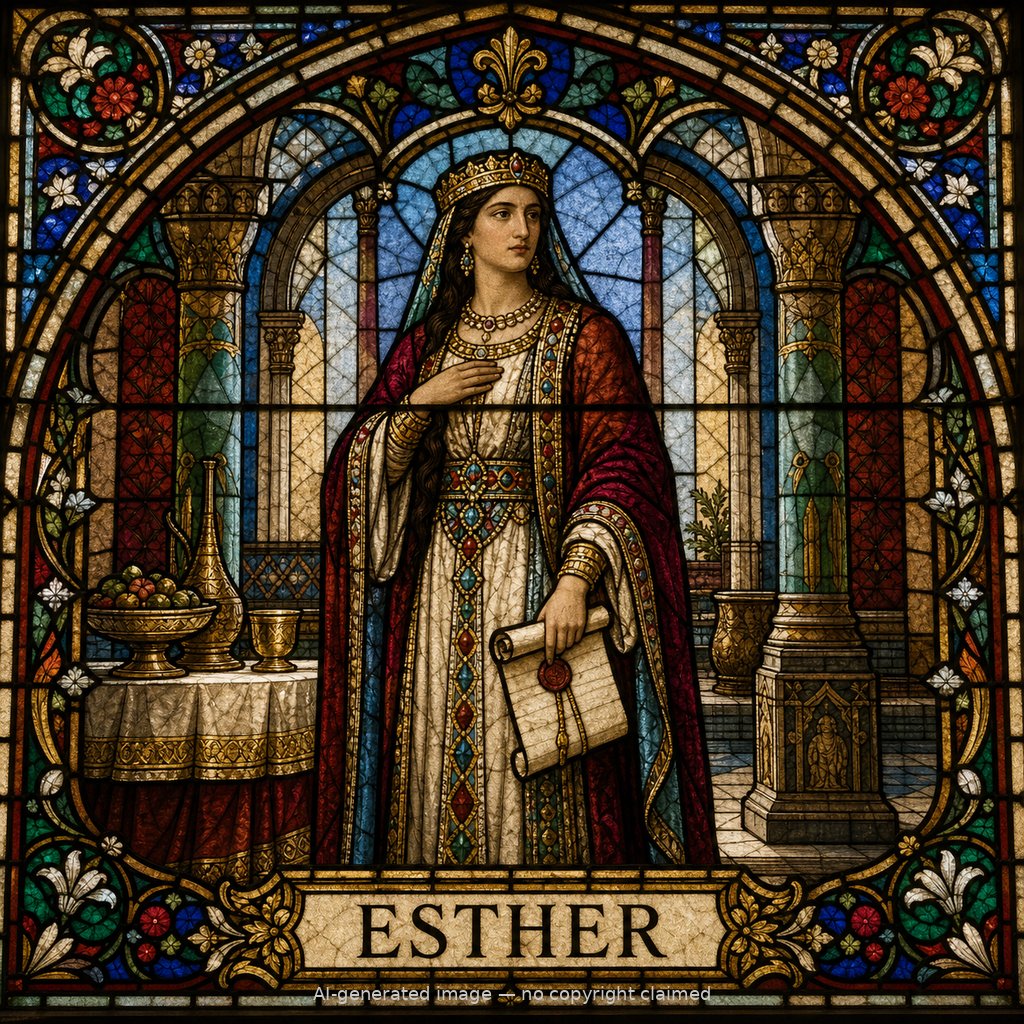
Esther (F)
First named in Esther 2:7-22
Esther, also called Hadassah, was a Jewish orphan in the Persian exile, raised by her older cousin Mordecai in the capital city of Susa (Esther 2:7). When King Ahasuerus sought a new queen after deposing Vashti, Esther was brought into the harem and, on Mordecai's instruction, kept her Jewish identity concealed; she found favor with the king and was crowned queen (2:8-17). The crisis of the book comes when Haman, an official enraged at Mordecai's refusal to bow to him, persuades Ahasuerus to issue a decree for the annihilation of all Jews throughout the empire (3:1-15). Mordecai urges Esther to intervene, warning her that her royal position may exist precisely "for such a time as this" and that silence would not spare her own life if the decree stood (4:12-14). Esther's response carries real risk: approaching the king unsummoned was punishable by death unless he extended his scepter. She asks all the Jews of Susa to fast for three days with her, then declares, "if I perish, I perish" (4:15-16). She approaches the king, is received, and over two banquets skillfully exposes Haman's murderous plot against her and her people (5:1-8; 7:1-6). Ahasuerus has Haman executed on the very gallows he had built for Mordecai (7:9-10), and though the original decree cannot be revoked, a second edict allows the Jews to defend themselves, resulting in their deliverance (8:1-17; 9:1-19) -- an event still commemorated in the feast of Purim (9:20-32). Esther's story is notable in Scripture for never naming God directly, yet its plot turns entirely on unlikely, well-timed providences that spare God's covenant people from destruction.
Thought for Today
Esther risked her life to approach the king unsummoned, telling the Jews of Susa only, 'if I perish, I perish.' Jesus went further still, walking toward certain death on a cross to save people who could offer Him nothing in return.
References: Esther 2:7-22; Esther 4:4-17; Esther 5:1-12; Esther 6:14; Esther 7:1-8; Esther 8:1-7; Esther 9:12-32
Genealogy
Connections
Places
- Susa — the Jewish queen who risked her life before the king in this citadel
Esther 4:16; Esther 5:1-2