 Lives of Scripture
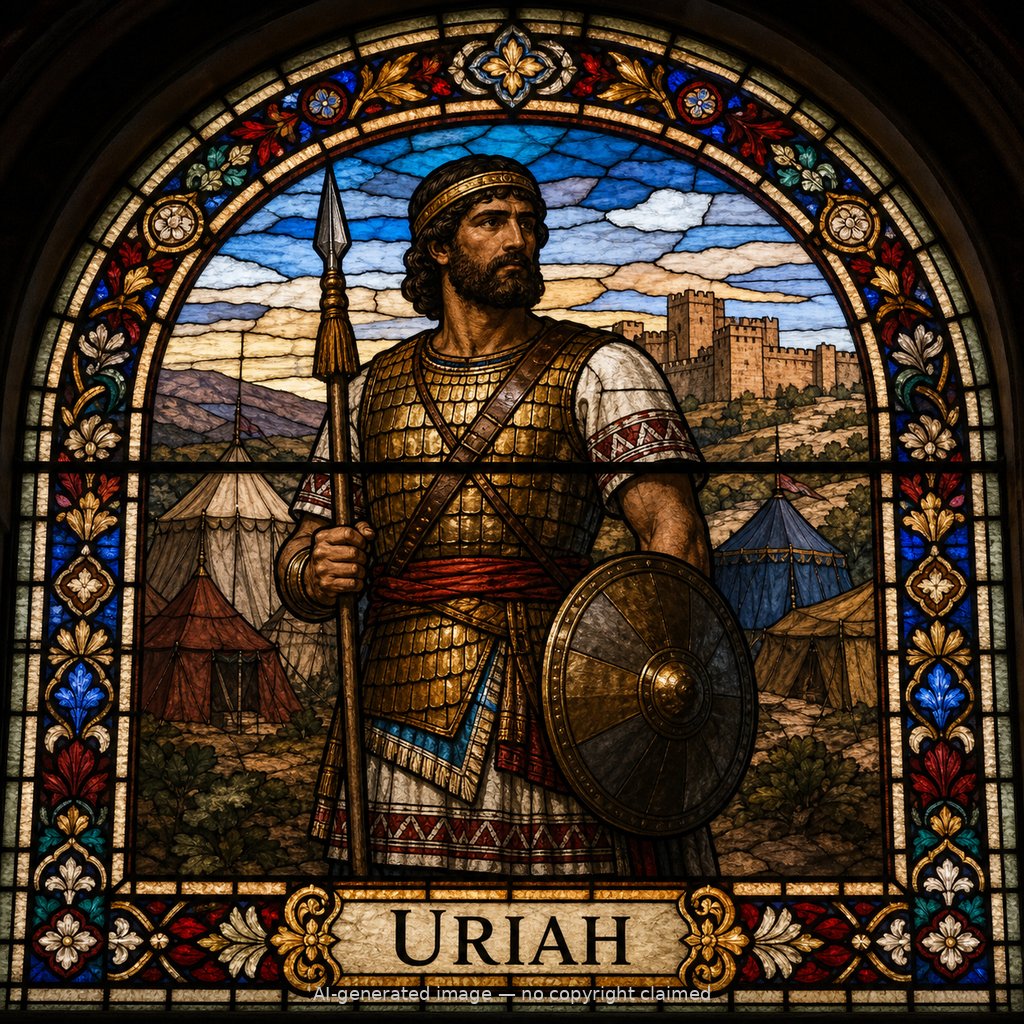
Uriah (M)
First named in 2 Samuel 11:3-26
Uriah the Hittite was one of David's "thirty mighty men," married to Bathsheba, and away at the siege of Rabbah when David saw Bathsheba bathing and sent for her, committing adultery that led to her pregnancy (2 Samuel 11:1-5; 23:39). David brought Uriah home from the front, hoping he would sleep with his wife and unknowingly cover the child's true parentage. But Uriah refused to enjoy his own house and bed while "the ark and Israel and Judah are staying in temporary shelters, and my lord Joab and the servants of my lord are camping in the open field" -- even when David got him deliberately drunk (11:6-13). His loyalty to his fellow soldiers, an outsider showing more faithfulness to Israel's covenant army than the king himself, foiled the cover-up. David then sent Uriah back to Joab carrying his own death sentence: written orders to place him at the fiercest point of battle and withdraw support so he would be killed, which Joab carried out (11:14-17). Uriah died never knowing of the betrayal. The prophet Nathan later confronted David directly over the murder, and Scripture states plainly that "the thing that David had done was evil in the sight of the LORD" (11:27; 12:1-14). Uriah's integrity, held up against David's failure, is one of Scripture's sharpest studies of righteousness surrounding a king's worst sin.
Thought for Today
While David tried to hide his sin, Uriah refused to enjoy his own bed while the ark and his fellow soldiers camped in the open field -- loyalty that exposed the king's cover-up instead of completing it. Jesus's own integrity, like Uriah's, was never for sale, even when it cost Him everything.
References: 2 Samuel 11:3-26; 2 Samuel 12:9-15; 2 Samuel 23:39; 1 Kings 15:5; 1 Chronicles 11:41; Matthew 1:6