 Lives of Scripture
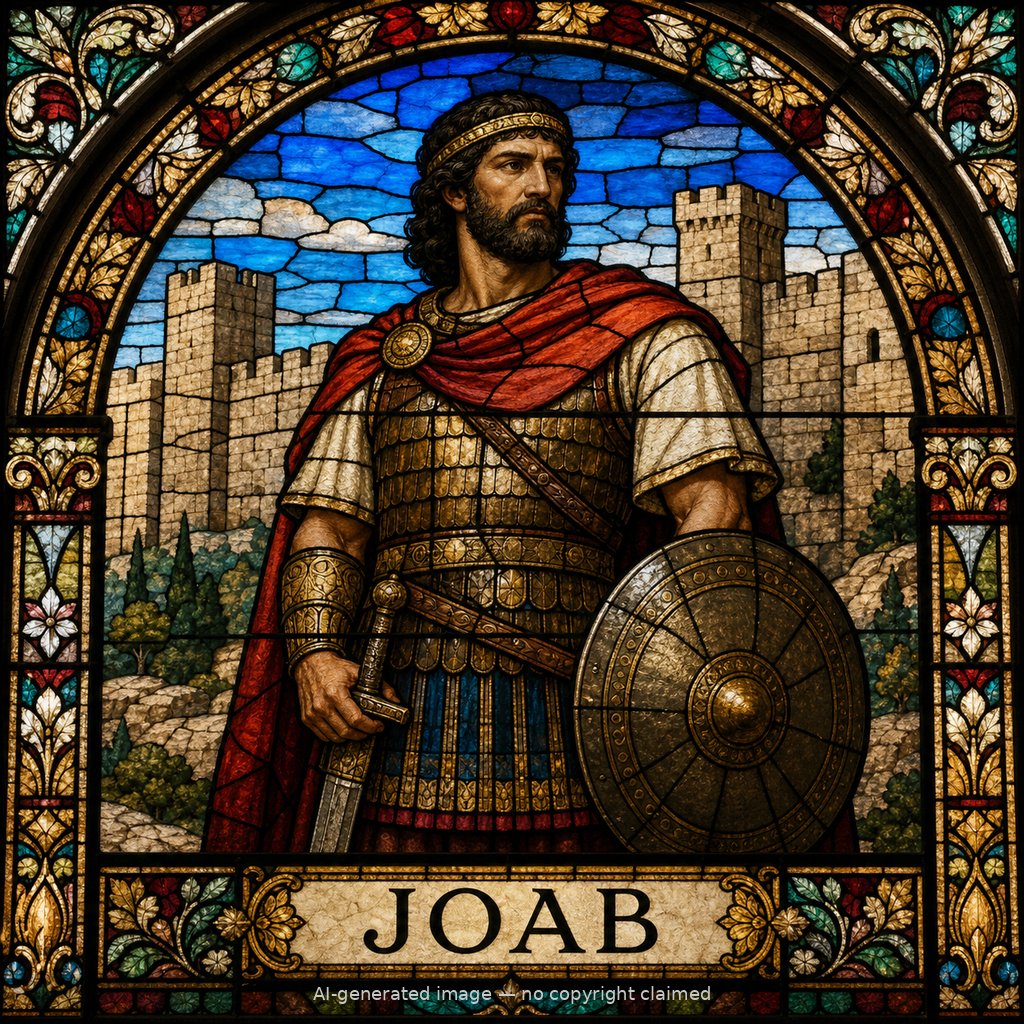
Joab (M)
First named in 1 Samuel 26:6
Joab, David's nephew through his sister Zeruiah, commanded David's army through most of his reign, leading the capture of Jerusalem from the Jebusites and numerous military victories (1 Chronicles 11:6; 2 Samuel throughout). He was capable, decisive, and fiercely protective of David's throne -- yet Scripture repeatedly shows him acting with a ruthlessness David could not control. He murdered Abner in peacetime to avenge his brother Asahel's death (2 Samuel 3:27), later murdered Amasa, his own replacement as commander, in the same treacherous manner (20:9-10), and directly disobeyed David's explicit order to spare Absalom's life, killing him himself with three spears while he hung trapped in a tree (18:5, 14-15). Joab could also be a voice of hard wisdom: he warned David against publicly mourning Absalom in a way that would demoralize the very soldiers who had saved his throne, and David heeded him (19:1-8). Yet his unresolved killings of Abner and Amasa weighed on David to the end of his life; on his deathbed, David charged Solomon not to let Joab's "gray hair go down to Sheol in peace," for shedding innocent blood in peacetime under the guise of war (1 Kings 2:5-6). When Joab, sensing the reckoning, fled to the altar's horns for sanctuary near the end of Solomon's succession struggle, Solomon had him executed there, closing out one of David's most capable but morally compromised servants.
Thought for Today
Joab killed Abner in peacetime to avenge his brother, then years later murdered Amasa the very same treacherous way, unable to let vengeance go even when David commanded otherwise. Jesus, betrayed and killed unjustly Himself, never repaid violence with violence, breaking the cycle Joab kept feeding.
References: 1 Samuel 26:6; 2 Samuel 2:13-32; 2 Samuel 3:22-31; 2 Samuel 8:16; 2 Samuel 10:7-14; 2 Samuel 11:1-25; 2 Samuel 12:26-27; 2 Samuel 14:1-33; 2 Samuel 17:25; 2 Samuel 18:2-29; 2 Samuel 19:1-13; 2 Samuel 20:7-23; 2 Samuel 23:18-37; 2 Samuel 24:2-9; 1 Kings 1:7-41; 1 Kings 2:5-33; 1 Kings 11:15-21; 1 Chronicles 2:16; 1 Chronicles 11:6-39; 1 Chronicles 18:15; 1 Chronicles 19:8-15; 1 Chronicles 20:1; 1 Chronicles 21:2-6; 1 Chronicles 26:28; 1 Chronicles 27:7-34; Psalms 60:0
Genealogy
Connections
- Zeruiah (F) — bore → Joab (M)
- Joab (M) — murdered him in revenge → Abner (M)
Joab, still bearing a blood-grudge over Abner's earlier killing of his brother Asahel in battle, lured Abner aside under a pretense of peace and murdered him just as Abner was working to unite Israel behind David.
2 Samuel 2:18-23; 2 Samuel 3:22-30
- Joab (M) — killed him against David's direct order → Absalom (M)
Joab had earlier arranged Absalom's return from exile through an elaborate ruse, but when Absalom's revolt against David failed and he hung suspended by his hair in an oak tree, Joab disregarded David's express command to deal gently with him and thrust three spears through his heart.
2 Samuel 14:1-33; 2 Samuel 18:9-15
- Joab (M) — murdered him with a feigned greeting kiss → Amasa (M)
When David gave Amasa command of the army in Joab's place, Joab met Amasa at Gibeon, took hold of his beard as if to kiss him, and stabbed him fatally with a concealed sword, an act of premeditated murder David later charged Solomon to hold Joab accountable for.
2 Samuel 20:8-13; 1 Kings 2:5; 1 Kings 2:32
- Asahel (M) ↔ fought alongside him at Gibeon ↔ Joab (M)
Asahel, Joab, and their brother Abishai -- the three sons of Zeruiah -- fought together against Abner's forces at Gibeon; Asahel pursued Abner directly and was killed by him, a death Joab avenged two years later by murdering Abner himself.
2 Samuel 2:18-23; 2 Samuel 3:27-30