 Lives of Scripture
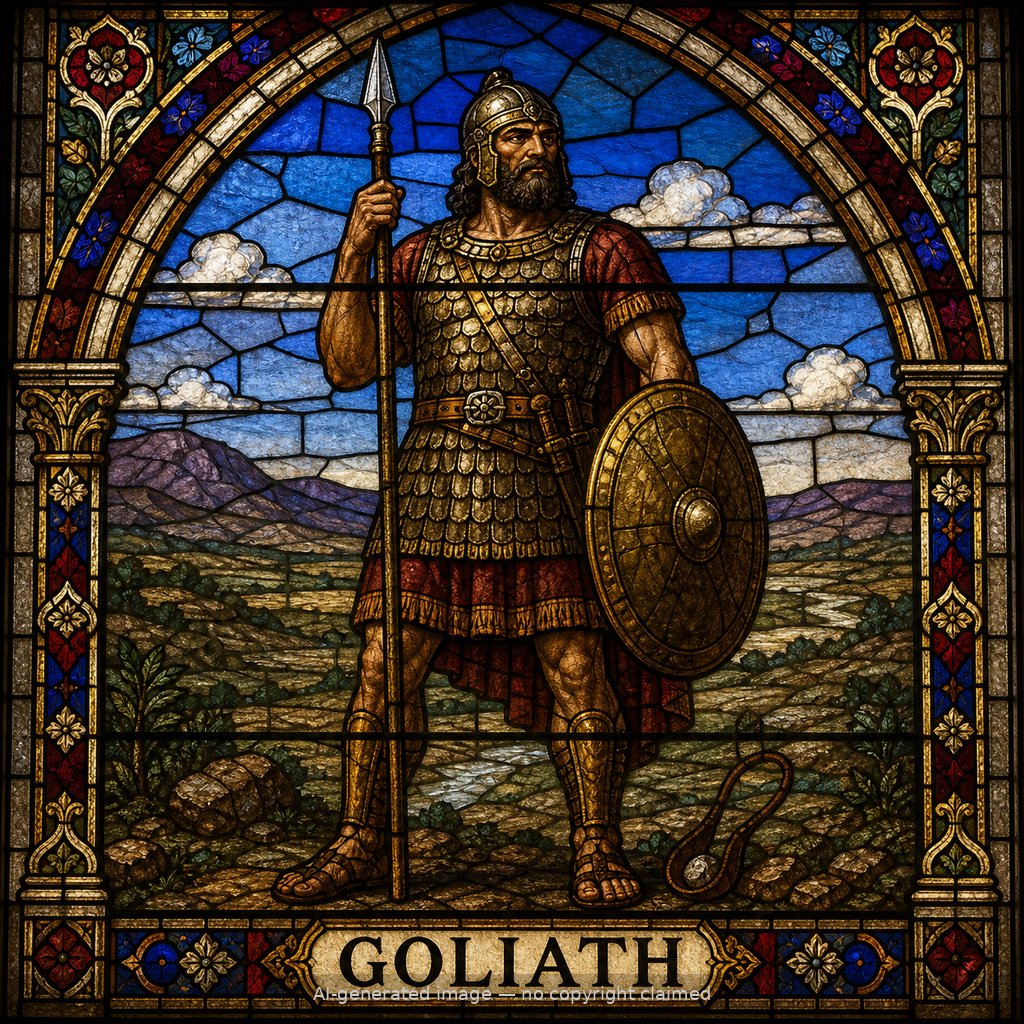
Goliath (M)
First named in 1 Samuel 17:4-57
Goliath was a champion of the Philistine army from Gath, described as towering in height and armored head to foot in bronze, who for forty days taunted the armies of Israel encamped in the Valley of Elah to send a man to fight him one-on-one, with the losing nation becoming the other's servants (1 Samuel 17:1-11). King Saul and his soldiers were terrified, but the young shepherd David -- sent by his father to bring provisions to his brothers in the camp -- was indignant that this "uncircumcised Philistine" should defy "the armies of the living God" (17:26). Refusing Saul's armor, David went out with only his shepherd's staff, a sling, and five smooth stones, declaring that he came "in the name of the LORD of hosts" and that the battle belonged to God, not to sword or spear (17:45-47). David felled Goliath with a single stone to the forehead, then used the giant's own sword to kill him and cut off his head, sending the Philistine army fleeing (17:48-51). Goliath's defeat became a defining moment establishing David's reputation (18:6-7) and was still remembered decades later, when David took Goliath's sword with him while fleeing Saul (21:9). Later biblical texts describe further Philistine giants from Gath killed by David's men, including a warrior named Lahmi, called "the brother of Goliath" (1 Chronicles 20:5; compare 2 Samuel 21:19). Goliath's story is remembered above all as a demonstration that victory belongs to God, not to human size or strength.
Thought for Today
Goliath trusted his height, his armor, and forty days of unanswered taunts, but fell to a shepherd boy's single stone because, as David said, 'the battle is the LORD's.' Jesus has already won our own greatest battle, against sin and death, by means the world would never have called strength.
References: 1 Samuel 17:4-57; 1 Samuel 18:6; 1 Samuel 21:9; 1 Samuel 22:10; 2 Samuel 21:19; 1 Chronicles 20:5
Genealogy
Father
—Mother
—Spouse(s)
—Children
—Places
- Gath — the Philistine champion from this city, killed by David in the Valley of Elah
1 Samuel 17:4; 1 Samuel 17:23
- Philistia
- Valley of Elah — defied Israel's army in this valley for forty days until David killed him
1 Samuel 17:2-4; 1 Samuel 17:49