 Lives of Scripture
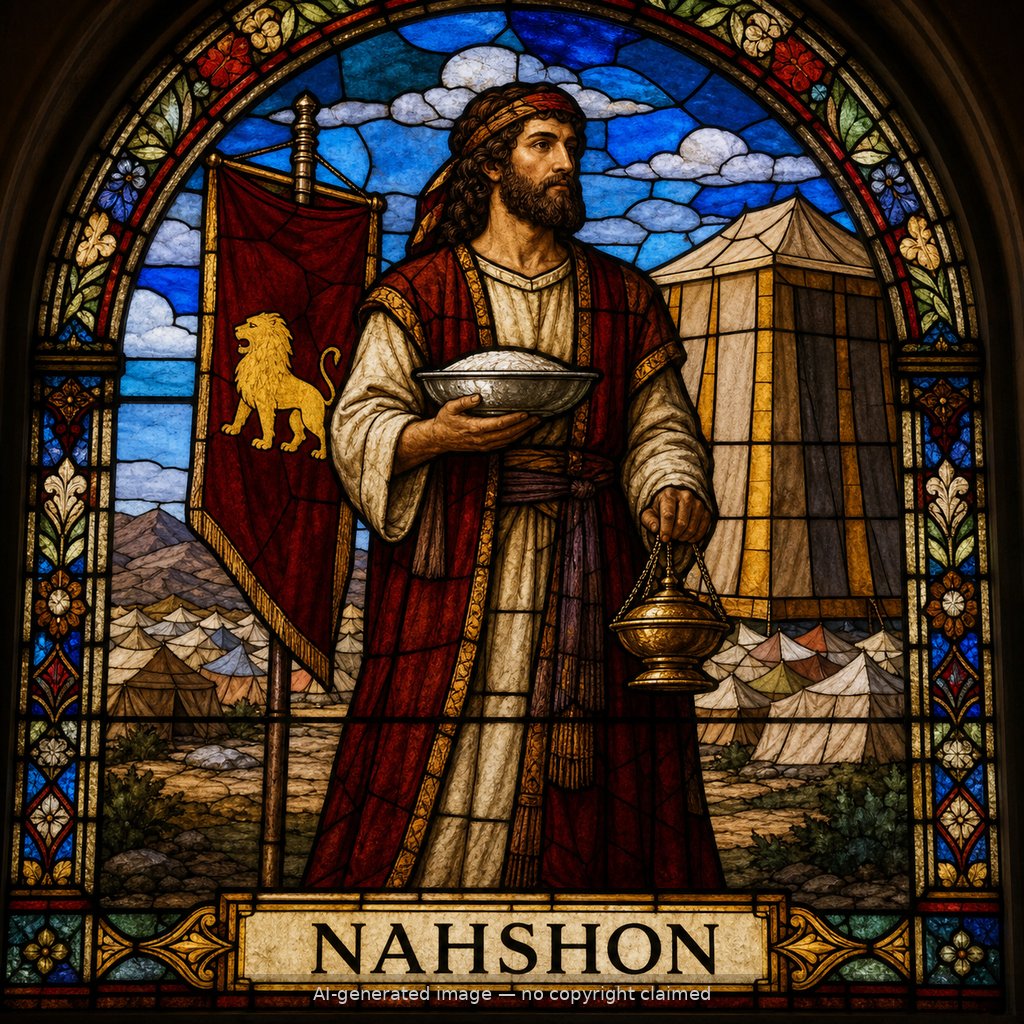
Nahshon (M)
First named in Exodus 6:23
Nahshon, son of Amminadab, led the tribe of Judah during Israel's wilderness journey after the exodus from Egypt (Numbers 1:7; 2:3). He was connected to Israel's priestly family by marriage, since his sister Elisheba was the wife of Aaron (Exodus 6:23). When the tabernacle was completed and consecrated, the twelve tribal leaders each brought an offering on a successive day of dedication; Nahshon, representing Judah, brought his on the very first day (Numbers 7:12). Scripture records his offering in full detail -- a silver dish and bowl filled with fine flour mixed with oil, a gold pan of incense, and a bull, ram, lamb, goat, and additional animals for the peace offerings (7:13-17) -- the same detailed formula repeated for each of the twelve leaders across the following days, giving Nahshon the distinction of leading off Israel's first corporate act of worship at the newly dedicated tabernacle. He also led Judah's contingent as the tribes set out from Sinai in their prescribed marching order (Numbers 10:14). Nahshon's greatest significance, however, lies in his genealogical position: he is named as the father of Salmon and an ancestor of Boaz, Obed, Jesse, and ultimately King David (Ruth 4:20-22; 1 Chronicles 2:10-11), placing him directly in the Messianic line recorded in both Matthew's and Luke's genealogies of Jesus Christ (Matthew 1:4; Luke 3:32).
Thought for Today
Nahshon led Judah's offering on the very first day the tabernacle was dedicated, the first tribe to bring its gift in Israel's first corporate act of worship. Jesus deserves that same eagerness from us, the readiness to be first rather than last to bring Him what's ours to give.
References: Exodus 6:23; Numbers 1:7; Numbers 2:3; Numbers 7:12-17; Numbers 10:14; Ruth 4:20; 1 Chronicles 2:10-11; Matthew 1:4; Luke 3:32