 Lives of Scripture
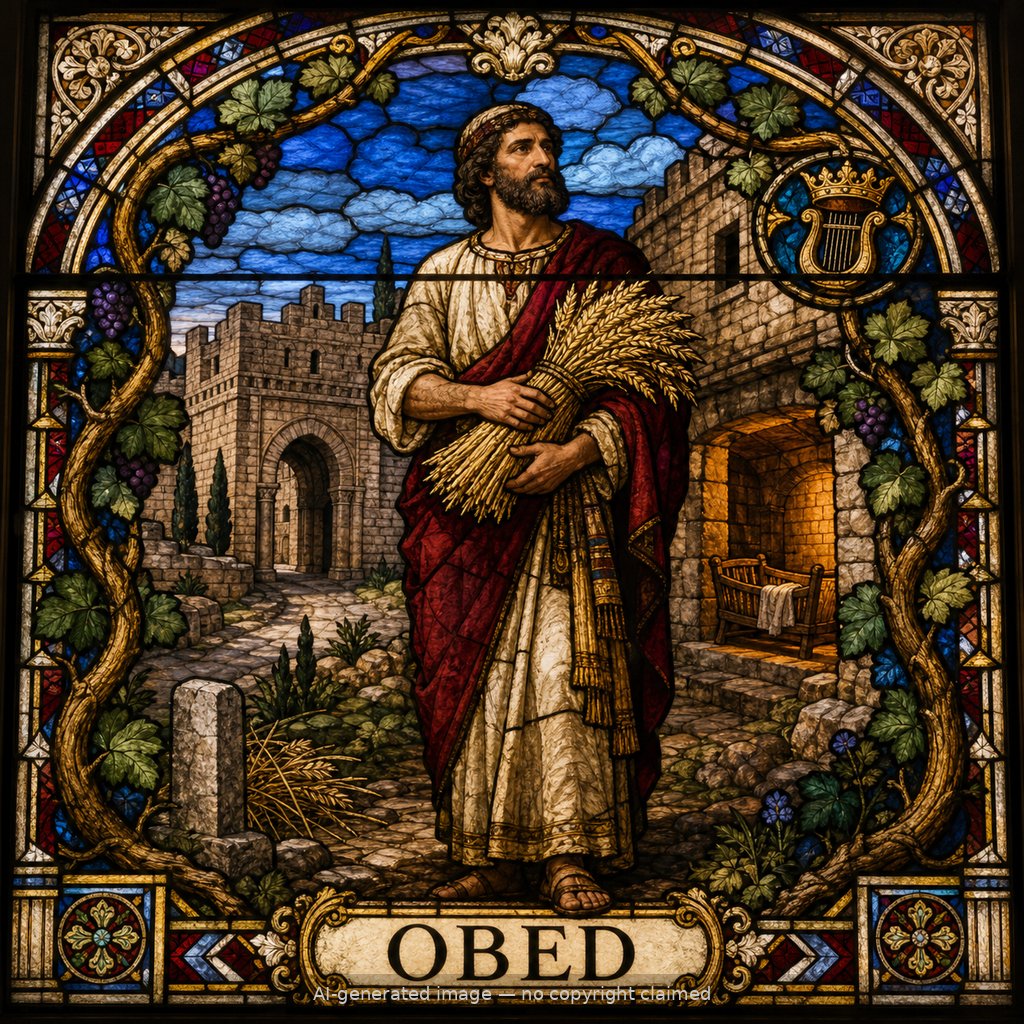
Obed (M)
First named in Ruth 4:13-17
Obed's birth closes the book of Ruth on a note of restoration after its opening chapters of famine, death, and loss. Ruth, a Moabite widow who had pledged unwavering loyalty to her Israelite mother-in-law Naomi, married Boaz as her kinsman-redeemer following the legal and covenantal process described in Ruth 3-4. When Ruth bore a son, the women of Bethlehem blessed Naomi rather than Ruth directly, recognizing what his birth meant for her: "a son has been born to Naomi... he will be to you a restorer of life and a sustainer of your old age; for your daughter-in-law, who loves you and is better to you than seven sons, has given birth to him" (Ruth 4:14-15). Naomi took the child and became his nurse, and the neighbor women named him Obed (4:16-17). The book's closing genealogy reveals why his birth mattered beyond one family's joy: "Obed became the father of Jesse, and Jesse became the father of David" (4:17,21-22) -- placing a Moabite woman's son directly in the ancestral line of Israel's greatest king. Matthew's genealogy of Jesus later carries this same line forward (Matthew 1:5-6), so that Obed, born to an Israelite widower and a foreign convert, stands as an ancestor not only of David but ultimately of Christ.
Thought for Today
Obed's birth turned Naomi's empty story into one full of hope, and his line led straight to King David. Through David, Obed became an ancestor of Jesus Himself.
References: Ruth 4:13-17; Matthew 1:5
Genealogy
Connections
Places
- Bethlehem — son of Boaz and Ruth, born in this town, grandfather of King David
Ruth 4:17