 Lives of Scripture
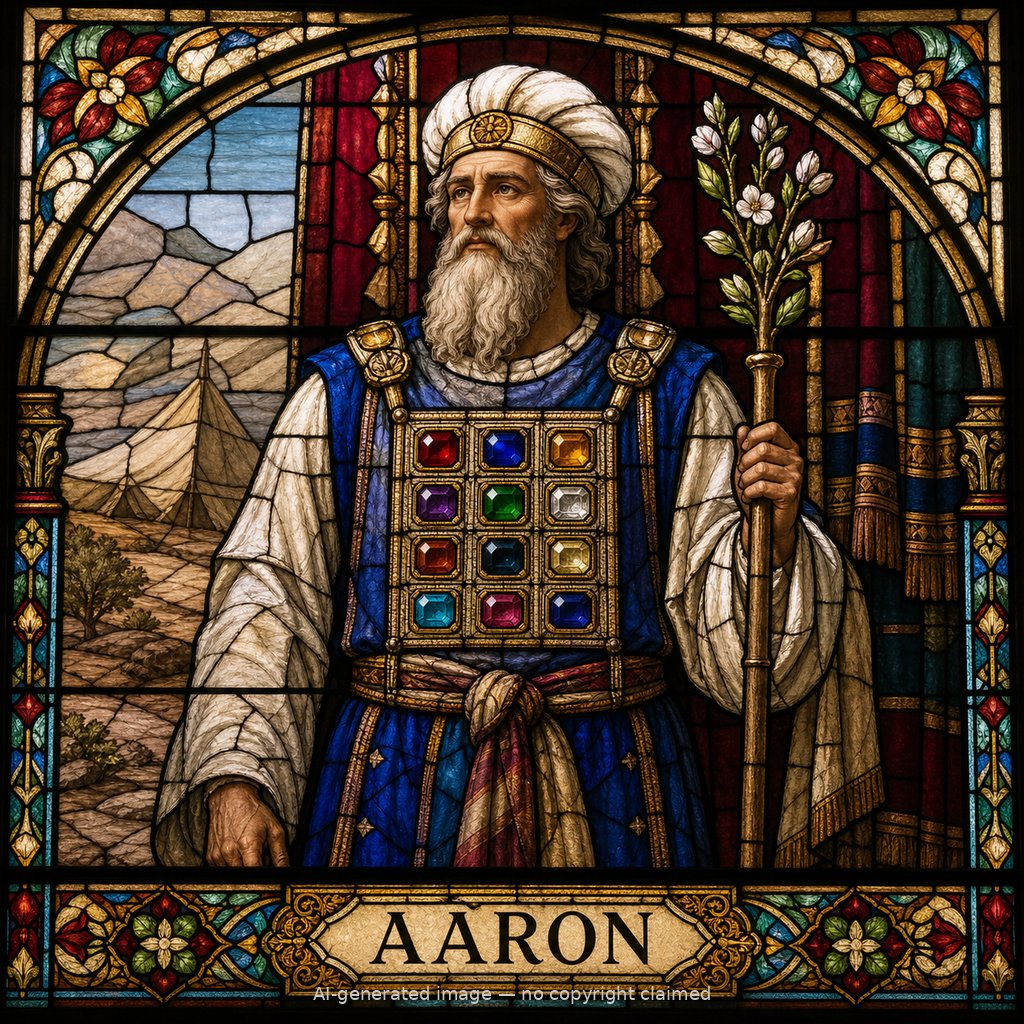
Aaron (M)
First named in Exodus 4:14-16
Aaron, three years older than Moses, is introduced at the burning bush as God's answer to Moses' objection he could not speak well: God appointed Aaron as Moses' mouthpiece before Pharaoh and Israel (Exodus 4:10-16, 27-31). Aaron performed several signs himself, including turning his staff into a serpent and bringing on the plagues of blood, frogs, and gnats (Exodus 7:8-12, 19-20; 8:5-6, 16-17). At Sinai, Aaron and his sons were set apart as Israel's first priests, and Aaron alone was consecrated high priest, permitted into the Holy of Holies once a year to atone for the nation (Exodus 28-29; Leviticus 16). Scripture does not soften what came next: with Moses forty days on the mountain, the people demanded gods to lead them, and Aaron collected their gold, cast a calf, and proclaimed a feast to the LORD — a violation of the covenant by the man who would become high priest (Exodus 32:1-6). Moses' intercession, not Aaron's merit, turned aside the wrath (Exodus 32:9-14, 30-35). Aaron's authority was tested again when he and Miriam challenged Moses' standing, for which Miriam alone was struck with leprosy while Aaron pleaded for her healing (Numbers 12). When Korah rose against Aaron's priesthood, God vindicated him by making his staff alone, of twelve gathered, sprout, bud, and bear almonds overnight (Numbers 16-17). Aaron died on Mount Hor at 123, his garments transferred to his son Eleazar (Numbers 20:22-29). Hebrews treats Aaron's priesthood as real but temporary, pointing forward to Christ's permanent priesthood (Hebrews 7:23-28).
Thought for Today
When the people demanded a god they could see, Aaron caved and built the golden calf -- it was Moses' intercession, not Aaron's own merit, that turned aside God's wrath. Jesus already intercedes for us permanently, at God's own right hand, so we never have to hope someone else steps in for us.
References: Exodus 4:14-16; Exodus 6:20; Exodus 7-12; Exodus 28-29; Exodus 32; Leviticus 8-10; Numbers 12; Numbers 16-17; Numbers 20:22-29
Genealogy
Connections
- A type of Christ (Hebrews 5:4-5)
- Amram (M) — begot → Aaron (M)
- Jochebed (F) — bore → Aaron (M)
- Aaron (M) — begot → Nadab (M)
- Aaron (M) — begot → Abihu (M)
- Aaron (M) — begot → Eleazar (M)
- Aaron (M) — begot → Ithamar (M)
- Aaron (M) ↔ married ↔ Elisheba (F)
- Aaron (M) ↔ collaborated with ↔ Moses (M)
Aaron served as Moses' spokesman before Pharaoh and co-led Israel through the Exodus, though he also built the golden calf in Moses' absence.
Exodus 4:14-16; Exodus 7:1-2; Exodus 32