 Lives of Scripture
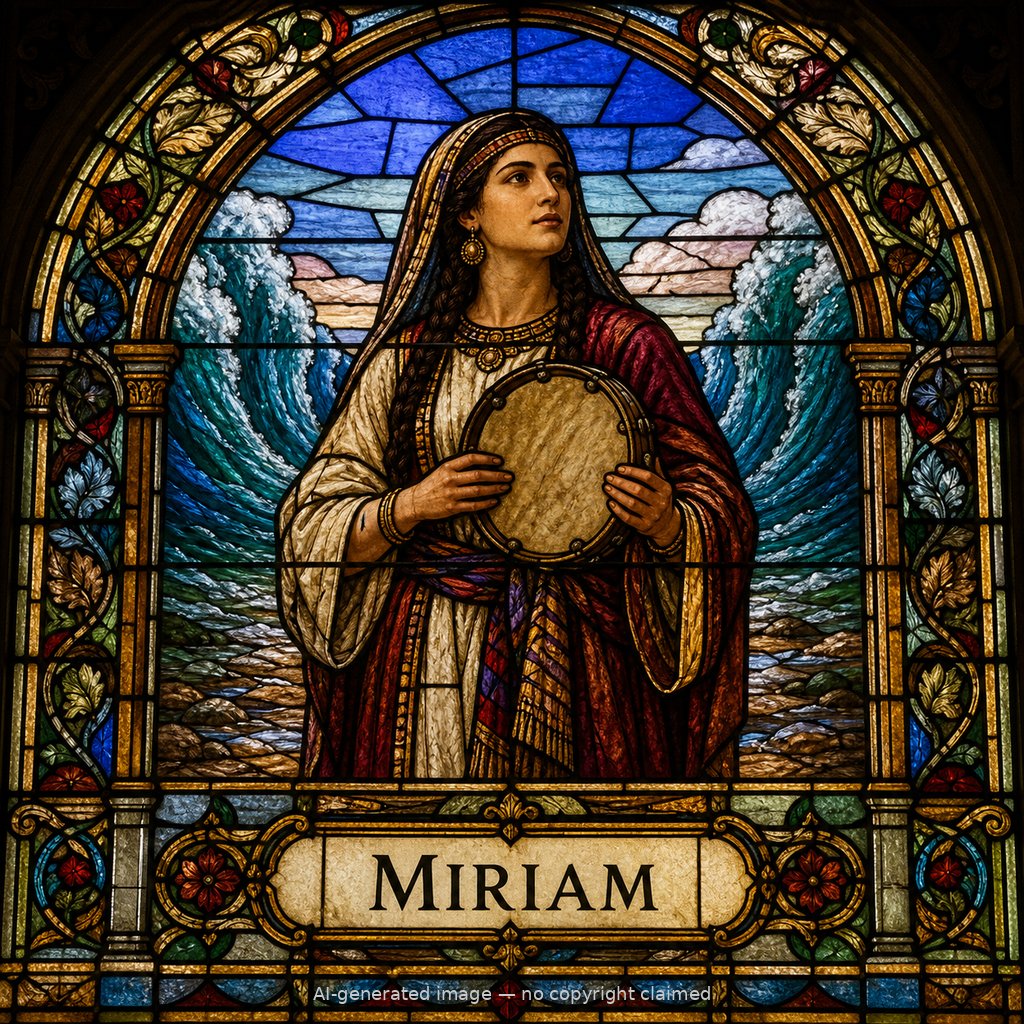
Miriam (F)
First named in Exodus 15:20-21
Miriam, daughter of Amram and Jochebed and sister of Moses and Aaron, is first named explicitly in Scripture after the crossing of the Red Sea, where she is called 'the prophetess' and led the women of Israel with tambourines and dancing in a song celebrating the LORD's triumph over Pharaoh's army: 'Sing to the LORD, for He is highly exalted; the horse and his rider He has hurled into the sea' (Exodus 15:20-21). This scene has led many readers to identify her as the same unnamed sister who watched over the infant Moses in his basket on the Nile and arranged for their mother to nurse him (Exodus 2:4-8), though Scripture does not state this connection directly. Miriam's story takes a darker turn in Numbers 12, where she and Aaron 'spoke against Moses because of the Cushite woman whom he had married,' and challenged his unique authority: 'Has the LORD indeed spoken only through Moses? Has He not spoken through us as well?' (12:1-2). The LORD Himself intervened, affirming Moses's singular role as one with whom He spoke 'mouth to mouth' rather than through visions and dreams as with other prophets (12:6-8), and struck Miriam -- apparently the primary instigator, since she alone bore the punishment -- with leprosy (12:10). Aaron pleaded with Moses on her behalf, and Moses, in one of Scripture's shortest and most heartfelt prayers, cried out, 'O God, heal her, I pray!' (12:13). Miriam was shut outside the camp for seven days as the law for such uncleanness required, and the people did not move on until she was restored (12:14-15). Scripture records her death simply, at Kadesh in the wilderness of Zin (Numbers 20:1), and both Deuteronomy and Micah later recall her, alongside Moses and Aaron, as part of God's leadership given to Israel at the exodus (Deuteronomy 24:9; Micah 6:4).
Thought for Today
Miriam led Israel in song at the Red Sea as 'the prophetess,' then years later grew jealous of Moses's unique closeness to God and was struck with leprosy for challenging him. Jesus doesn't overlook envy just because someone has genuinely served Him before.
References: Exodus 15:20-21; Numbers 12:1-15; Numbers 20:1; Numbers 26:59; Deuteronomy 24:9; 1 Chronicles 6:3; Micah 6:4
Genealogy
Connections
Places
- Egypt — watched over the infant Moses here, and led Israel's song after the sea
Exodus 2:4-8; Exodus 15:20