 Lives of Scripture
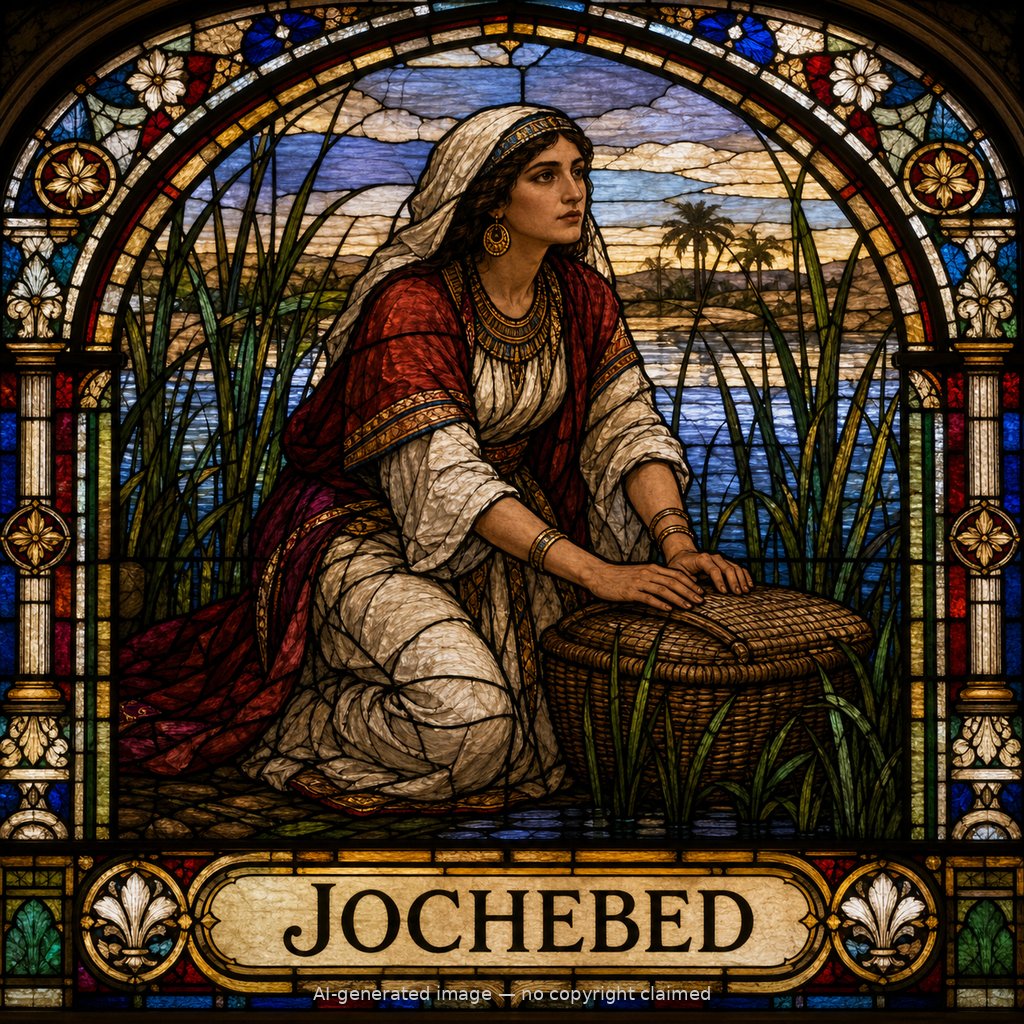
Jochebed (F)
First named in Exodus 2:1-10
Jochebed gave birth to Moses under Pharaoh's standing order that every Hebrew baby boy be thrown into the Nile, and 'seeing that he was a fine child,' she hid him for three months — an act of faith the New Testament credits jointly to Moses' parents, who 'were not afraid of the king's edict' (Exodus 1:22-2:2; Hebrews 11:23). When she could no longer keep him hidden, she wove a papyrus basket, coated it with tar and pitch, and placed it among the reeds — aiming his exposure toward the very place Pharaoh's household drew its water, using the river Pharaoh had weaponized against Hebrew sons as the means of saving one instead (Exodus 2:3). She sent her daughter Miriam to watch from a distance. When Pharaoh's daughter found the basket, she had compassion on the child despite her father's decree, and Miriam offered to find a Hebrew nurse, fetching her own mother (Exodus 2:4-8). In one of Scripture's sharper ironies, Pharaoh's daughter then paid Jochebed wages to nurse her own son, and Jochebed raised Moses under the unwitting protection of the very household that had ordered his death, until he was old enough to be brought to Pharaoh's daughter to become, legally, her son (Exodus 2:9-10). Exodus 6:20 identifies her as Amram's father's sister as well as his wife, and mother not only of Moses but of Aaron and Miriam — one woman's quiet courage setting in motion Israel's entire deliverance story.
Thought for Today
Jochebed hid her son three months, then wove a basket and set it where Pharaoh's own daughter would find it, turning the Nile Pharaoh had aimed at Hebrew sons into the means of saving one. Jesus, too, was a helpless baby hidden from a king's murderous order, protected until it was time to save His people.
References: Exodus 2:1-10; Exodus 6:20; Numbers 26:59; Hebrews 11:23
Genealogy
Connections
Places
- Egypt — hid her son Moses here for three months, then set him afloat on the Nile
Exodus 2:1-3