Lives of Scripture
Jehu (M)
First named in 1 Kings 19:16-17
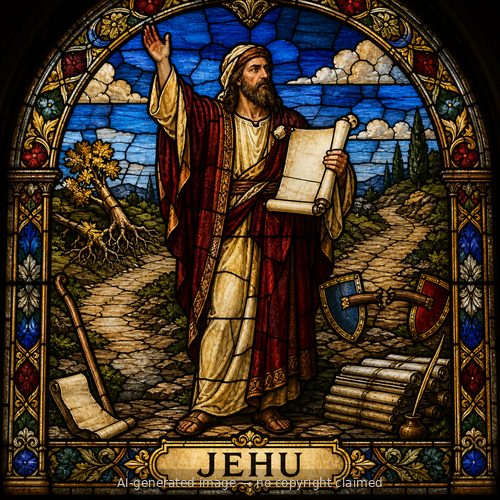
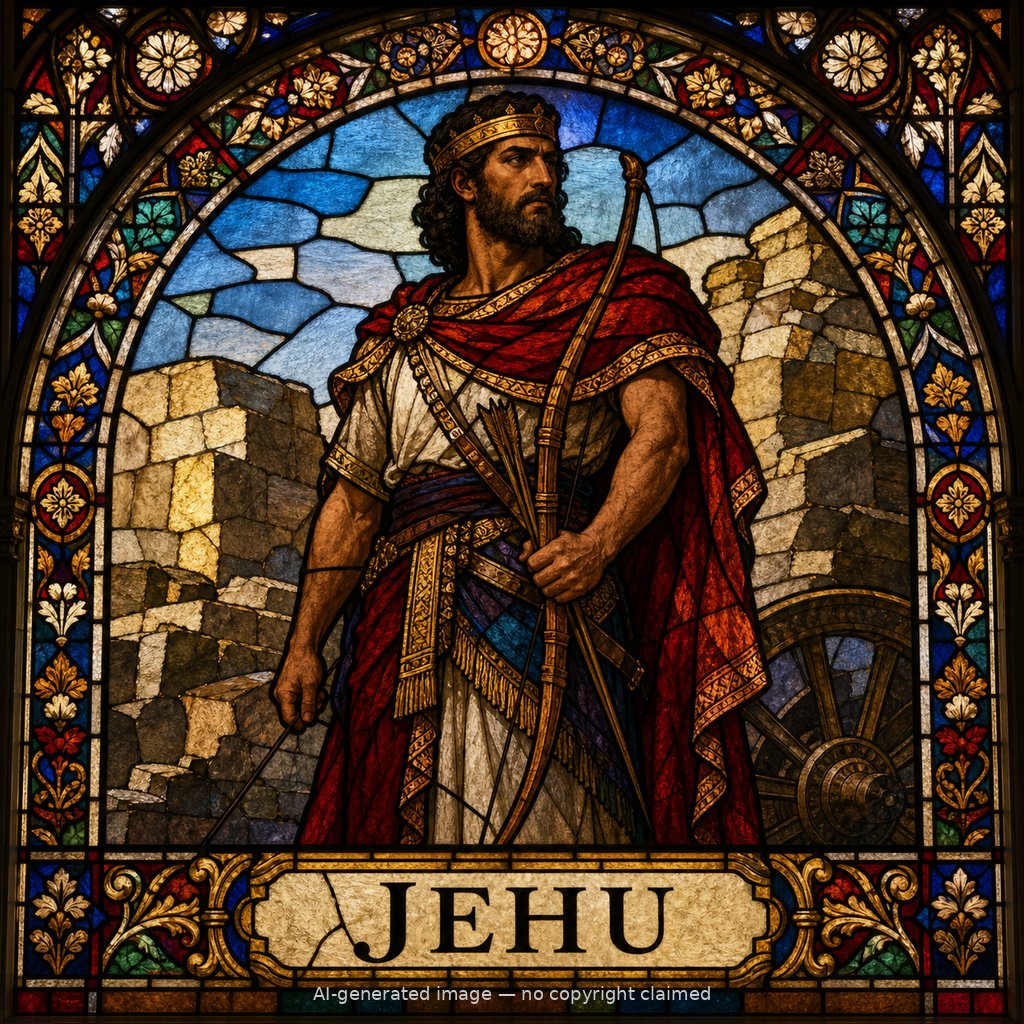
Jehu, an army commander, was anointed king over Israel by a young prophet sent from Elisha, told that God was raising him up to destroy the house of Ahab in judgment for Jezebel's murders and idolatry (2 Kings 9:1-10). Jehu acted with startling speed: he killed King Joram of Israel and King Ahaziah of Judah, had Jezebel thrown from a window to be eaten by dogs exactly as Elijah had prophesied, and had all seventy of Ahab's remaining sons beheaded (2 Kings 9:14-37; 10:1-11). He then gathered Baal's prophets and worshipers under the pretense of a sacrifice to Baal and slaughtered them all, tearing down Baal's temple (2 Kings 10:18-28). God commended Jehu for carrying out this judgment, promising his descendants would sit on Israel's throne to the fourth generation (2 Kings 10:30) — later fulfilled exactly (2 Kings 15:12). Yet Jehu "was not careful to walk in the law of the LORD... with all his heart"; he never tore down the golden calves at Bethel and Dan, and Israel's worship stayed corrupted (2 Kings 10:29-31). The prophet Hosea later announced God would still judge Jehu's house for the bloodshed at Jezreel, showing that being an instrument of judgment is not the same as covenant faithfulness (Hosea 1:4).
Thought for Today
Jehu carried out God's judgment on Ahab's house with terrifying speed and precision, exactly as Elijah had prophesied against Jezebel. Jesus is the judge who will one day set every wrong right completely, not partially the way Jehu did when he left Bethel's golden calves standing.
References: 1 Kings 19:16-17; 2 Kings 9:2-31; 2 Kings 10:1-36; 2 Kings 12:1; 2 Kings 13:1; 2 Kings 14:8; 2 Kings 15:12; 2 Chronicles 22:7-9; 2 Chronicles 25:17; Hosea 1:4
Genealogy
Connections
Places
- Jezreel — killed King Joram here and had Jezebel thrown from a window in this town
2 Kings 9:24; 2 Kings 9:30-33
- Kingdom of Israel — anointed its king to destroy the house of Ahab
2 Kings 9:1-13
- Samaria — wiped out Ahab's family and Baal worship in this city
2 Kings 10:11; 2 Kings 10:17-28
Other people named Jehu