 Lives of Scripture
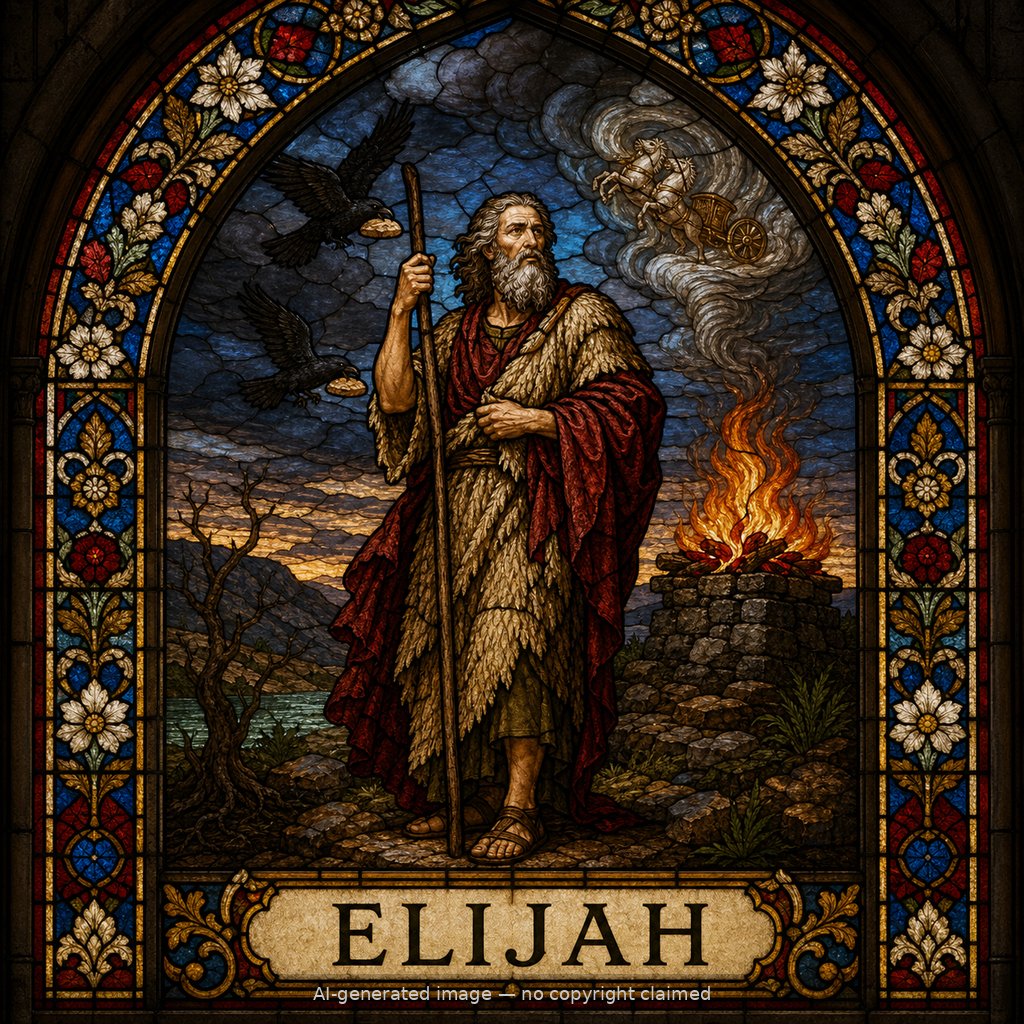
Elijah (M)
First named in 1 Kings 17:1-24
Elijah the Tishbite appears abruptly, announcing a drought to King Ahab as judgment for Baal worship, then surviving by ravens and a widow's jar of flour and oil that never ran out — even raising her dead son back to life (1 Kings 17). His defining moment came at Mount Carmel: he alone confronted 450 prophets of Baal, and after their god failed to answer, fire fell from heaven onto Elijah's water-soaked sacrifice, and the people cried, "The LORD, He is God" (1 Kings 18:20-40). Yet immediately afterward, threatened by Jezebel, Elijah fled in terror to Horeb, wishing to die; God met him not in wind, earthquake, or fire but in a "still small voice," gently correcting his despair and sending him back to work (1 Kings 19:1-18). Elijah anointed Elisha as his successor, confronted Ahab over Naboth's murdered inheritance, and later confronted King Ahaziah for consulting a foreign god instead of the LORD (1 Kings 19:19-21; 21:17-24; 2 Kings 1). Rather than dying, Elijah was taken up to heaven in a whirlwind by a chariot of fire, witnessed by Elisha, who received a double portion of his spirit (2 Kings 2:1-14). Elijah later appeared with Moses at Jesus' transfiguration, and Jesus identified John the Baptist as the promised "Elijah" of Malachi 4:5, "in spirit and power," though John denied being Elijah literally reborn (Matthew 17:3-13; Luke 1:17; John 1:21).
Thought for Today
God met Elijah's fear not with anger but with a gentle whisper. When fear gets the better of us, may we remember that He meets us just as gently.
References: 1 Kings 17:1-24; 1 Kings 18:1-46; 1 Kings 19:1-21; 1 Kings 21:17-28; 2 Kings 1:3-17; 2 Kings 2:1-15; 2 Kings 3:11; 2 Kings 9:36; 2 Kings 10:10-17; 2 Chronicles 21:12; Malachi 4:5; Matthew 11:14; Matthew 16:14; Matthew 17:3-12; Matthew 27:47-49; Mark 6:15; Mark 8:28; Mark 9:4-13; Mark 15:35-36; Luke 1:17; Luke 4:25-26; Luke 9:8-33; John 1:21-25; Romans 11:2; James 5:17
Genealogy
Father
—Mother
—Spouse(s)
—Children
—Connections
- Witness to Christ (Luke 9:30-31)
- Elijah (M) — confronted → Ahab (M)
Elijah announced a drought as judgment on Ahab's Baal worship, defeated Baal's prophets at Mount Carmel, and pronounced judgment on Ahab's house after he seized Naboth's vineyard.
1 Kings 17:1; 1 Kings 18:17-40; 1 Kings 21:17-24
- Elijah (M) — prophesied against → Ahaziah (M)
Elijah announced that Ahaziah would die of his injuries because he had sent to inquire of Baal-zebub instead of the LORD.
2 Kings 1:2-17
- Elijah (M) — warned → Jehoram (M)
A letter came to Jehoram of Judah from Elijah, warning of a plague on his people and family and a painful disease for walking in the ways of the kings of Israel.
2 Chronicles 21:12-15
- Obadiah (M) — arranged meeting with → Elijah (M)
Obadiah unexpectedly met Elijah while searching for water and, despite fearing Ahab's wrath, delivered his message to the king, setting up the Mount Carmel confrontation.
1 Kings 18:7-16
Places
- Gilead — a Tishbite of this region, who announced the drought to Ahab
1 Kings 17:1
- Kingdom of Israel — its prophet in the days of Ahab and Ahaziah
1 Kings 17:1
- Mount Carmel — called down fire from heaven and defeated the 450 prophets of Baal on this mountain
1 Kings 18:19-40
- Mount Sinai — fled to this mountain and heard God in a low whisper
1 Kings 19:8-12