 Lives of Scripture
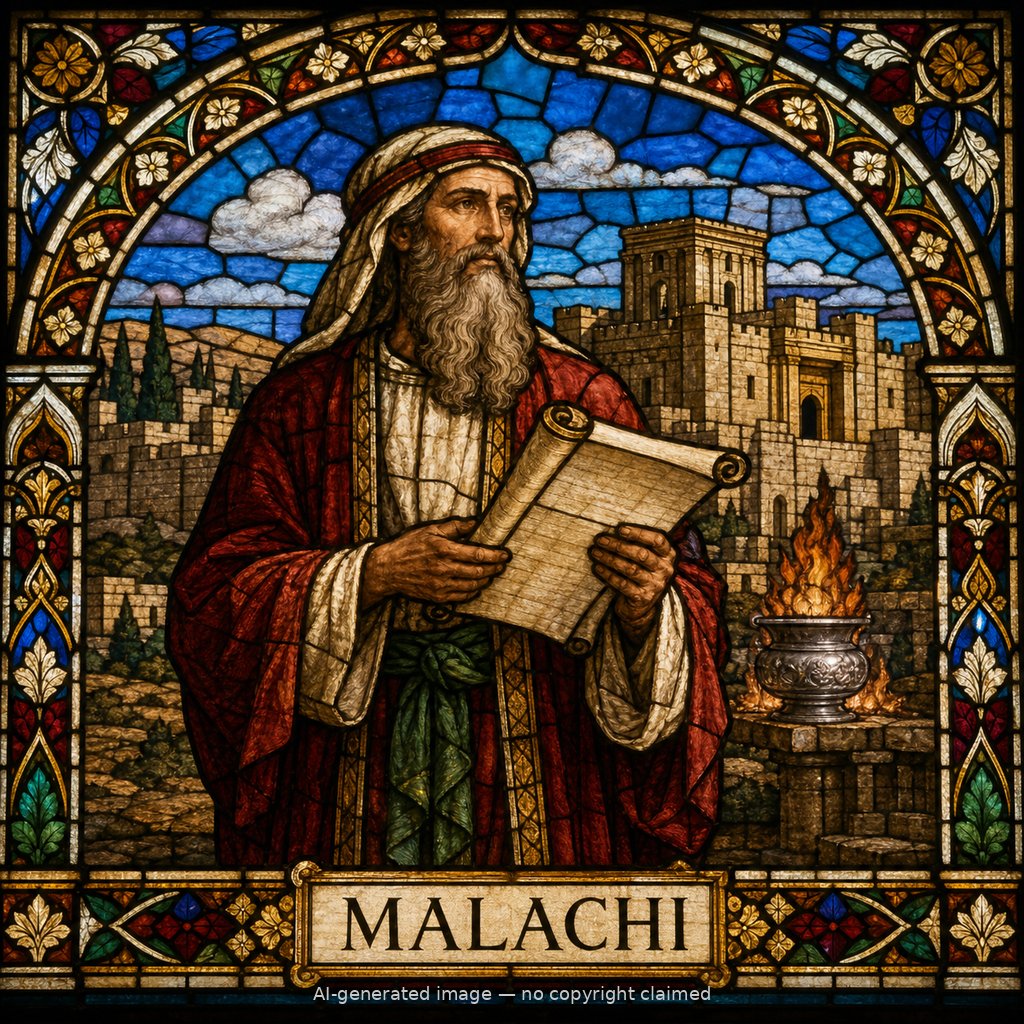
Malachi (M)
First named in Malachi 1:1
Almost nothing is known about Malachi personally — his name means "my messenger," and some scholars debate whether it functioned as a title rather than a personal name (Malachi 1:1). Writing after the temple's rebuilding, when the initial enthusiasm of the return from exile had worn into weary routine, Malachi confronts specific failures: priests offering blind, lame, and diseased animals as sacrifices instead of their best (Malachi 1:6-14); men treacherously divorcing the wives of their youth, which God says He hates (Malachi 2:13-16); and a people who had stopped tithing faithfully, whom God challenges directly, "Will man rob God? Yet you are robbing me... Bring the full tithe... and test me now, and see if I will not open the windows of heaven" (Malachi 3:8-10). Underneath these failures lies a deeper problem: the people had begun to doubt God's love and justice, asking "How have you loved us?" (Malachi 1:2; 3:14). Malachi promises a messenger would come to prepare the way before the LORD's own sudden arrival at His temple, refining His people like a metalworker refines silver (Malachi 3:1-3) — words the Gospels apply to John the Baptist preparing the way for Jesus (Matthew 11:10). The book, and the entire Old Testament, closes by promising "Elijah" would come before "the great and awesome day of the LORD" (Malachi 4:5-6).
Thought for Today
Malachi confronted a weary, going-through-the-motions people with priests offering blind and lame animals instead of their best. Jesus deserves, and is worth, more than our leftovers; He asks for the same wholehearted devotion Malachi begged Judah to bring back.
References: Malachi 1:1
Genealogy
Father
—Mother
—Spouse(s)
—Children
—Connections
- Prophesied of Christ (Matthew 11:10)