 Lives of Scripture
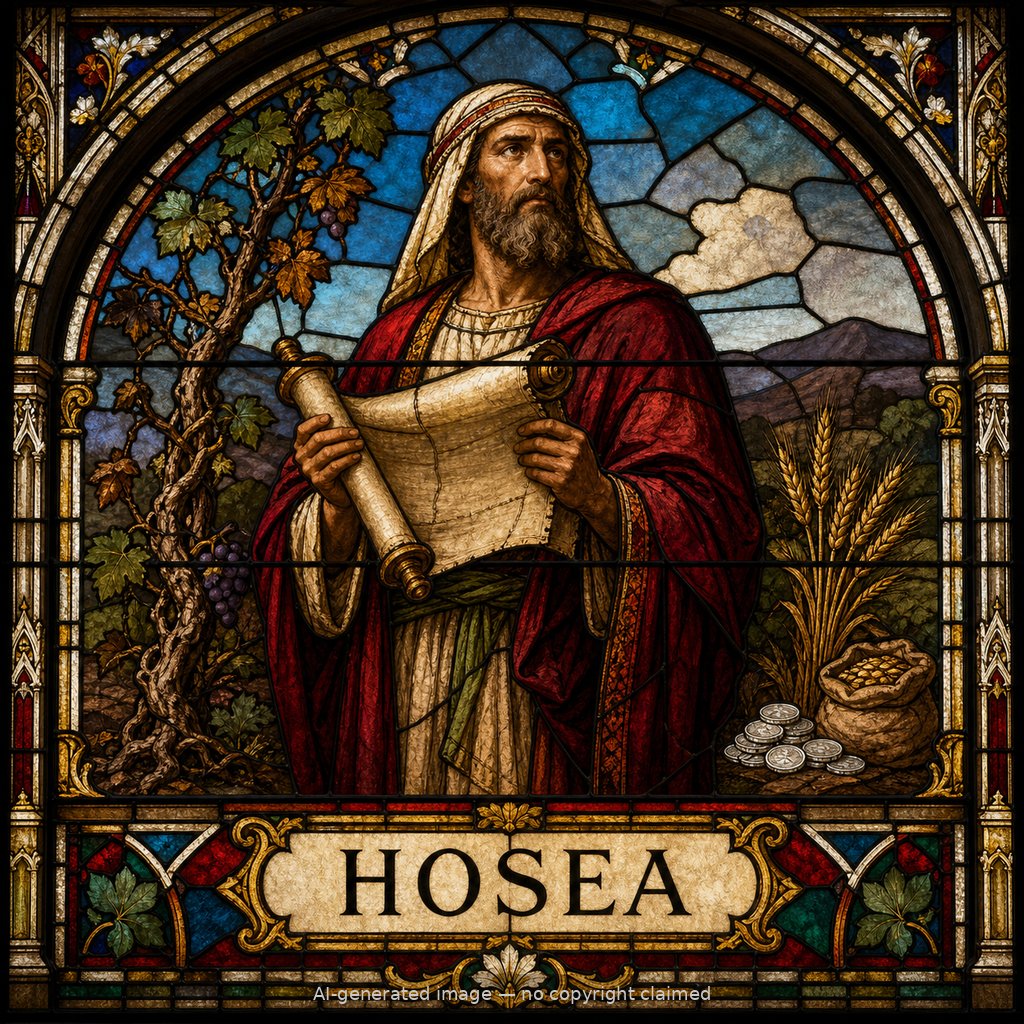
Hosea (M)
First named in Hosea 1:1-2
Hosea ministered to the northern kingdom of Israel during its final, spiritually corrupt decades, and his own marriage became the central message of his book: God commanded him to marry Gomer, a woman who would prove unfaithful, as a living picture of Israel's persistent unfaithfulness despite His covenant love (Hosea 1:2-3). Their children were given prophetic names reflecting Israel's coming judgment — Jezreel, for bloodshed to be repaid; Lo-ruhamah, "not pitied"; and Lo-ammi, "not my people" (Hosea 1:4-9). Yet the book turns on remarkable grace: God commanded Hosea to go again and love his wife, buying her back from slavery even after her repeated unfaithfulness, exactly as God kept pursuing an unfaithful Israel (Hosea 3:1-3). Hosea's poetry captures both God's grief over Israel's idolatry — "they sacrifice... but I have no delight in them" (Hosea 8:13) — and His unbreakable tenderness — "How can I give you up, Ephraim?... My heart recoils within me" (Hosea 11:8). Hosea's message, "I desire steadfast love and not sacrifice," was quoted by Jesus against religious hardness of heart, and his line about God calling His son out of Egypt is applied by Matthew to the child Jesus (Hosea 6:6; 11:1; Matthew 2:15; 9:13).
Thought for Today
God told Hosea to marry Gomer knowing she would be unfaithful, then to buy her back from slavery even after she betrayed him again, a living picture of God's own pursuit of unfaithful Israel. Jesus is that pursuing love made permanent, paying to redeem people who had already turned away from Him.
References: Hosea 1:1-2; Romans 9:25
Genealogy
Connections
Places
- Kingdom of Israel — prophesied to this kingdom of its coming judgment and of God's love
Hosea 1:1-2