 Lives of Scripture
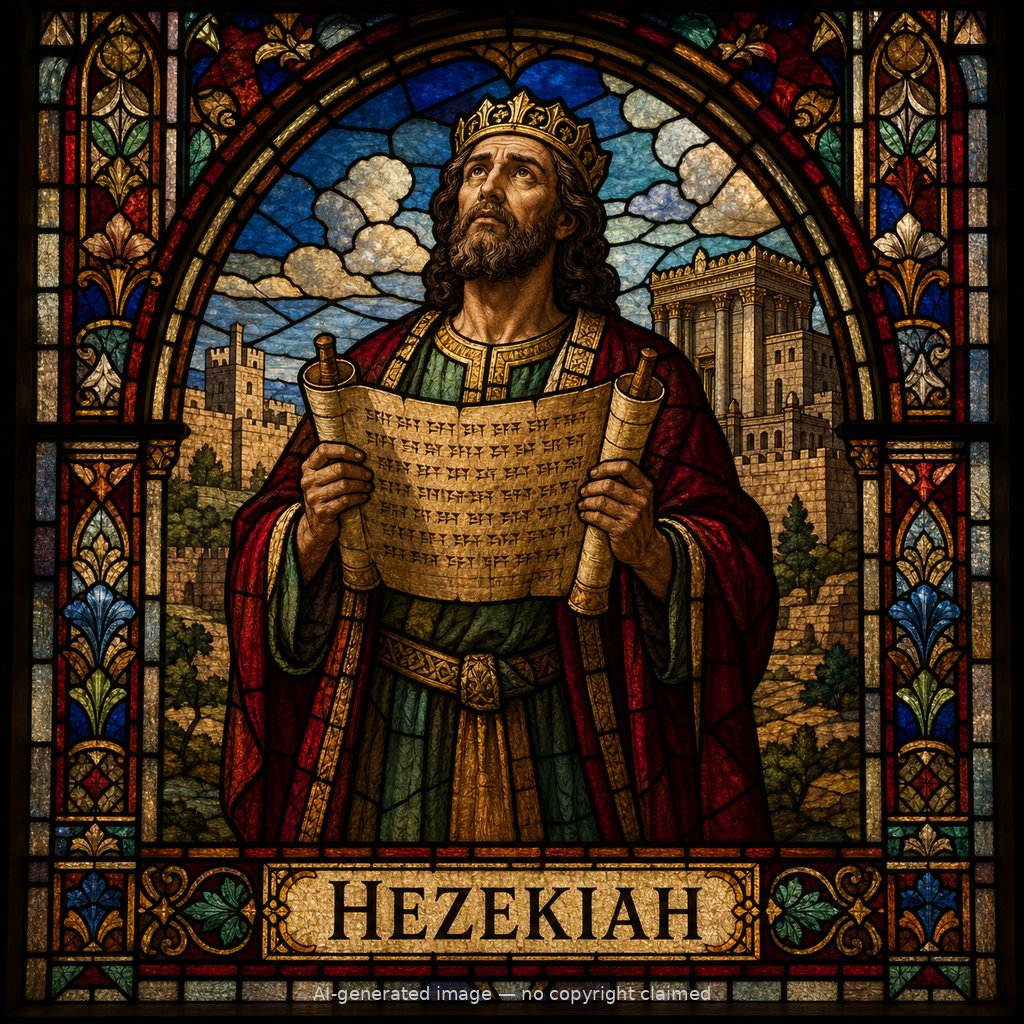
Hezekiah (M)
First named in 2 Kings 16:20
Hezekiah, son of the idolatrous Ahaz, did what was right "according to all that his father David had done" — he removed the high places, broke into pieces the bronze serpent Moses had made because Israel had begun worshiping it, and Scripture says "there was none like him among all the kings of Judah" for trust in the LORD (2 Kings 18:1-6). When Assyria's King Sennacherib invaded and mocked Judah's God, Hezekiah spread the threatening letter before the LORD in the temple and prayed; Isaiah announced deliverance, and that night "the angel of the LORD went out and struck 185,000" in the Assyrian camp (2 Kings 18:13-19:37). When Hezekiah fell fatally ill, he wept and prayed, and God granted him fifteen more years, confirmed by the sign of the sun's shadow moving backward (2 Kings 20:1-11). Yet pride followed deliverance: Hezekiah showed off all his treasures to envoys from Babylon, and Isaiah warned that everything, and some of his own descendants, would one day be carried off to Babylon — a prophecy Hezekiah accepted with troubling relief that it would not happen in his own lifetime (2 Kings 20:12-19). Hezekiah also organized a great Passover reuniting worshipers from both the northern and southern kingdoms (2 Chronicles 30:1-27).
Thought for Today
When Sennacherib's threatening letter arrived, Hezekiah didn't panic or negotiate -- he spread it out before the LORD in the temple and prayed, and God answered decisively that same night. Jesus invites us to bring our own worst threats to Him just as directly, trusting Him to be enough for whatever is written against us.
References: 2 Kings 16:20; 2 Kings 18:1-37; 2 Kings 19:1-20; 2 Kings 20:1-21; 2 Kings 21:3; 1 Chronicles 3:13; 1 Chronicles 4:41; 2 Chronicles 28:27; 2 Chronicles 29:1-36; 2 Chronicles 30:1-24; 2 Chronicles 31:2-20; 2 Chronicles 32:2-33; 2 Chronicles 33:3; Proverbs 25:1; Isaiah 1:1; Isaiah 36:1-22; Isaiah 37:1-21; Isaiah 38:1-22; Isaiah 39:1-8; Jeremiah 15:4; Jeremiah 26:18-19; Hosea 1:1; Micah 1:1; Matthew 1:9-10
Genealogy
Connections
- Ancestor of Christ (Matthew 1:9-10)
- Ahaz (M) — begot → Hezekiah (M)
- Abi (F) — bore → Hezekiah (M)
- Hezekiah (M) — begot → Manasseh (M)
- Isaiah (M) — advised → Hezekiah (M)
Isaiah promised deliverance from Sennacherib's siege, announced Hezekiah's healing and fifteen added years, then later warned of a future Babylonian exile after Hezekiah showed off his treasury.
2 Kings 19:1-7; 2 Kings 20:1-19
- Micah (M) — prophesied to → Hezekiah (M)
Jeremiah 26:18-19 explicitly recalls that Micah's warning of Jerusalem's destruction led Hezekiah to seek the LORD's favor rather than have Micah put to death.
Micah 3:12; Jeremiah 26:18-19
Places
- Jerusalem — its king, who trusted God when Assyria's army besieged the city
2 Kings 18:13; 2 Kings 19:32-36
- Kingdom of Judah — its king, who cleansed the temple and was spared when Assyria besieged Jerusalem
2 Chronicles 29:3; 2 Kings 19:35