 Lives of Scripture
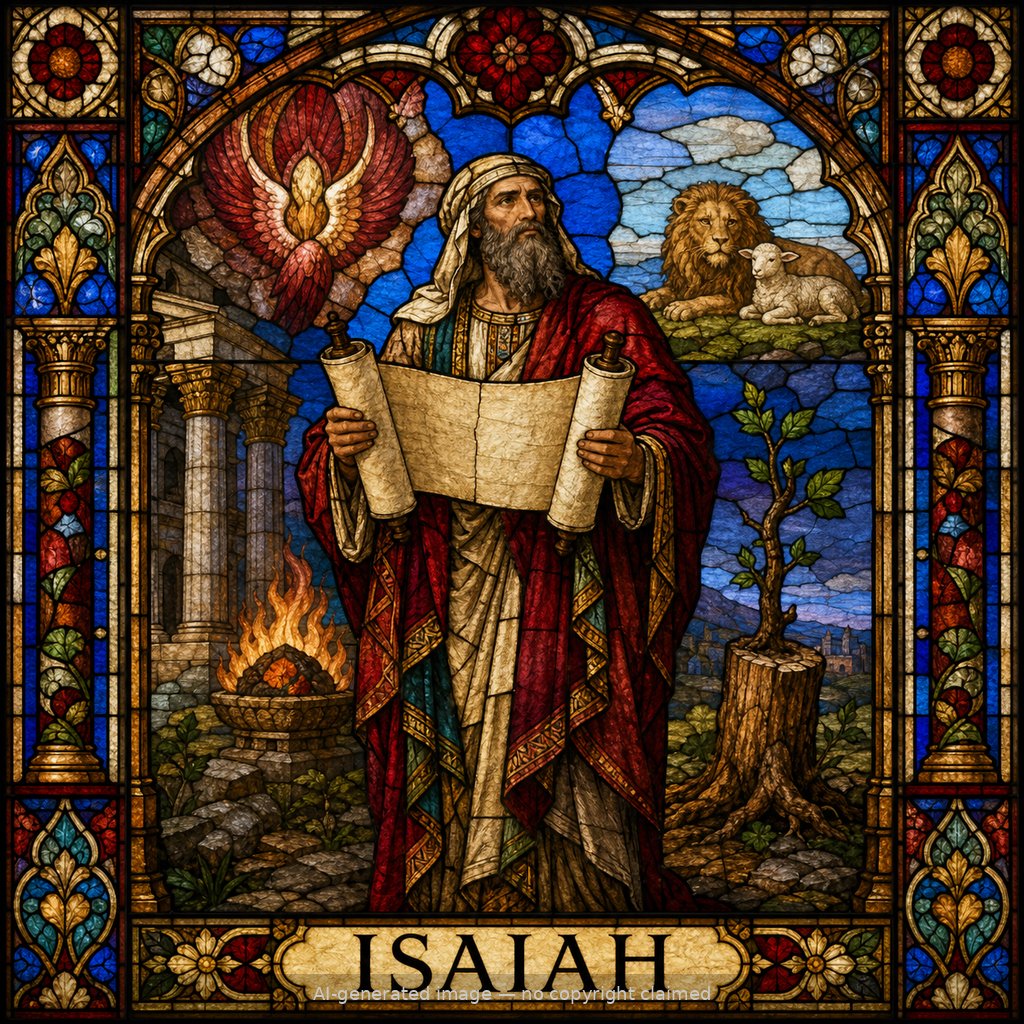
Isaiah (M)
First named in 2 Kings 19:2-20
Isaiah's prophetic call came through an overwhelming vision of the LORD enthroned in the temple, surrounded by seraphim crying "Holy, holy, holy"; overwhelmed by his own sinfulness, Isaiah was purified when a seraph touched his lips with a burning coal, then volunteered, "Here am I. Send me!" (Isaiah 6:1-8). He ministered across four reigns — Uzziah, Jotham, Ahaz, and Hezekiah (Isaiah 1:1). When King Ahaz panicked over an invading coalition, Isaiah urged him to trust God rather than seek Assyrian help, offering a sign: a child called Immanuel, "God with us" (Isaiah 7:1-14) — a prophecy the New Testament identifies as ultimately fulfilled in Christ's virgin birth (Matthew 1:22-23). Isaiah later confirmed God's deliverance of Jerusalem from Sennacherib's siege and, at Hezekiah's request, gave the sign of the sun's shadow moving backward during the king's illness (Isaiah 37-38). When Hezekiah proudly showed Babylonian envoys his treasures, Isaiah warned that everything would one day be carried off to Babylon (Isaiah 39). Isaiah's book contains Scripture's clearest Old Testament portrait of a coming Suffering Servant "pierced for our transgressions... by his wounds we are healed" (Isaiah 53:5), a passage the New Testament applies directly to Jesus (Acts 8:32-35).
Thought for Today
Isaiah saw God on the throne and cried out over his own sin. Only Jesus can make us clean enough to serve him.
References: 2 Kings 19:2-20; 2 Kings 20:1-19; 2 Chronicles 26:22; 2 Chronicles 32:20-32; Isaiah 1:1; Isaiah 2:1; Isaiah 7:3; Isaiah 13:1; Isaiah 20:2-3; Isaiah 37:2-21; Isaiah 38:1-21; Isaiah 39:3-8; Matthew 3:3; Matthew 8:17; Matthew 12:17; Matthew 13:14; Matthew 15:7; Mark 1:2; Mark 7:6; Luke 3:4; Luke 4:17; John 1:23; John 12:38-41; Acts 8:28-30; Romans 9:27-29; Romans 10:20; Romans 15:12
Genealogy
Connections
- Prophesied of Christ (Acts 8:32-35)
- Amoz (M) — begot → Isaiah (M)
- Isaiah (M) — begot → Shear-jashub (M)
- Isaiah (M) — begot → Immanuel (M)
- Isaiah (M) — counseled → Ahaz (M)
Isaiah urged Ahaz to trust God rather than Assyria and offered the Immanuel sign, but Ahaz refused to ask for a sign and appealed to Assyria anyway.
Isaiah 7:1-17
- Isaiah (M) — advised → Hezekiah (M)
Isaiah promised deliverance from Sennacherib's siege, announced Hezekiah's healing and fifteen added years, then later warned of a future Babylonian exile after Hezekiah showed off his treasury.
2 Kings 19:1-7; 2 Kings 20:1-19
Places
- Jerusalem — prophesied in this city through the Assyrian crisis
Isaiah 1:1; Isaiah 37:1-7
- Kingdom of Judah — prophesied to its kings from Uzziah through Hezekiah
Isaiah 1:1