 Lives of Scripture
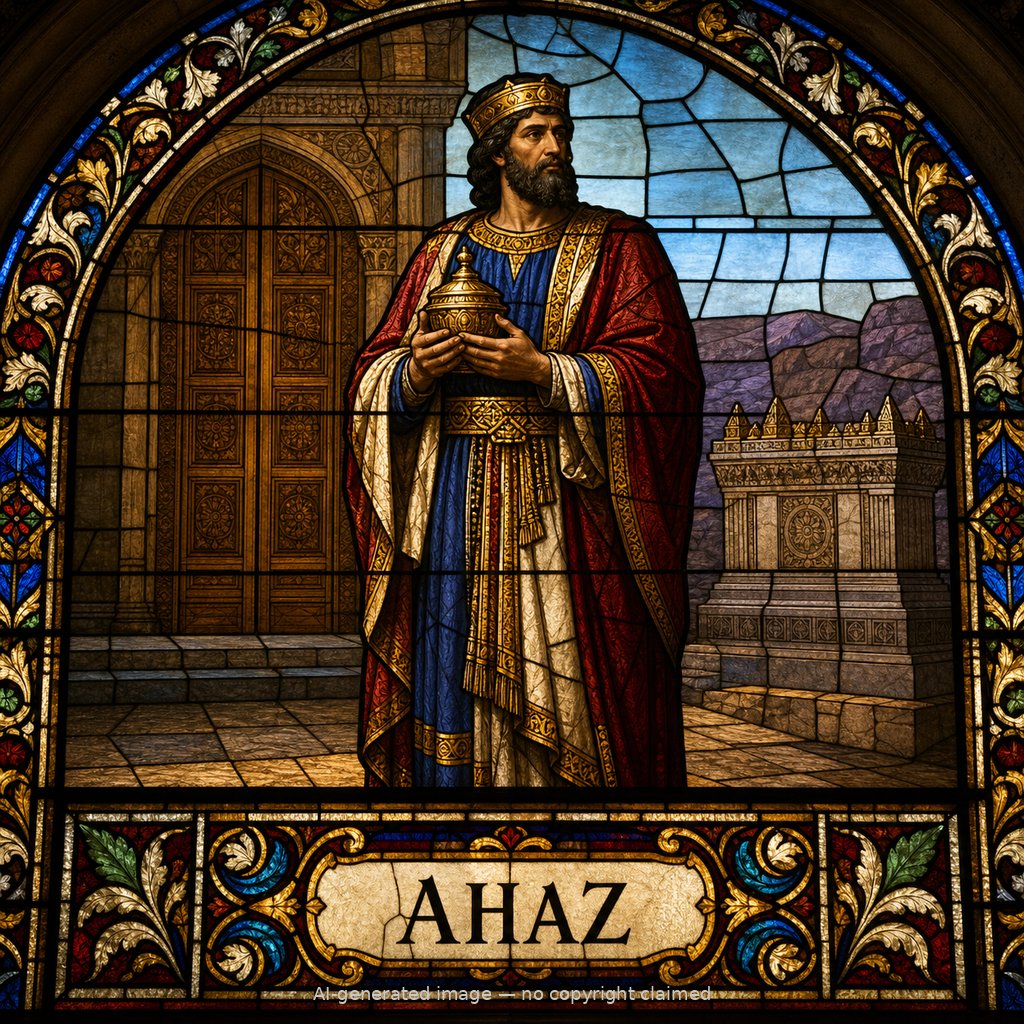
Ahaz (M)
First named in 2 Kings 15:38
Ahaz became king of Judah and, unlike his father Jotham, "did not do right in the sight of the LORD" (2 Kings 16:2). He walked in the ways of Israel's kings, cast metal images for the Baals, burned incense on the high places, and even made his own son pass through the fire, following the abhorrent practices of the nations the LORD had driven out before Israel (2 Chronicles 28:1-3). When Aram's King Rezin and Israel's King Pekah allied to attack Jerusalem, Ahaz and his people trembled "as the trees of the forest shake with the wind" (Isaiah 7:2). The LORD sent Isaiah to Ahaz with a staggering offer: ask for any sign, as deep as Sheol or as high as heaven, to confirm God's promise of deliverance (Isaiah 7:10-11). Ahaz refused, hiding behind false piety -- "I will not ask, nor will I test the LORD" (7:12) -- so Isaiah gave the sign anyway, unasked: a virgin would bear a son called Immanuel (7:14). Rather than trust God, Ahaz stripped silver and gold from the temple and palace to buy Assyrian King Tiglath-pileser's help, becoming his vassal, and later remodeled the temple's altar after a pagan design he had seen in Damascus, going so far as to shut the temple doors altogether (2 Kings 16:7-18; 2 Chronicles 28:24). Despite Ahaz's unbelief, the LORD preserved the Davidic line through his son Hezekiah, and Ahaz is still named in Matthew's genealogy of Jesus (Matthew 1:9).
Thought for Today
Ahaz refused to even ask God for a sign, hiding behind false humility while trembling in unbelief -- so God gave one anyway: a virgin would bear a son called Immanuel. Centuries later that unasked-for sign was fulfilled in Jesus, born to save the very kind of unbelieving king and people Ahaz represented.
References: 2 Kings 15:38; 2 Kings 16:1-20; 2 Kings 17:1; 2 Kings 18:1; 2 Kings 20:11; 2 Kings 23:12; 1 Chronicles 3:13; 2 Chronicles 27:9; 2 Chronicles 28:1-27; 2 Chronicles 29:19; Isaiah 1:1; Isaiah 7:1-12; Isaiah 14:28; Isaiah 38:8; Hosea 1:1; Micah 1:1; Matthew 1:9
Genealogy
Connections
- Ancestor of Christ (Matthew 1:9)
- Jotham (M) — begot → Ahaz (M)
- Ahaz (M) — begot → Hezekiah (M)
- Ahaz (M) — begot → Maaseiah (M)
- Isaiah (M) — counseled → Ahaz (M)
Isaiah urged Ahaz to trust God rather than Assyria and offered the Immanuel sign, but Ahaz refused to ask for a sign and appealed to Assyria anyway.
Isaiah 7:1-17
- Pekah (M) — besieged Jerusalem with an ally → Ahaz (M)
Pekah of Israel allied with Rezin of Aram against Ahaz of Judah, killing many of Judah's soldiers and besieging Jerusalem, a crisis that drove Ahaz to appeal to Assyria rather than trust the LORD's promise of deliverance through Isaiah.
2 Kings 16:5; 2 Chronicles 28:5-8; Isaiah 7:1-9
- Rezin (M) — besieged Jerusalem with an ally → Ahaz (M)
Rezin of Aram allied with Pekah of Israel and marched against Jerusalem intending to depose Ahaz and install a puppet king, besieging the city though unable to take it.
2 Kings 16:5; Isaiah 7:1-6
- Ahaz (M) — paid for help and became his vassal → Tiglath-pileser (M)
Ahaz stripped silver and gold from the temple and palace to send to Tiglath-pileser as tribute, calling himself Assyria's servant and son and begging rescue from Israel and Aram; Tiglath-pileser captured Damascus as requested, but Chronicles notes the alliance afflicted Judah rather than strengthening it.
2 Kings 16:7-18; 2 Chronicles 28:20-21
Places
- Jerusalem
- Kingdom of Judah — its king, who shut the temple and sacrificed to other gods
2 Chronicles 28:24-25