 Lives of Scripture
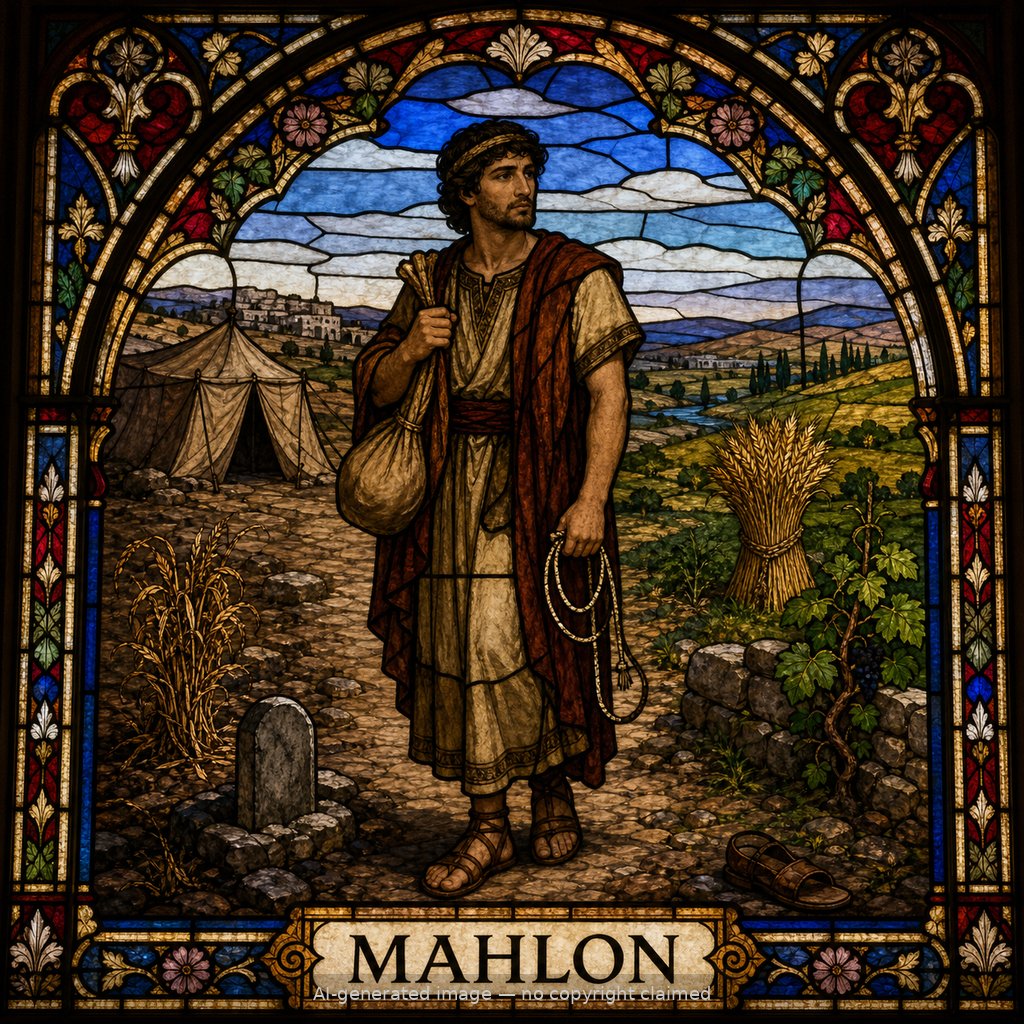
Mahlon (M)
First named in Ruth 1:1-5
Mahlon was one of two sons of Elimelech and Naomi, a family from Bethlehem in Judah who migrated to Moab during a severe famine (Ruth 1:1-2). While there, Mahlon married Ruth, a Moabite woman, and his brother Chilion married Orpah (1:4). After about ten years, Mahlon died in Moab, along with his brother and father, leaving Naomi without husband or sons and both young women widowed (1:3-5). Naomi and Ruth returned to Bethlehem together, where Ruth's loyalty to her mother-in-law and her gleaning in the fields brought her into contact with Boaz, a close relative of Elimelech. Boaz agreed to redeem Elimelech's property and to marry Ruth 'to raise up the name of the dead on his inheritance, so that the name of the dead may not be cut off' -- Mahlon's name specifically preserved through this act of levirate-style redemption (4:9-10). Mahlon himself speaks no words and performs no recorded deed in the narrative; his significance lies entirely in his marriage, his death, and the inheritance that Boaz redeems in his name. Through Ruth and Boaz's son Obed, the family line associated with Mahlon's household became part of the ancestry of David -- and ultimately of Christ (4:17-22; Matthew 1:5-6).
Thought for Today
Mahlon died without children, but Boaz redeemed his inheritance and preserved his name through marrying Ruth. Boaz's redemption pictures Jesus, our kinsman-redeemer, who restores what was lost.
References: Ruth 1:1-5; Ruth 4:10