 Lives of Scripture
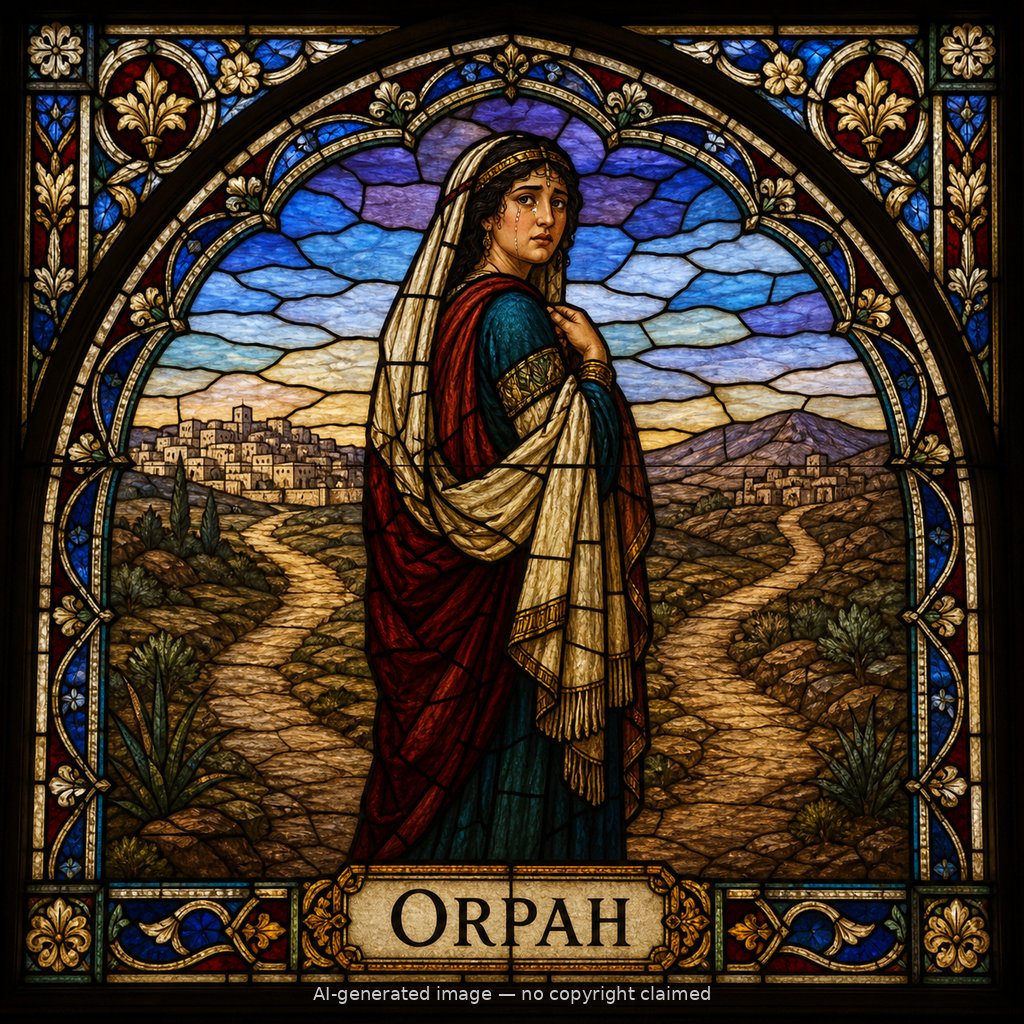
Orpah (F)
First named in Ruth 1:4-14
Orpah was married to one of Naomi's sons during the family's years in Moab, alongside her sister-in-law Ruth, who married Naomi's other son (Ruth 1:4). After the deaths of Naomi's husband and both sons, Naomi resolved to return to Bethlehem and urged Orpah and Ruth to go back instead to their own mothers' homes and find new husbands among their own people, praying that the LORD would deal kindly with them as they had with the dead and with her (1:8-9). Orpah wept and initially resisted, insisting she would return with Naomi, but after Naomi pressed the point further -- pointing out she had no more sons to offer them and was too old to remarry and provide new ones -- "Orpah kissed her mother-in-law, but Ruth clung to her" (1:10-14). Orpah's decision to return to Moab and "her gods" is recorded without moral condemnation; it was, by any ordinary measure, the more reasonable and secure choice, given Naomi's honest assessment that she had nothing left to offer her daughters-in-law (1:11-13, 15). Ruth's contrasting choice to stay -- "your people shall be my people, and your God, my God" -- is what the book goes on to celebrate, making Ruth an ancestor of David and ultimately of Christ (1:16-17; 4:13-22; Matthew 1:5). Orpah disappears from the narrative entirely after this scene, her story standing as the ordinary, reasonable road not taken beside Ruth's extraordinary loyalty.
Thought for Today
Orpah loved Naomi but chose the safer road home, while Ruth chose to stay. May we, like Ruth, choose Jesus even when it costs the safer path.
References: Ruth 1:4-14
Genealogy
Connections
Places
- Moab — Naomi's daughter-in-law, who turned back to this, her own land
Ruth 1:14