Lives of Scripture
Jeroboam (M)
First named in 1 Kings 11:26-40
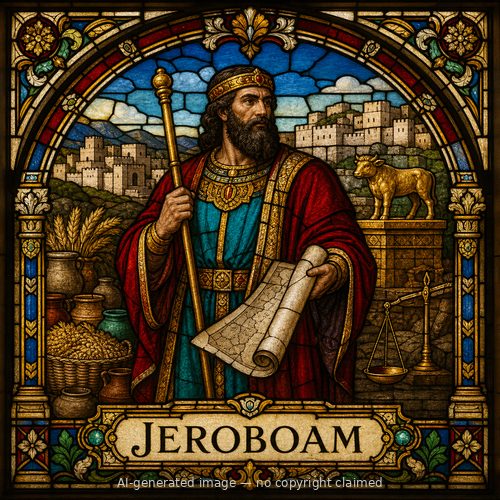
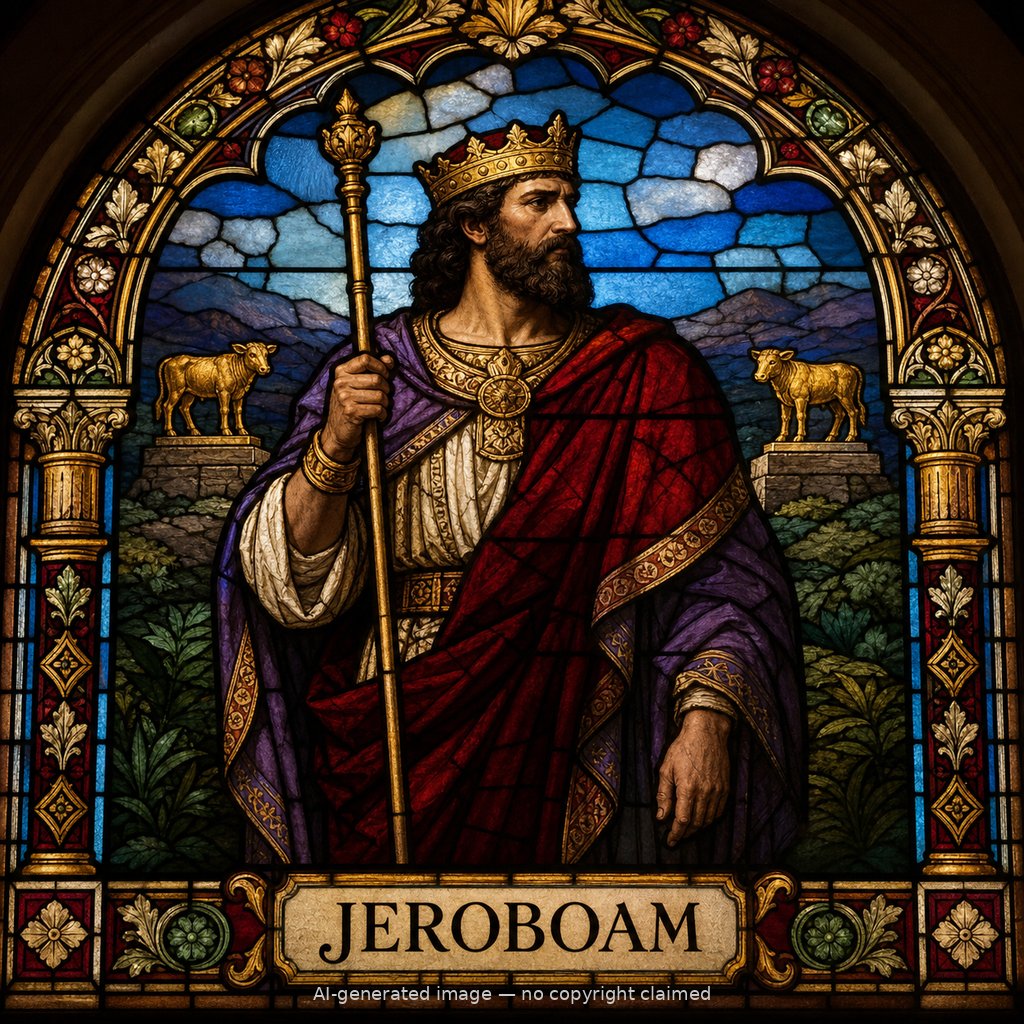
Jeroboam was an official under Solomon whom the prophet Ahijah met on a road and told, by tearing a new garment into twelve pieces, that God was giving him ten tribes as judgment on Solomon's idolatry — with a conditional promise of an enduring dynasty if Jeroboam kept God's statutes like David (1 Kings 11:26-38). Solomon tried to kill him, and Jeroboam fled to Egypt, returning to become king over the ten northern tribes when Rehoboam's harsh answer split the kingdom (1 Kings 11:40; 12:1-20). Rather than trust the promise, Jeroboam feared his people would return to Rehoboam if they kept traveling to Jerusalem to worship, so he made two golden calves at Bethel and Dan and told Israel, "Behold your gods... who brought you up from Egypt," installing his own priests against the first and second commandments (1 Kings 12:26-33). A man of God confronted him at Bethel's altar; it split, and Jeroboam's hand withered when he ordered the prophet seized, restored only after the prophet's prayer — yet Jeroboam did not turn from his evil way (1 Kings 13:1-34). This became Scripture's standing indictment of the whole northern kingdom: king after king is measured by whether he "walked in the sin of Jeroboam," and 2 Kings 17:21-22 ties Israel's exile directly to this legacy. Ahijah later told Jeroboam's wife their sick son alone would be mourned, and the rest of his house swept away — fulfilled when Baasha assassinated Jeroboam's son and successor Nadab (1 Kings 14:1-18; 15:27-29).
Thought for Today
God offered Jeroboam an enduring dynasty if he would simply keep His statutes, but Jeroboam trusted his own fear more than the promise and built two golden calves instead. Jesus is the king we can actually trust with our future, so we don't have to protect ourselves the way Jeroboam tried to protect his throne.
References: 1 Kings 11:26-40; 1 Kings 12:2-32; 1 Kings 13:1-34; 1 Kings 14:1-30; 1 Kings 15:1-34; 1 Kings 16:2-31; 1 Kings 21:22; 1 Kings 22:52; 2 Kings 3:3; 2 Kings 9:9; 2 Kings 10:29-31; 2 Kings 13:2-11; 2 Kings 14:24; 2 Kings 15:9-24; 2 Kings 17:21-22; 2 Kings 23:15; 1 Chronicles 5:17; 2 Chronicles 9:29; 2 Chronicles 10:2-15; 2 Chronicles 11:4-14; 2 Chronicles 12:15; 2 Chronicles 13:1-20
Genealogy
Connections
- Nebat (M) — begot → Jeroboam (M)
- Zeruah (F) — bore → Jeroboam (M)
- Jeroboam (M) — begot → Abijah (M)
- Jeroboam (M) — begot → Nadab (M)
- Ahijah (M) — prophesied to → Jeroboam (M)
Ahijah tore his cloak into twelve pieces to announce that Jeroboam would rule ten tribes, then later pronounced judgment on his house for its idolatry.
1 Kings 11:29-39; 1 Kings 14:1-18
Places
- Bethel — set up one of his two golden calves in this town
1 Kings 12:28-29
- Egypt
- Kingdom of Israel — its first king, who set up the golden calves at Bethel and Dan
1 Kings 12:20; 1 Kings 12:28
- Shechem — rebuilt this town and first reigned from it
1 Kings 12:25