 Lives of Scripture
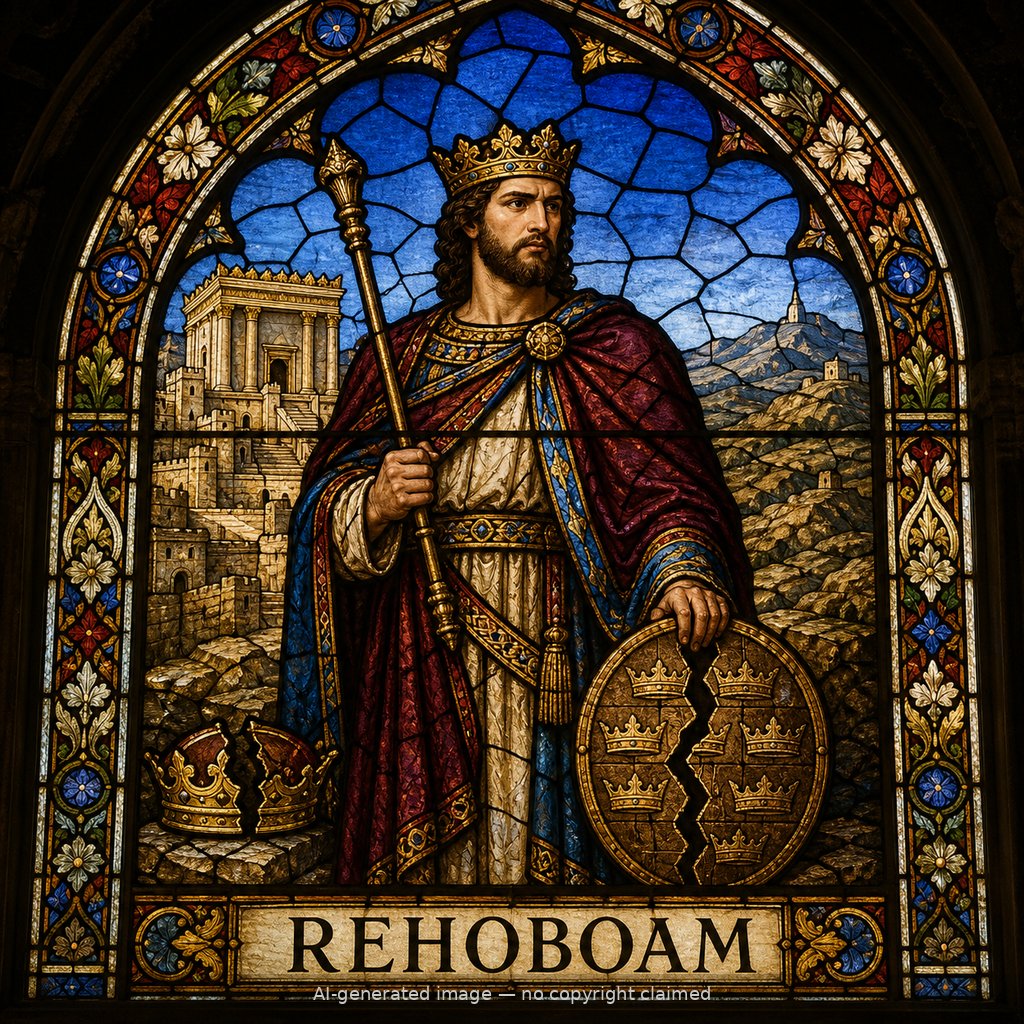
Rehoboam (M)
First named in 1 Kings 11:40-43
Rehoboam inherited Solomon's throne and, at Shechem, was asked by the northern tribes to lighten the harsh labor Solomon had imposed. Rejecting his father's experienced elders for the bravado of the young men he'd grown up with, Rehoboam answered, "My father disciplined you with whips, but I will discipline you with scorpions" (1 Kings 12:1-14). The ten northern tribes rebelled immediately, crowning Jeroboam king over Israel and leaving Rehoboam only Judah and Benjamin — Scripture calls this "a turn of events from the LORD," fulfilling judgment on Solomon's idolatry even though Rehoboam's own folly triggered it (1 Kings 12:15-24; 11:11-13). Rehoboam fortified Judah's cities and, for a time, walked in some faithfulness, but once established he "abandoned the law of the LORD, and all Israel with him," reviving the pagan high places Solomon had allowed (2 Chronicles 12:1). In his fifth year, Pharaoh Shishak invaded and stripped the temple and palace treasures, including Solomon's gold shields — a humiliation Scripture attributes directly to Judah's unfaithfulness (1 Kings 14:25-28; 2 Chronicles 12:2-12). When Rehoboam and his officials humbled themselves at the prophet Shemaiah's warning, God tempered the judgment, sparing Jerusalem from destruction even though Shishak still plundered it. Rehoboam remained in David's line despite the split, so the covenant promise to David's house continued through him toward Christ (Matthew 1:7).
Thought for Today
Rehoboam's pride split a kingdom, but God's promise to David held anyway. Our mistakes can't break God's plans.
References: 1 Kings 11:40-43; 1 Kings 12:1-27; 1 Kings 14:21-31; 1 Kings 15:6; 1 Chronicles 3:10; 2 Chronicles 9:31; 2 Chronicles 10:1-18; 2 Chronicles 11:1-22; 2 Chronicles 12:1-16; 2 Chronicles 13:7; Matthew 1:7
Genealogy
Connections
- Ancestor of Christ (Matthew 1:7)
- Solomon (M) — begot → Rehoboam (M)
- Naamah (F) — bore → Rehoboam (M)
- Rehoboam (M) — begot → Abijah (M)
- Rehoboam (M) — begot → Jeush (M)
- Rehoboam (M) — begot → Shemariah (M)
- Rehoboam (M) — begot → Zaham (M)
- Rehoboam (M) — begot → Attai (M)
- Rehoboam (M) — begot → Ziza (M)
- Rehoboam (M) — begot → Shelomith (M)
- Rehoboam (M) ↔ married ↔ Mahalath (M)
- Shemaiah (M) — restrained → Rehoboam (M)
Shemaiah stopped Rehoboam from marching to war against the ten northern tribes, then later rebuked Judah's leaders during Shishak's invasion.
1 Kings 12:21-24; 2 Chronicles 12:5-8
Places
- Jerusalem
- Kingdom of Judah — its first king, in whose reign the kingdom split from Israel
1 Kings 12:17-19
- Shechem — came here to be made king, and lost the ten northern tribes
1 Kings 12:1-16