Lives of Scripture
Nadab (M)
First named in 1 Kings 14:20
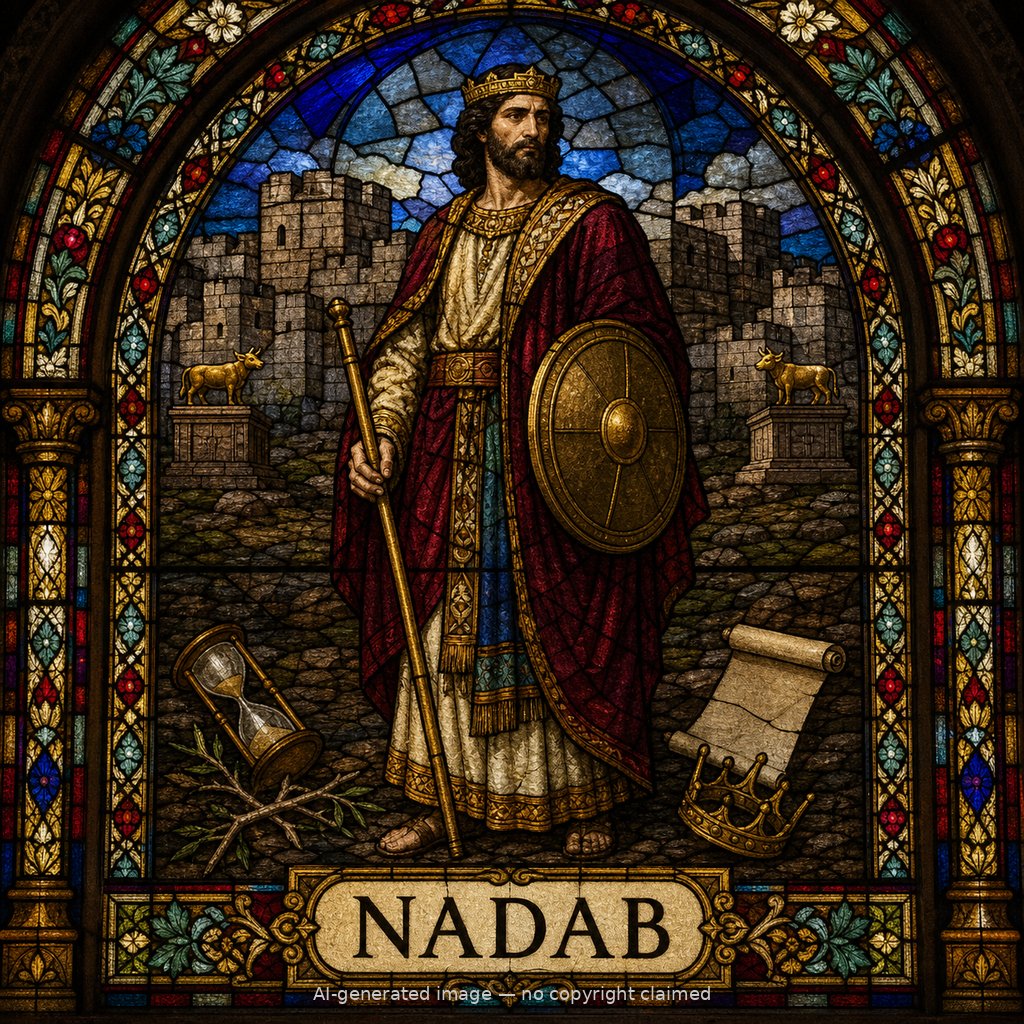
Nadab succeeded his father Jeroboam I as king of the northern kingdom of Israel and reigned two years (1 Kings 15:25). Like his father, he 'did evil in the sight of the LORD, walking in the way of his father and in his sin which he made Israel sin' (15:26) -- a reference to Jeroboam's establishment of alternative worship centers with golden calves at Bethel and Dan to keep his subjects from returning their allegiance to Jerusalem. While Nadab and all Israel were besieging the Philistine city of Gibbethon, Baasha of the tribe of Issachar conspired against him and struck him down (15:27). Baasha then seized the throne and, in a further act of violence, 'killed all the household of Jeroboam. He did not leave to Jeroboam any persons alive, until he had destroyed him' (15:29). The narrator explicitly connects this bloody purge to prophecy: it happened 'according to the word of the LORD which He spoke by His servant Ahijah the Shilonite,' who had earlier warned that Jeroboam's dynasty would be utterly cut off because of his idolatry (14:10-11; 15:29). Nadab's brief, unremarkable reign and violent end mark the collapse of Israel's first royal dynasty, setting the pattern of instability and bloody usurpation that would recur throughout the northern kingdom's history.
Thought for Today
Nadab's death fulfilled exactly what the LORD had spoken through the prophet Ahijah. Every promise of God, whether judgment or blessing, is fulfilled just as certainly in Jesus.
References: 1 Kings 14:20; 1 Kings 15:25-31
Genealogy
Connections
Places
Other people named Nadab