 Lives of Scripture
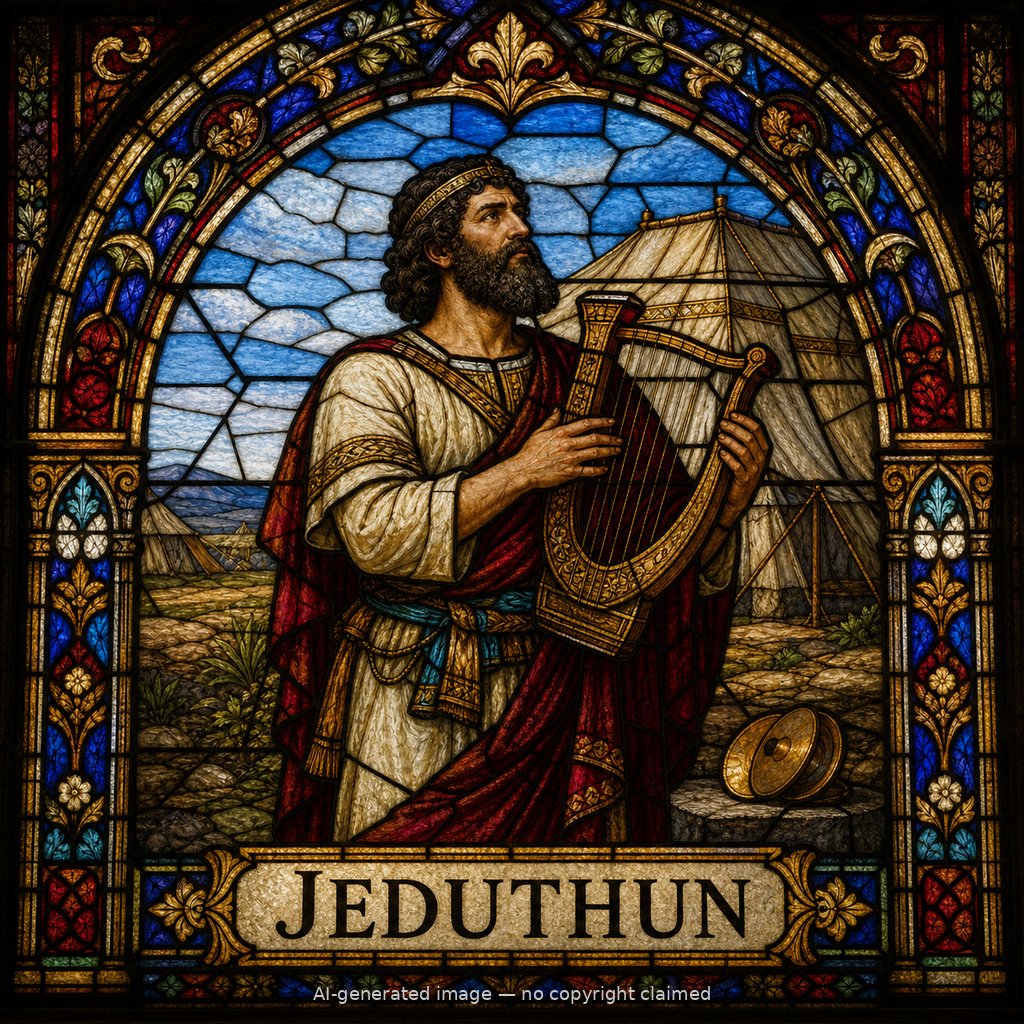
Jeduthun (M)
First named in 1 Chronicles 9:16
When David brought the ark of the covenant to Jerusalem and organized worship there, he appointed Jeduthun, along with Asaph and Heman, over the service of song (1 Chronicles 16:41-42; 25:1). Jeduthun's sons were set apart "to prophesy with the lyre in giving thanks and praising the LORD" (25:1, 3), and his family became one of the twenty-four courses of Levitical musicians who ministered in rotation at the sanctuary (25:1-6; 9:16). Three psalms carry his name in their titles -- Psalms 39, 62, and 77 -- traditionally understood as psalms performed "according to Jeduthun," possibly indicating a musical style or choir associated with his line. Jeduthun's family's ministry outlasted his own lifetime by centuries: his descendants sang at the dedication of Solomon's temple (2 Chronicles 5:12), took part in Hezekiah's reconsecration of the temple (29:14), and served again at Josiah's great Passover celebration, where Jeduthun himself is remembered by the striking title "the king's seer" (35:15) -- language elsewhere reserved for prophets who spoke on the king's behalf. Jeduthun's story is less a single dramatic episode than a lifelong, generational vocation: leading God's people in sung worship that Scripture treats as itself a form of prophetic proclamation, faithfully carried on by his family long after him.
Thought for Today
Jeduthun led God's people in sung worship that Scripture calls a form of prophecy. Jesus is the one our worship has always pointed toward, in song or word.
References: 1 Chronicles 9:16; 1 Chronicles 16:38-42; 1 Chronicles 25:1-6; 2 Chronicles 5:12; 2 Chronicles 29:14; 2 Chronicles 35:15; Nehemiah 11:17; Psalms 39:0; Psalms 62:0; Psalms 77:0