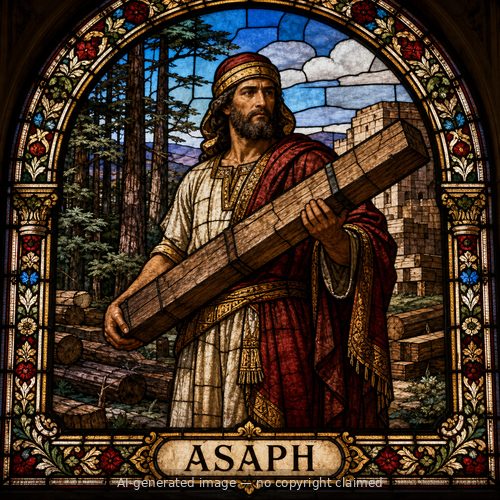
Lives of Scripture
Asaph (M)
First named in 1 Chronicles 6:39
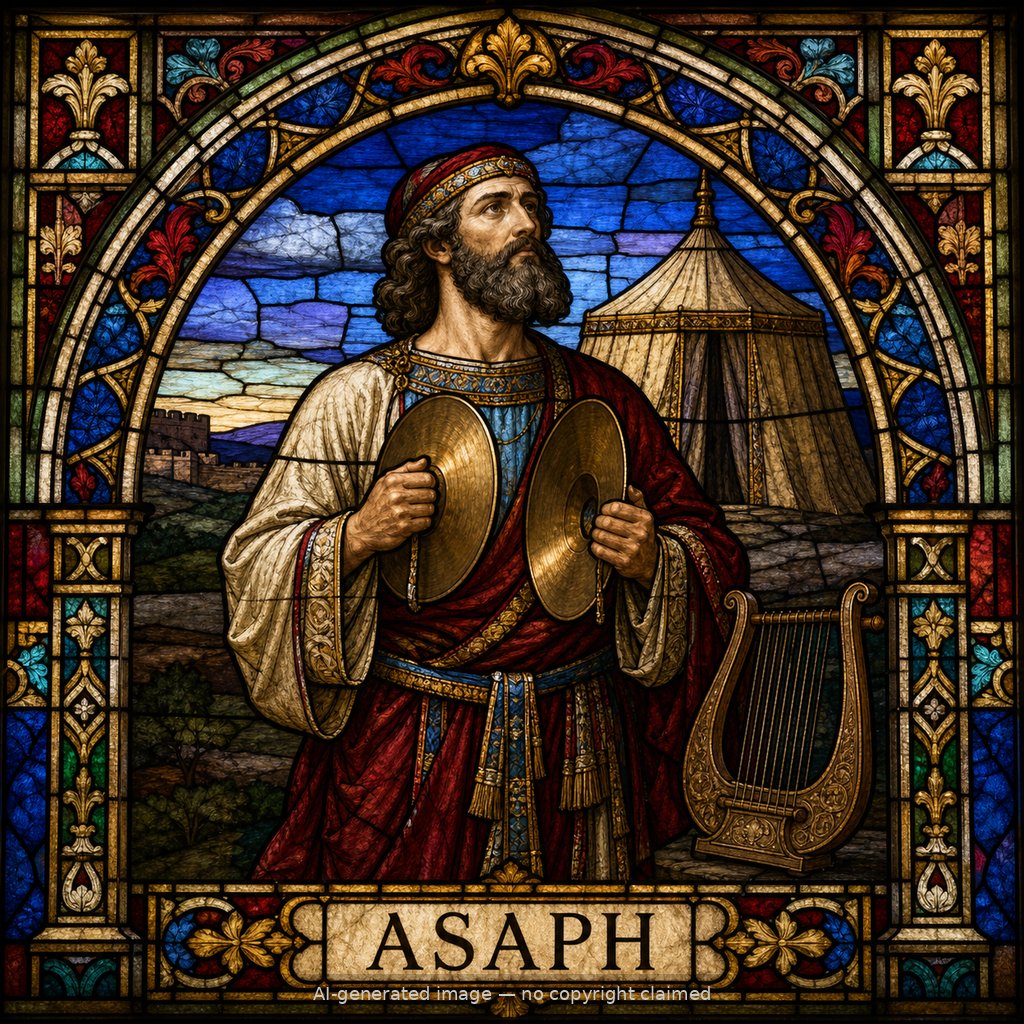
Asaph, a Levite of the Kohathite line and son of Berechiah, was among the musicians David appointed when the ark of the covenant was brought up to Jerusalem, given bronze cymbals to sound aloud (1 Chronicles 15:16-19). When the ark arrived, David placed a psalm of thanksgiving "into the hand of Asaph and his relatives" to sing before it -- a song of praise recorded in 1 Chronicles 16:8-36, celebrating God's covenant faithfulness to Israel. David later organized Asaph's family formally among the Levites "who prophesied with lyres, harps, and cymbals," appointing Asaph's sons by lot to their divisions of temple service (1 Chronicles 25:1-9). Scripture calls him "Asaph the seer" (2 Chronicles 29:30), pairing his music with prophetic authority, and Psalm 50 bears his name in its title. Generations later, when Hezekiah restored temple worship, the Levites sang praise using "the words of David and Asaph the seer" (2 Chronicles 29:30), and after the exile Asaph's descendants -- still called "the sons of Asaph" -- resumed the ministry of song at the rebuilt temple (Nehemiah 12:35-46). Asaph's own name endured for centuries as shorthand for the office he founded: leading God's people in sung praise. His life shows worship as an appointed, disciplined ministry, not an afterthought -- a craft entrusted by a king to a family that carried it forward long after he was gone.
Thought for Today
David placed a psalm of thanksgiving directly into Asaph's hands to sing before the ark, and generations later Hezekiah's Levites were still singing "the words of David and Asaph the seer." Worship Asaph led outlived him by centuries, the way every act of praise pointed toward the greater King, Jesus, still being worshiped today.
References: 1 Chronicles 6:39; 1 Chronicles 15:17-19; 1 Chronicles 16:5-37; 1 Chronicles 25:1-9; 2 Chronicles 5:12; 2 Chronicles 29:13-30; Nehemiah 12:35-46; Psalms 50:0
Genealogy
Connections
Places
Other people named Asaph