 Lives of Scripture
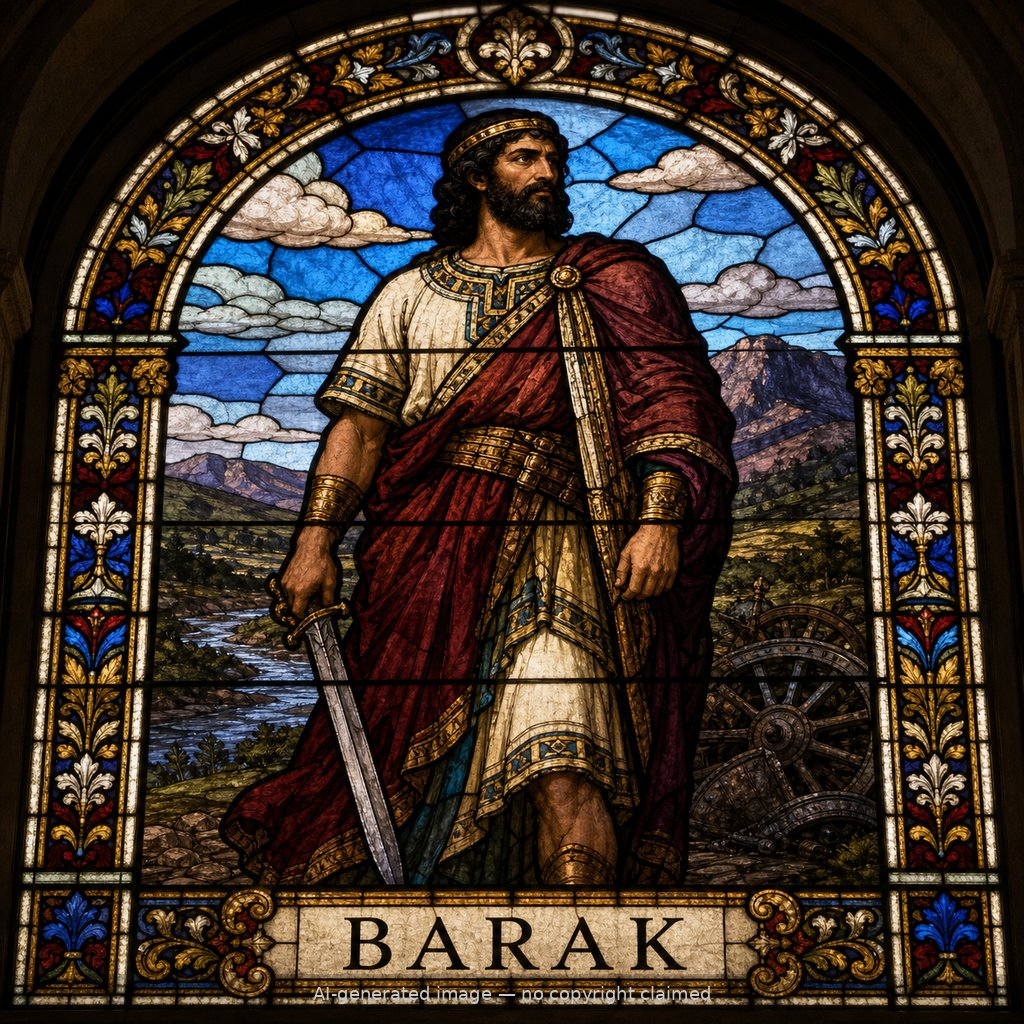
Barak (M)
First named in Judges 4:6-24
Barak, from Kedesh in Naphtali, was summoned by the prophetess and judge Deborah with God's specific battle plan: gather ten thousand men from Naphtali and Zebulun at Mount Tabor, and God would draw out Sisera, commander of Canaan's oppressive army with its 900 iron chariots, to be defeated at the Kishon river (Judges 4:6-7). Barak's response reveals a real, if imperfect, faith: 'If you will go with me, then I will go; but if you will not go with me, I will not go' (4:8) -- he was willing to obey, but only with Deborah's presence assuring him of God's guidance. Deborah agreed to accompany him, though she told him the LORD would deliver Sisera 'into the hands of a woman,' a statement whose fulfillment came not through her but through Jael (4:9, 17-22). Barak did lead the assault that routed Sisera's chariots and army completely, pursuing the survivors himself, even though Sisera fled the scene before Barak could capture him personally (4:14-16, 22). Afterward Barak joined Deborah in the extended victory song of Judges 5, praising God's intervention. Despite his initial hesitation, Hebrews 11:32 lists Barak among the great heroes of faith, alongside Gideon, Samson, and David -- Scripture's own verdict that Barak's obedience, even when it required reassurance, still counted as genuine faith that accomplished God's purposes for Israel.
Thought for Today
Barak agreed to lead Israel's army against Sisera's iron chariots only on the condition Deborah went with him, an honest, hesitant kind of faith rather than a bold one. Jesus doesn't wait for faith to be fearless before He uses it; Hebrews 11 lists Barak among the heroes anyway.
References: Judges 4:6-24; Judges 5:1-15; Hebrews 11:32
Genealogy
Connections
Places
- Kedesh
- Mount Tabor — mustered ten thousand men on this mountain before routing Sisera
Judges 4:6; Judges 4:14