Lives of Scripture
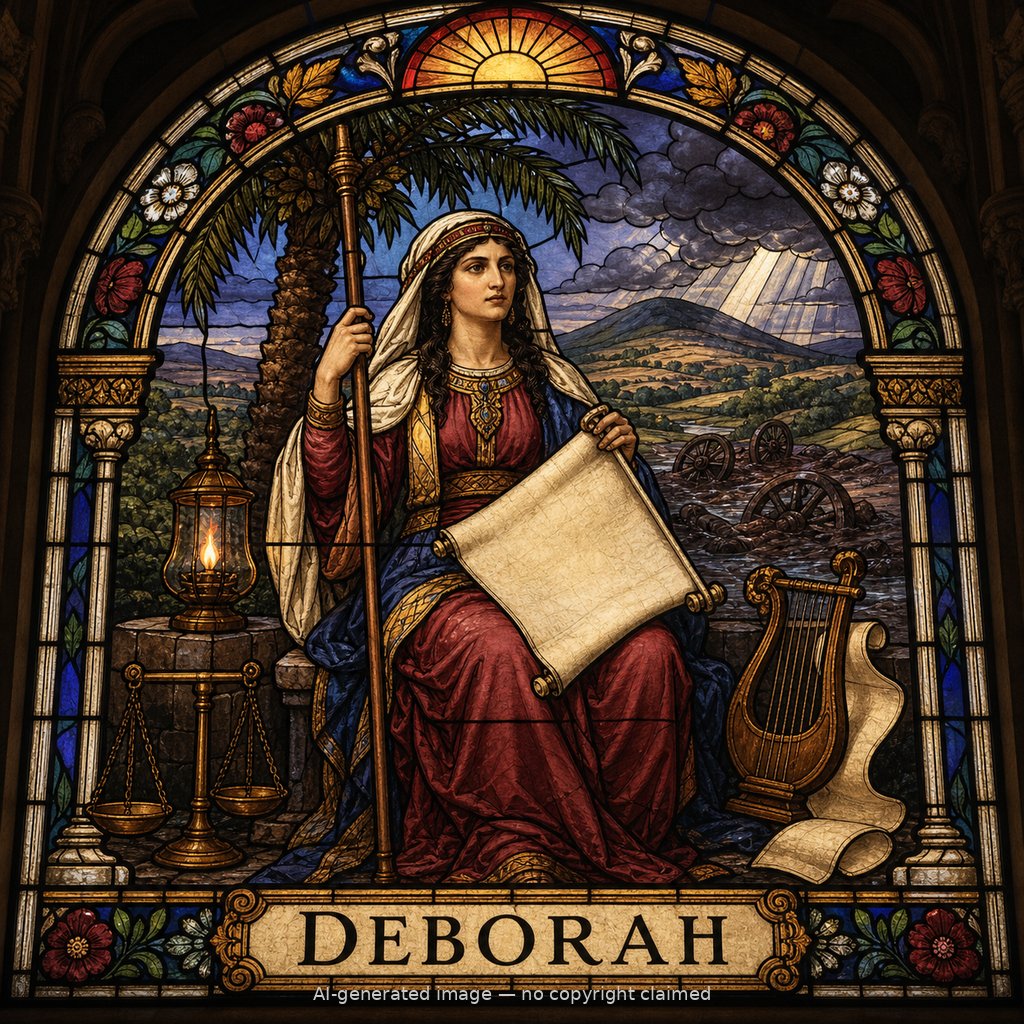
Deborah (F)
First named in Judges 4:1-24
Deborah, a prophetess, was already judging Israel -- settling disputes beneath a palm tree in the hill country of Ephraim -- when Israel had been oppressed for twenty years by Jabin, king of Canaan, and his army commander Sisera, who had 900 iron chariots (Judges 4:1-5). Deborah summoned Barak and relayed God's specific command: gather ten thousand men at Mount Tabor, and God would draw Sisera's army to the Kishon river and give Israel the victory (4:6-7). Barak agreed only on the condition that Deborah go with him, to which she consented, though she told him plainly that the honor of the victory would then go to a woman instead of to him (4:8-9) -- a prophecy fulfilled not by Deborah but by Jael, who killed the fleeing Sisera in her tent (4:17-22). Israel's forces routed Sisera's army completely at Deborah's word (4:14-16). Afterward, Deborah and Barak together sang an extended victory song, one of the oldest poetic texts in Scripture, recounting God's intervention, praising Jael's act, and closing with a prayer that all God's enemies would perish while those who love Him would 'be like the rising of the sun in its might' (Judges 5:1-31). Deborah's leadership as judge and prophetess, in a period otherwise marked by repeated cycles of Israel's unfaithfulness, stands as a clear instance of God raising up capable, faithful leadership wherever He chose.
Thought for Today
Deborah trusted God's word completely and led Israel to a victory only God could win. Jesus leads us to a victory over sin we could never win ourselves.
References: Judges 4:1-24; Judges 5:1-31
Genealogy
Connections
Places
- Bethel
- Hill Country of Ephraim — judged Israel under her palm in this hill country
Judges 4:5
- Mount Tabor — sent Barak down from this mountain against Sisera's army
Judges 4:6; Judges 4:14