 Lives of Scripture
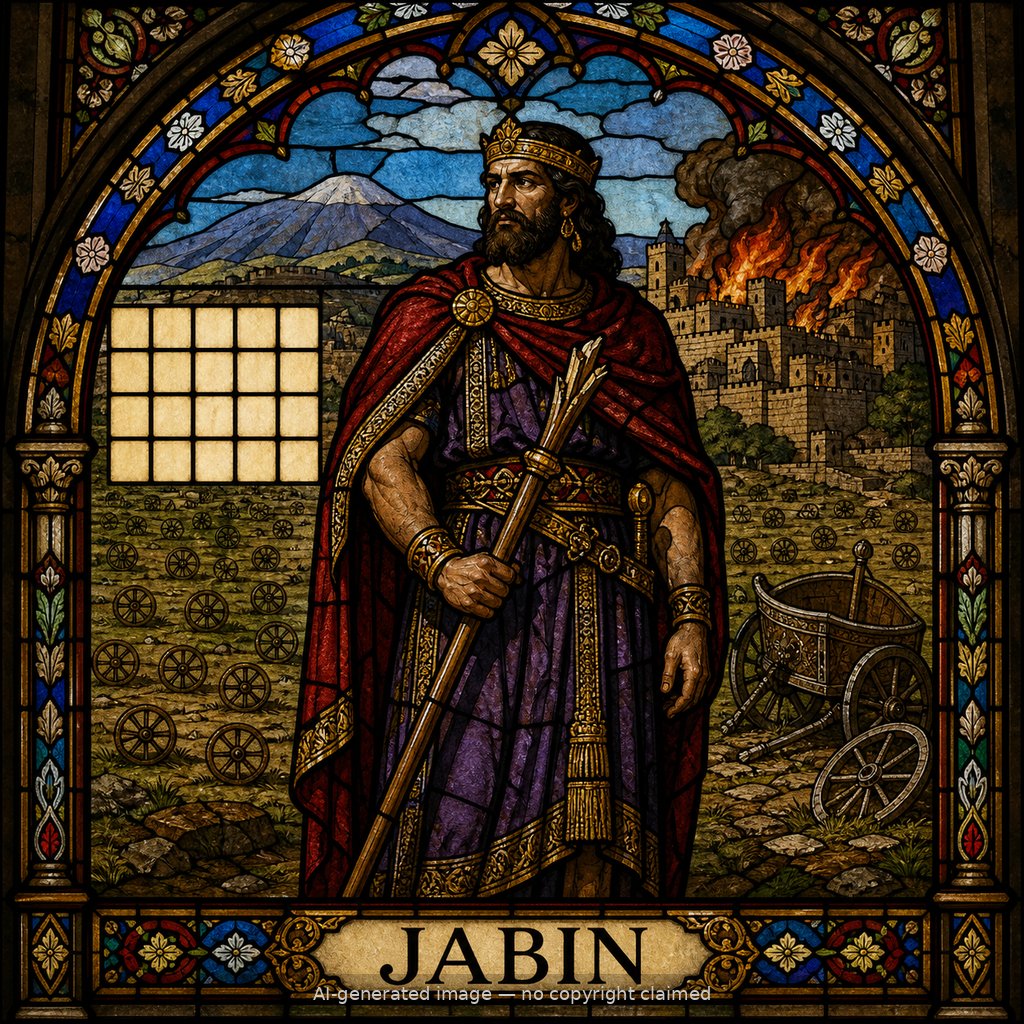
Jabin (M)
First named in Joshua 10:33
Jabin, king of Hazor, first appears leading a coalition of northern Canaanite kings against Joshua's invading Israelites; Joshua defeated the coalition at the waters of Merom, captured Hazor -- "the head of all these kingdoms" -- and burned it (Joshua 11:1-11). Generations later, in the days of the judges, Scripture again names a King Jabin of Canaan, reigning at Hazor, whose army commander Sisera oppressed Israel with nine hundred iron chariots for twenty years (Judges 4:2-3). Israel cried out to the LORD, and the prophetess and judge Deborah summoned Barak to lead ten thousand men against Sisera's forces at Mount Tabor. The LORD threw Sisera's army into confusion; his entire army fell by the sword, and Sisera himself was killed by Jael, driving a tent peg through his temple while he slept (4:14-22). "So on that day God subdued Jabin the king of Canaan before the sons of Israel" (4:23), and Israel's hand grew stronger against him until he was destroyed (4:24). Psalm 83:9 later recalls Jabin and Sisera together as a byword for enemies God has decisively judged. Whether one dynasty or two bore the name, Jabin's story frames a recurring pattern in Israel's history: opposition raised against God's people, and God's deliverance breaking it.
Thought for Today
Jabin's chariots oppressed Israel for twenty years until God subdued him through Deborah, Barak, and Jael. Jesus breaks the power of every oppressor that holds God's people captive.
References: Joshua 10:33; Joshua 11:1; Joshua 12:12; Judges 4:2-24; Psalms 83:9
Genealogy
Father
—Mother
—Spouse(s)
—Children
—Places
- Hazor — a king of this city, defeated by Joshua and, later, under Deborah and Barak
Joshua 11:1; Judges 4:2