 Lives of Scripture
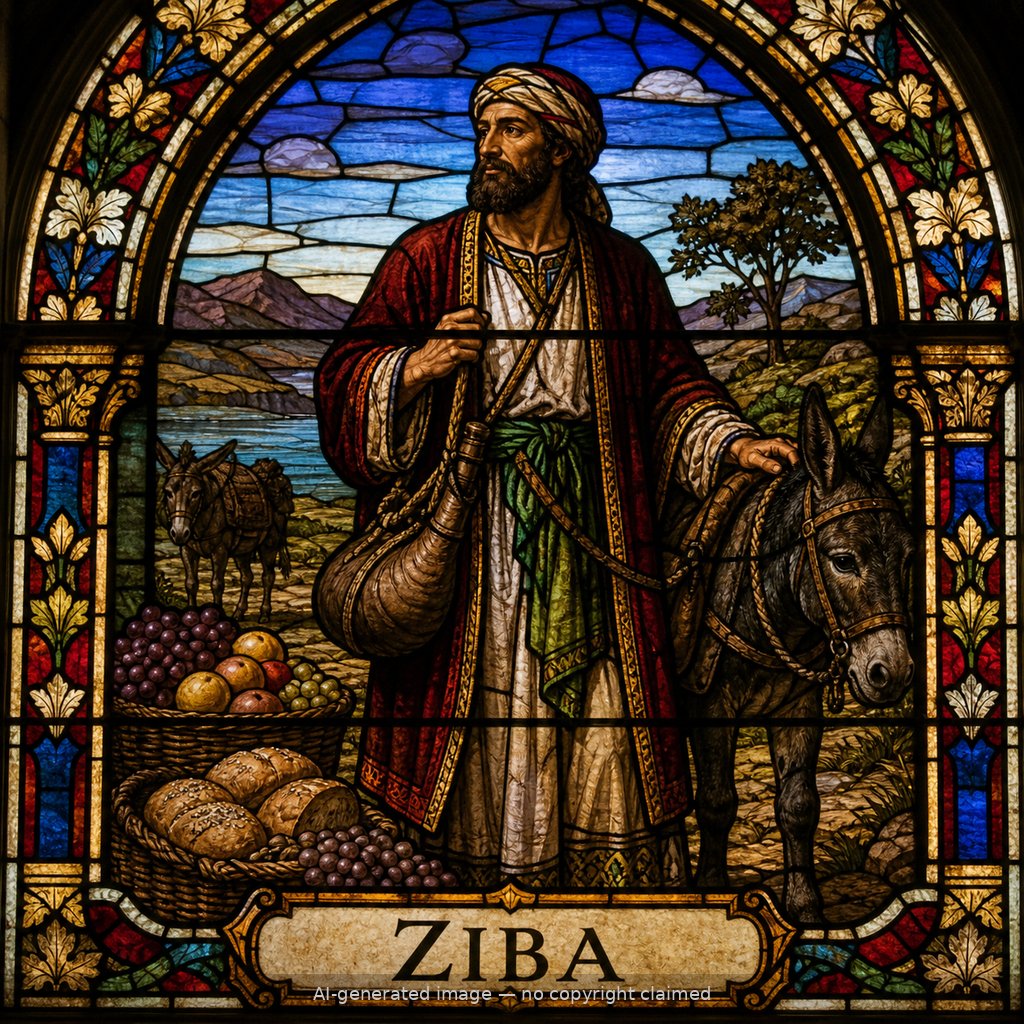
Ziba (M)
First named in 2 Samuel 9:2-12
Ziba had been a servant in Saul's household with fifteen sons and twenty servants of his own (2 Samuel 9:10). When David sought out any survivor of Saul's line to "show the kindness of God," Ziba directed him to Mephibosheth, and David placed Ziba in charge of farming Mephibosheth's restored land and provisions (9:1-12). Years later, as David fled Jerusalem during Absalom's revolt, Ziba met him with donkeys, bread, raisins, summer fruit, and wine -- welcome provision for a king in flight -- and told David that Mephibosheth had stayed behind, hoping Israel would restore Saul's kingdom to him (16:1-4). David believed him on the spot and gave Ziba everything that had belonged to Mephibosheth. When David returned victorious, however, Mephibosheth insisted Ziba had slandered him, deceiving him and leaving him behind despite his loyalty (19:24-30). Scripture records both claims without settling which man told the truth; David, unable or unwilling to judge the matter further, simply divides the land between them (19:29). Ziba's story stands as one of Scripture's honest, unresolved cases -- a reminder that not every account in the biblical narrative comes with the truth clearly adjudicated for the reader, and that political loyalty in a time of crisis is not always what it appears.
Thought for Today
Ziba and Mephibosheth each accused the other, and Scripture never tells us which man told the truth -- David simply divided the land between them. We won't always get resolution or vindication in this life either, but Jesus knows exactly what's true even when no one else can judge it.
References: 2 Samuel 9:2-12; 2 Samuel 16:1-4; 2 Samuel 19:17-29