Lives of Scripture
Sheba (M)
First named in 2 Samuel 20:1-22
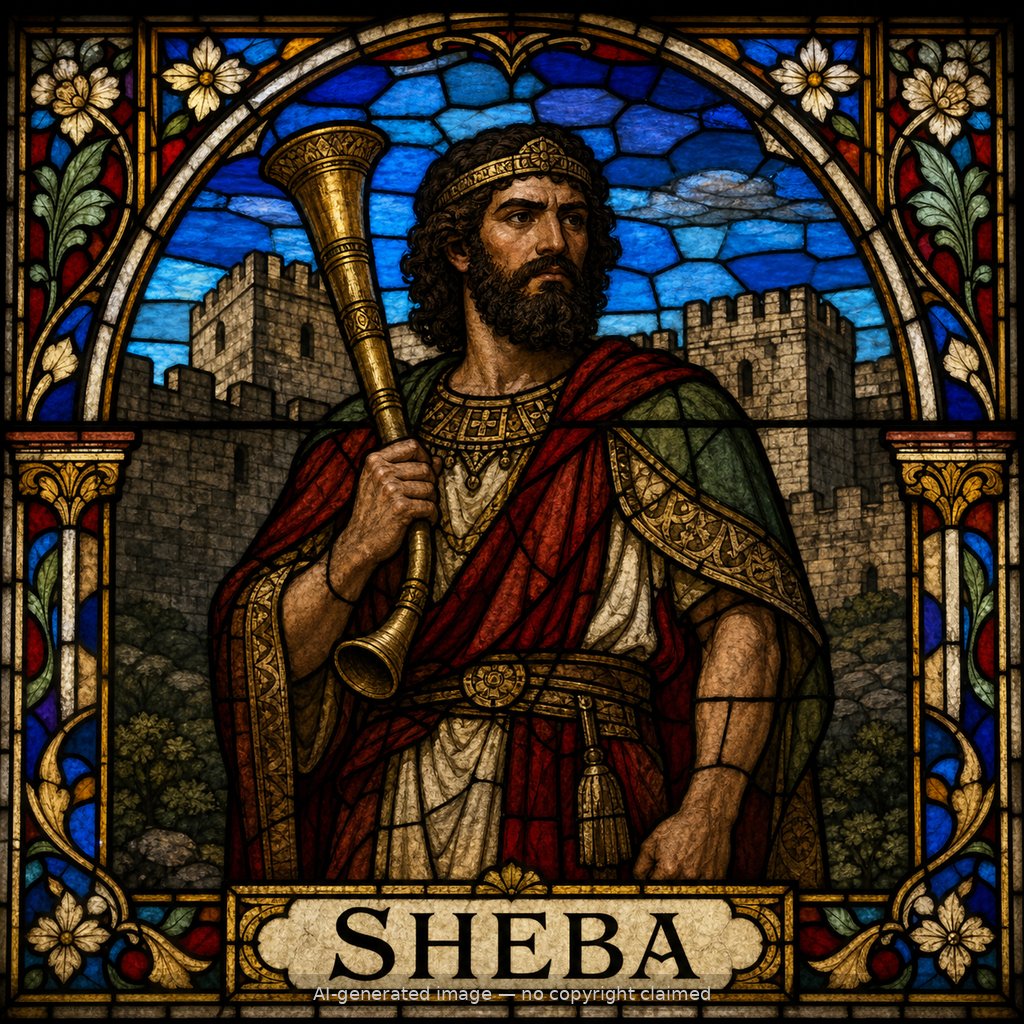
Sheba son of Bichri, a Benjamite, exploited the raw tension between Israel and Judah in the chaotic aftermath of Absalom's failed rebellion. When a dispute broke out over which tribes had the greater claim on David, Sheba blew a trumpet and cried, "We have no portion in David... every man to his tents, O Israel!" -- and the men of Israel abandoned David to follow him, leaving only Judah loyal to the king (2 Samuel 20:1-2). David, wary of a second uprising so soon after Absalom's, sent Amasa to muster Judah's forces, then Abishai, and finally Joab took command and pursued Sheba north (20:4-13) -- along the way Joab murdered Amasa, his rival for command, in cold blood (20:9-10). Joab besieged Sheba inside Abel Beth-maacah and began battering the wall. A "wise woman" of the city called out to Joab, negotiated on the city's behalf, and persuaded her fellow citizens to end the siege by giving up the rebel: "they cut off the head of Sheba the son of Bichri and threw it to Joab" (20:14-22). Joab blew the trumpet, withdrew his army, and the revolt collapsed as quickly as it began. Sheba's brief rebellion shows how fragile David's kingdom remained even after Absalom's defeat, and how ruthlessly -- and effectively -- Joab was willing to act to hold it together.
Thought for Today
One guilty man's death spared a whole city from Joab's siege. Jesus went further still -- the innocent One who bore judgment for the guilty.
References: 2 Samuel 20:1-22
Genealogy
Connections
Places
Other people named Sheba