 Lives of Scripture
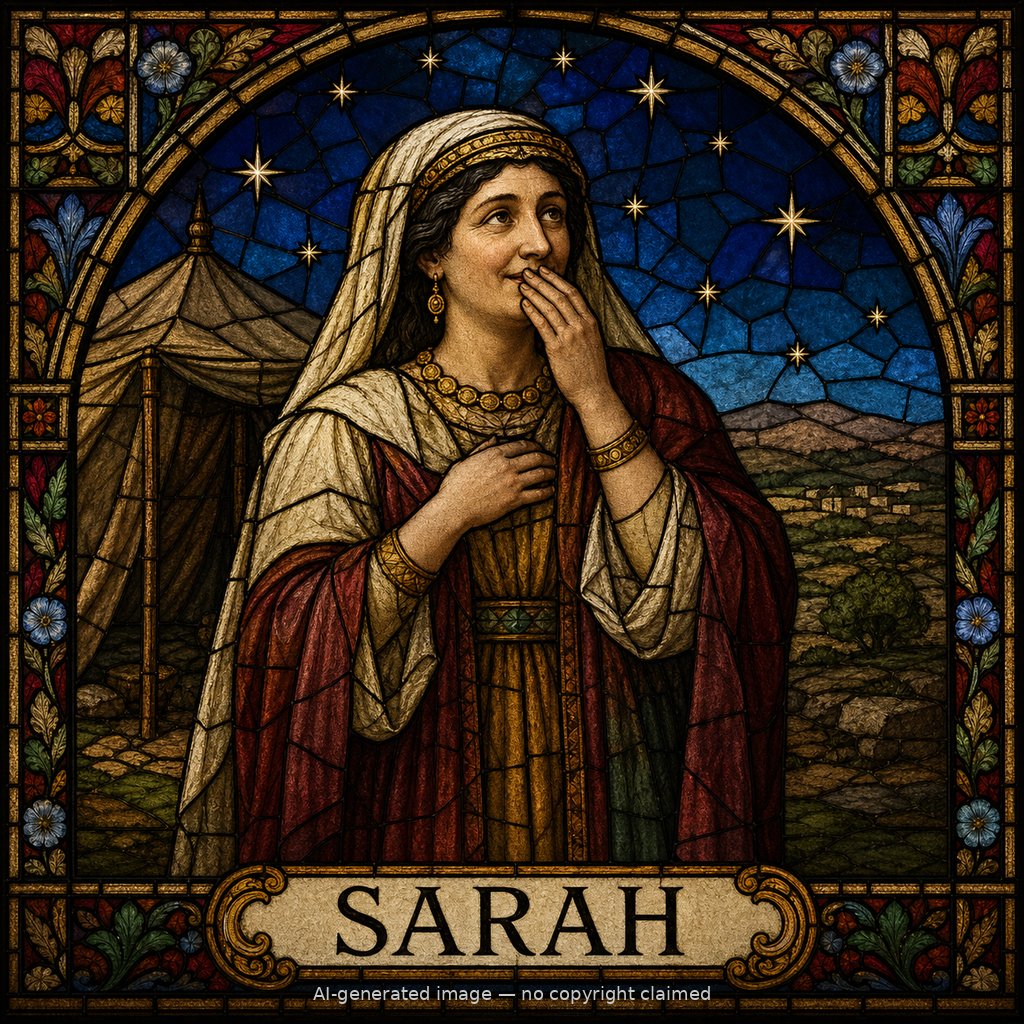
Sarah (F)
First named in Genesis 11:29-31
Sarai left Ur and then Haran with her husband Abram at God's call, carrying the quiet grief of barrenness (Genesis 11:29-31). Twice Abraham told foreign rulers she was only his sister, endangering her until God intervened both times (Genesis 12:10-20; 20). When decades passed without a child, Sarai gave her servant Hagar to Abram to bear an heir — a solution that produced lasting grief, recorded plainly with neither woman cast simply as villain (Genesis 16:1-6). When the LORD renewed His promise and renamed her Sarah ('princess'), declaring she herself would bear the promised son within the year, Sarah laughed in disbelief at ninety, then denied laughing out of fear — prompting God's reply, 'Is anything too difficult for the LORD?' (Genesis 17:15-21; 18:1-15). The promise held: Isaac was born, and this time Sarah's laughter was pure joy (Genesis 21:1-7). Her hardest moment as a mother came when she saw Hagar's son Ishmael in some way threatening or mocking Isaac and demanded Abraham send both away — a request that distressed Abraham until God told him to listen to her, since the covenant would run through Isaac alone (Genesis 21:8-14). Sarah died at 127 in Hebron; Abraham's purchase of the cave of Machpelah to bury her became Israel's first legal foothold in the promised land (Genesis 23). The New Testament remembers her for faith: Hebrews 11:11 credits her considering God faithful despite her body's inability, and 1 Peter 3:5-6 holds her up as a model of hope set on God.
Thought for Today
Sarah laughed when God said a ninety-year-old woman would have a son, then laughed again, differently, when Isaac was actually born. Jesus's own birth answered an even bigger promise that must have sounded just as impossible when God first gave it.
References: Genesis 11:29-31; Genesis 12:10-20; Genesis 16; Genesis 17:15-21; Genesis 18:1-15; Genesis 20; Genesis 21:1-7; Genesis 23; Hebrews 11:11; 1 Peter 3:5-6
Genealogy
Connections
- Terah (M) — begot → Sarah (F)
- Sarah (F) — bore → Isaac (M)
- Abraham (M) ↔ married ↔ Sarah (F)
- Sarah (F) ↔ clashed with ↔ Hagar (F)
Hagar showed contempt for Sarah once pregnant with Abraham's child, and Sarah in turn dealt harshly with Hagar, then later insisted Abraham cast out both Hagar and Ishmael.
Genesis 16:4-6; Genesis 21:8-14
Places
- Canaan — came to this land with Abraham and was buried at Machpelah
Genesis 23:2; Genesis 23:19
- Egypt
- Haran — left this city with Abraham for the land God promised
Genesis 11:31; Genesis 12:5
- Ur of the Chaldeans — left this city with Abram and Terah for the land of Canaan
Genesis 11:31