 Lives of Scripture
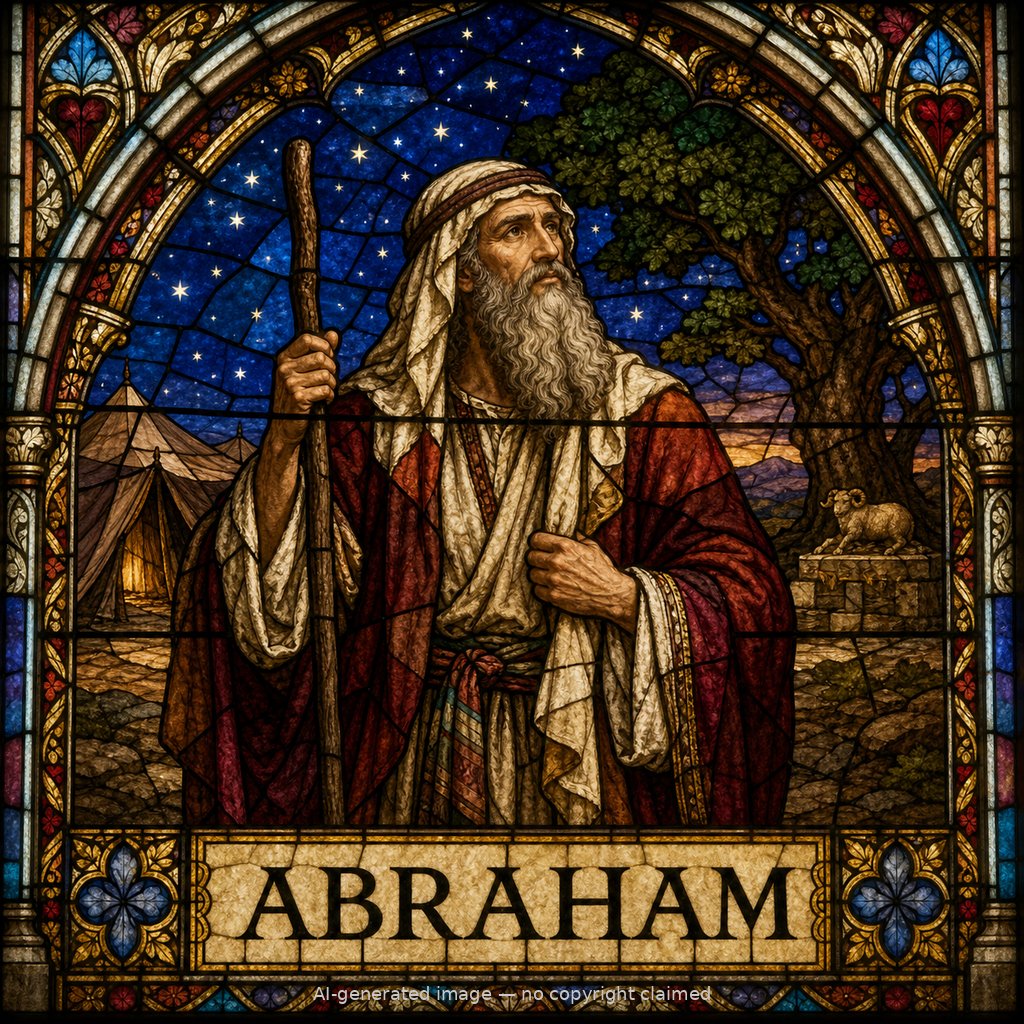
Abraham (M)
First named in Genesis 11:26-25:11
Abram was called from Ur, then Haran, when God commanded him to leave his father's household for a land not yet shown, promising to make him a great nation and bless all earth's families through him (Genesis 12:1-3). At seventy-five, he obeyed — Genesis, Romans, and Hebrews all treat this as the model of justification by faith: he believed God's promise before seeing it fulfilled, and it was credited to him as righteousness (Genesis 15:6; Romans 4:3; Hebrews 11:8-10). That faith did not make him flawless: twice he presented Sarah as only his sister to protect himself from foreign rulers, endangering her both times until God intervened (Genesis 12:10-20; 20). When the promised son delayed for decades, Abram fathered Ishmael through Sarah's servant Hagar instead of waiting on God — a decision producing lasting family grief (Genesis 16). God still kept covenant, renaming him Abraham ('father of many') and sealing it with circumcision (Genesis 17). The covenant's sharpest test came on Mount Moriah, where God commanded Abraham to offer his long-awaited son Isaac; Abraham obeyed to the point of raising the knife before God provided a substitute ram — Scripture's clearest Old Testament picture of a father not withholding his son, read forward to God's own unspared Son (Genesis 22; Romans 8:32). Isaac alone inherited the covenant; Ishmael and Keturah's sons were sent away with gifts (Genesis 21; 25:1-6). Abraham died at 175, still a stranger in the land God promised, looking ahead to a better country (Hebrews 11:13-16).
Thought for Today
Abraham was ready to give his own son back to God, but God provided a way out at the last moment. May we remember that Jesus is God's own Son, given for us.
References: Genesis 11:26-25:11; Romans 4; Hebrews 11:8-19
Genealogy
Connections
- Ancestor of Christ (Matthew 1:1-2)
- Prophesied of Christ (Galatians 3:16)
- Terah (M) — begot → Abraham (M)
- Abraham (M) — begot → Isaac (M)
- Abraham (M) — begot → Ishmael (M)
- Abraham (M) ↔ married ↔ Sarah (F)
- Abraham (M) ↔ married ↔ Hagar (F)
- Abraham (M) — begot → Zimran (M)
- Abraham (M) — begot → Jokshan (M)
- Abraham (M) — begot → Medan (M)
- Abraham (M) — begot → Midian (M)
- Abraham (M) — begot → Ishbak (M)
- Abraham (M) — begot → Shuah (M)
- Abraham (M) ↔ married ↔ Keturah (F)
Places
- Canaan — called to this land and given it by covenant for his offspring
Genesis 12:5-7
- Egypt — went down to this land in a famine and passed Sarah off as his sister
Genesis 12:10-13
- Haran — settled here with Terah, then left at God's call for Canaan
Genesis 11:31; Genesis 12:4
- Ur of the Chaldeans — left this city with his father Terah at the start of the journey to Canaan
Genesis 11:31