 Lives of Scripture
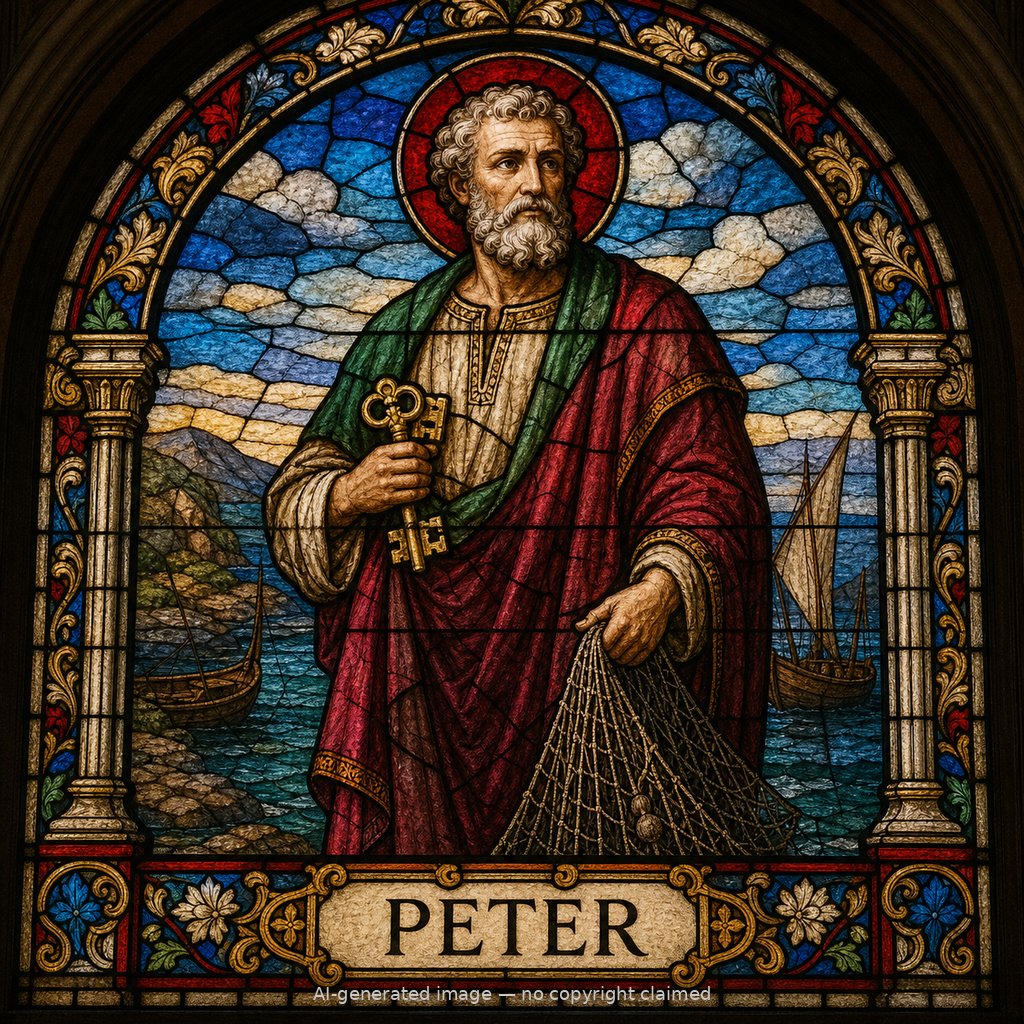
Peter (M)
First named in Matthew 4:18-20
Simon, a Galilean fisherman, was called by Jesus early in His ministry and given the name Peter ('rock'), with his brother Andrew (Matthew 4:18-20; John 1:40-42). He became the most prominent of the twelve apostles — often speaking first, often wrong first. He confessed Jesus as the Christ, the Son of the living God, and heard Jesus call him a rock on which He would build His church (Matthew 16:16-18); minutes later, rebuking Jesus for predicting His own death, Peter was called Satan for setting his mind on man's concerns, not God's (Matthew 16:21-23). Peter walked briefly on water toward Jesus before fear overtook him (Matthew 14:28-31), and at the Last Supper swore he would die before disowning Jesus, only to deny Him three times within hours, exactly as predicted (Matthew 26:33-35, 69-75). Scripture does not omit this collapse to protect Peter's reputation. After the resurrection, the risen Christ restored Peter personally, asking three times whether he loved Him — matching the three denials — and recommissioned him to feed and shepherd His sheep (John 21:15-19). At Pentecost, Peter preached the sermon behind three thousand conversions, and later a vision sent him to the Gentile centurion Cornelius, opening the church's mission beyond Jewish believers (Acts 2; 10). Even after this, Paul publicly opposed Peter at Antioch for withdrawing from table fellowship with Gentile believers under pressure, calling it hypocrisy (Galatians 2:11-14). Tradition, not Scripture, holds Peter was later martyred in Rome, crucified upside down at his own request (John 21:18-19).
Thought for Today
Peter confessed Jesus as 'the Christ, the Son of the living God' one moment and was called Satan the next for arguing with Him minutes later. Jesus doesn't need us to have it all figured out before He uses us; He works through people who get it right and wrong in the same breath.
References: Matthew 4:18-20; Matthew 16:13-23; Matthew 26:69-75; John 21:15-19; Acts 2; Acts 10; Galatians 2:11-14
Genealogy
Connections
- Apostle of Christ (Matthew 10:2-4)
- John (M) — begot → Peter (M)
- Paul (M) ↔ clashed with ↔ Peter (M)
Paul publicly opposed Peter at Antioch, calling him a hypocrite for withdrawing from table fellowship with Gentile believers under pressure from certain Jewish Christians.
Galatians 2:11-14
- Paul (M) ↔ collaborated with ↔ Peter (M)
Paul and Peter stood together at the Jerusalem Council affirming that Gentiles are saved by grace apart from the law.
Acts 15:6-11; Galatians 2:9
New Testament Churches
- Jerusalem — apostle / leading spokesman
Acts 1:15; Acts 2:14-41; Acts 15:7-11; Galatians 2:9
- Antioch (Syria) — publicly rebuked by Paul here for withdrawing from eating with Gentile believers out of fear of the circumcision party
Galatians 2:11-14
Places
- Antioch — ate with Gentiles here until he drew back, and Paul opposed him to his face
Galatians 2:11-14
- Capernaum — the fisherman whose house here Jesus made a base for His Galilean ministry
Mark 1:21; Mark 1:29
- Galilee — a fisherman of this region, leader among the Twelve
Matthew 4:18
- Jerusalem — preached at Pentecost in this city and led its first church
Acts 2:14-41