 Lives of Scripture
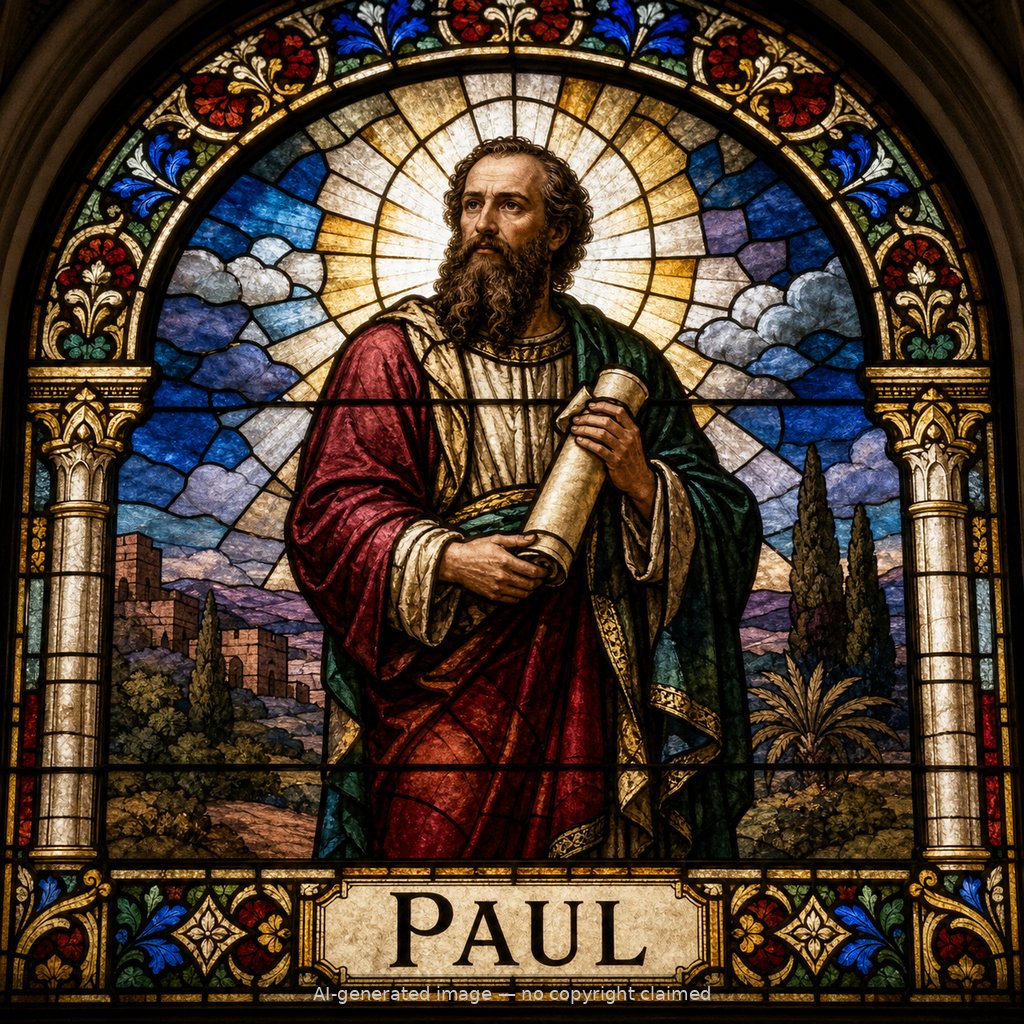
Paul (M)
First named in Acts 9
Saul of Tarsus was a Pharisee, trained under rabbi Gamaliel, and by his own admission a violent persecutor of the church — he approved of Stephen's stoning, dragged believers to prison, and was on his way to Damascus with letters authorizing further arrests when he met the risen Christ in a blinding light (Acts 7:58-8:3; 9:1-9; Galatians 1:13-14). Scripture does not minimize this; Paul calls it out repeatedly, describing himself as formerly a blasphemer, and later the least of the apostles, unworthy to be called one, for persecuting God's church (1 Corinthians 15:9). His conversion was a direct confrontation with Christ, followed by blindness, healing and baptism through a reluctant disciple, Ananias, and time in Arabia before he preached Jesus as God's Son in the very synagogues where he had hunted Christians (Acts 9:10-22; Galatians 1:15-17). Paul became the central figure of the Gentile mission, planting churches across Asia Minor and Greece and writing letters on justification by faith apart from works of the law (Romans 3-4; Galatians 3). He also had real conflict within the church: a sharp disagreement with Barnabas over John Mark split them into separate teams (Acts 15:36-41), and he confronted Peter at Antioch over gospel inconsistency (Galatians 2:11-14). Paul was repeatedly beaten, imprisoned, shipwrecked, and stoned for his preaching, a catalog he lists as evidence of his apostolic authority (2 Corinthians 11:23-28). He was eventually imprisoned in Rome, where the New Testament narrative ends; church tradition, not Scripture, holds he was later executed under Nero.
Thought for Today
Saul approved of Stephen's stoning and was hunting down believers with letters of arrest when the risen Christ confronted him in blinding light on the Damascus road. Jesus can interrupt anyone's life at its most hostile moment and turn a persecutor into a preacher of the very faith he tried to destroy.
References: Acts 9; Acts 13-28; Galatians 1-2; 1 Corinthians 15:9-10; 2 Corinthians 11:23-28
Genealogy
Father
—Mother
—Spouse(s)
—Children
—Connections
- Apostle of Christ (Acts 14:14)
- Witness to Christ (Acts 9:3-6)
- Paul (M) ↔ clashed with ↔ Peter (M)
Paul publicly opposed Peter at Antioch, calling him a hypocrite for withdrawing from table fellowship with Gentile believers under pressure from certain Jewish Christians.
Galatians 2:11-14
- Paul (M) ↔ collaborated with ↔ Peter (M)
Paul and Peter stood together at the Jerusalem Council affirming that Gentiles are saved by grace apart from the law.
Acts 15:6-11; Galatians 2:9
New Testament Churches
- Antioch (Syria) — taught here for a year before being sent out with Barnabas on the first missionary journey
Acts 11:25-26; Acts 13:1-3
- Antioch (Pisidia) — preached in the synagogue; expelled from the region by opponents
Acts 13:14-51
- Iconium — preached with Barnabas; fled a stoning plot
Acts 14:1-6; 2 Timothy 3:11
- Lystra — preached with Barnabas; stoned and left for dead, survived and returned
Acts 14:8-20; 2 Timothy 3:11
- Derbe — preached with Barnabas, making many disciples
Acts 14:20-21
- Philippi — founding missionary
Acts 16:12-40
- Thessalonica — founding missionary
Acts 17:1-4; 1 Thessalonians 1:1
- Berea — founding missionary
Acts 17:10-14
- Athens — reasoned in the synagogue and marketplace, then addressed the Areopagus
Acts 17:16-34
- Corinth — founding missionary, stayed eighteen months
Acts 18:1-11
- Ephesus — founding and long-term missionary, about three years
Acts 19:1-41; Acts 20:17-38
- Rome — wrote to this church before visiting; later arrived and preached under house arrest
Acts 28:14-31; Romans 1:1-15
- Troas — preached through the night here on his final journey to Jerusalem
Acts 20:6-12
Places
- Asia Minor — evangelized much of this region on his missionary journeys
Acts 16:6; Acts 19:10
- Damascus — blinded on the road to this city and baptized here
Acts 9:3-19
- Greece
- Jerusalem — seized in the temple here and arrested by the Roman guard
Acts 21:27-33
- Rome — brought here as a prisoner, and preached the kingdom under guard
Acts 28:16; Acts 28:30-31
- Tarsus