 Lives of Scripture
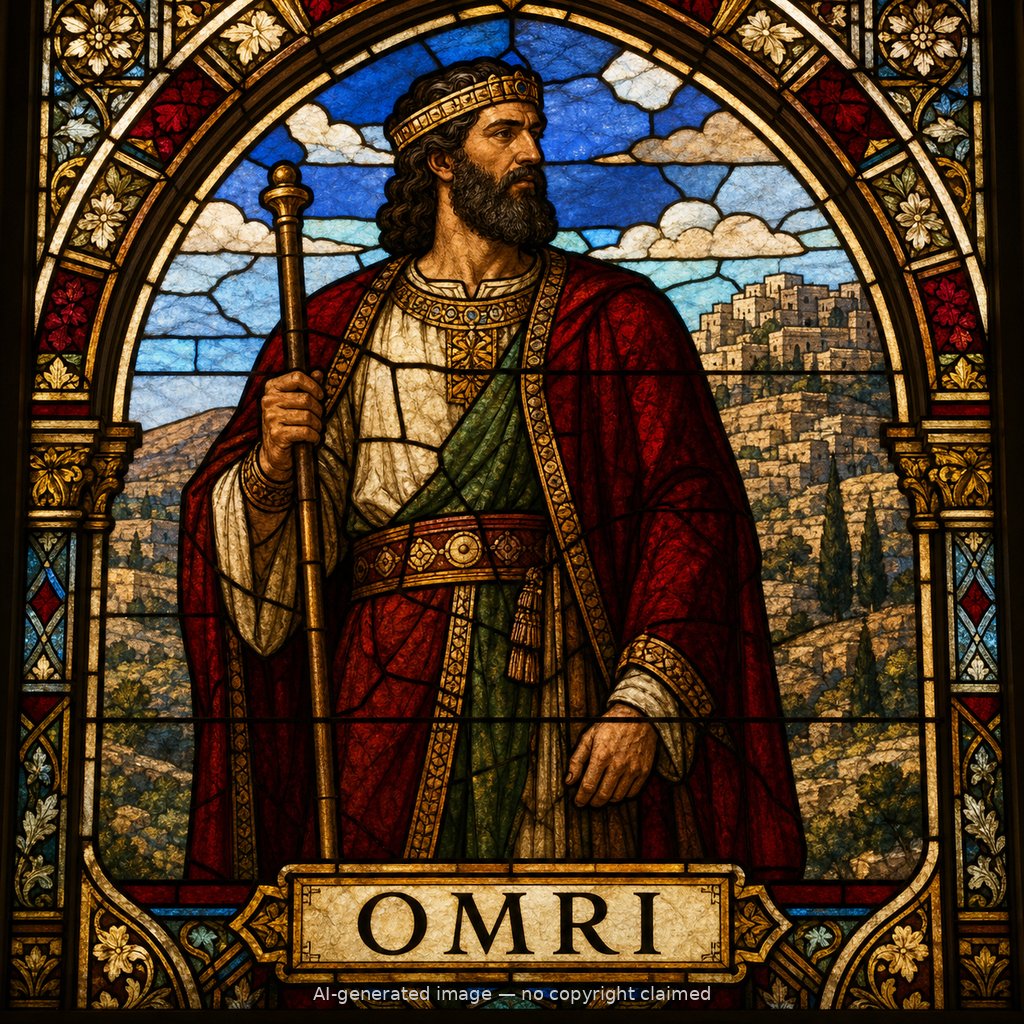
Omri (M)
First named in 1 Kings 16:16-30
Omri, commander of Israel's army, was proclaimed king by the troops after Zimri's coup and seven-day reign; he defeated a rival claimant, Tibni, in a civil war that split the kingdom's loyalty for several years before Omri secured the throne outright (1 Kings 16:15-22). He proved a capable and consequential ruler in worldly terms: he purchased the hill of Samaria and built it into Israel's new capital, a city that would remain the kingdom's seat for the rest of its existence, and extra-biblical Assyrian records continued referring to Israel as "the house of Omri" for generations after his dynasty ended (16:23-24). Yet Scripture's verdict on him is severe and unambiguous: "Omri did evil in the sight of the LORD, and acted more wickedly than all who were before him" (16:25). His political and building achievements are summarized in a single sentence pointing readers to "the Chronicles of the Kings of Israel" for the details, while his spiritual failure -- walking in Jeroboam's idolatrous ways and provoking God "with their idols" -- receives the weight of the account (16:26-27). Omri is remembered above all as the father of Ahab, whose marriage to Jezebel would deepen Israel's idolatry even further than his own father had (16:29-33).
Thought for Today
Omri built Samaria into a capital so significant that Assyrian records kept calling Israel 'the house of Omri' generations later, yet Scripture's own verdict is blunt: he 'did evil... more wickedly than all who were before him.' Jesus measures a life by faithfulness to God, not by monuments or headlines.
References: 1 Kings 16:16-30; 2 Kings 8:26; 2 Chronicles 22:2; Micah 6:16