 Lives of Scripture
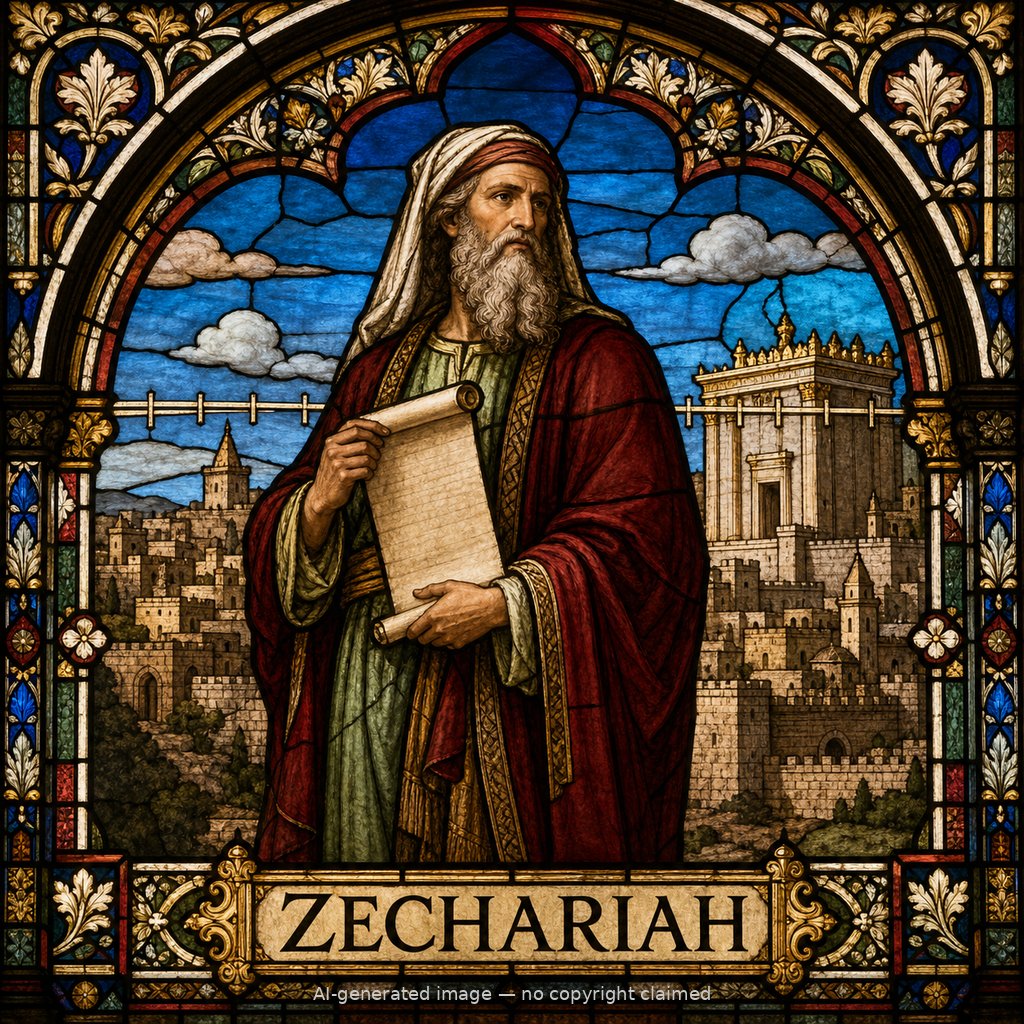
Zechariah (M)
First named in 2 Chronicles 26:5
Zechariah, grandson of the priest Iddo, began prophesying only two months after Haggai, in the same effort to encourage the returned exiles to rebuild the temple (Zechariah 1:1; Ezra 5:1). His book opens with eight night visions — including a rider among myrtle trees, a measuring line stretched over Jerusalem, and the high priest Joshua's filthy garments exchanged for clean ones, picturing God's removal of the nation's guilt (Zechariah 1-6). Zechariah's later chapters contain some of the Old Testament's most specific messianic prophecy: a coming king "righteous and having salvation... humble, and mounted on a donkey," which the Gospels record Jesus deliberately fulfilling at His triumphal entry (Zechariah 9:9; Matthew 21:1-9); thirty pieces of silver thrown to a potter, language Matthew applies to Judas's betrayal money (Zechariah 11:12-13; Matthew 27:3-10); a promise that the people would "look on Me, the one they have pierced," which John connects to the crucifixion (Zechariah 12:10; John 19:37); and a shepherd struck down so the sheep scatter, which Jesus applied to Himself and His disciples the night of His arrest (Zechariah 13:7; Matthew 26:31). Zechariah's closing vision looks toward a day when the Mount of Olives splits and "the LORD will be king over all the earth" (Zechariah 14:4, 9).
Thought for Today
Centuries before it happened, Zechariah described a king humble and mounted on a donkey, thirty pieces of silver thrown to a potter, and a pierced one the people would look on and mourn. Jesus fulfilled every one of those details exactly, proof His death was no accident but God's plan from the start.
References: 2 Chronicles 26:5; Ezra 5:1; Ezra 6:14; Nehemiah 8:4; Nehemiah 12:16; Zechariah 1:1-7; Zechariah 7:1-8; Matthew 23:35; Luke 11:51