 Lives of Scripture
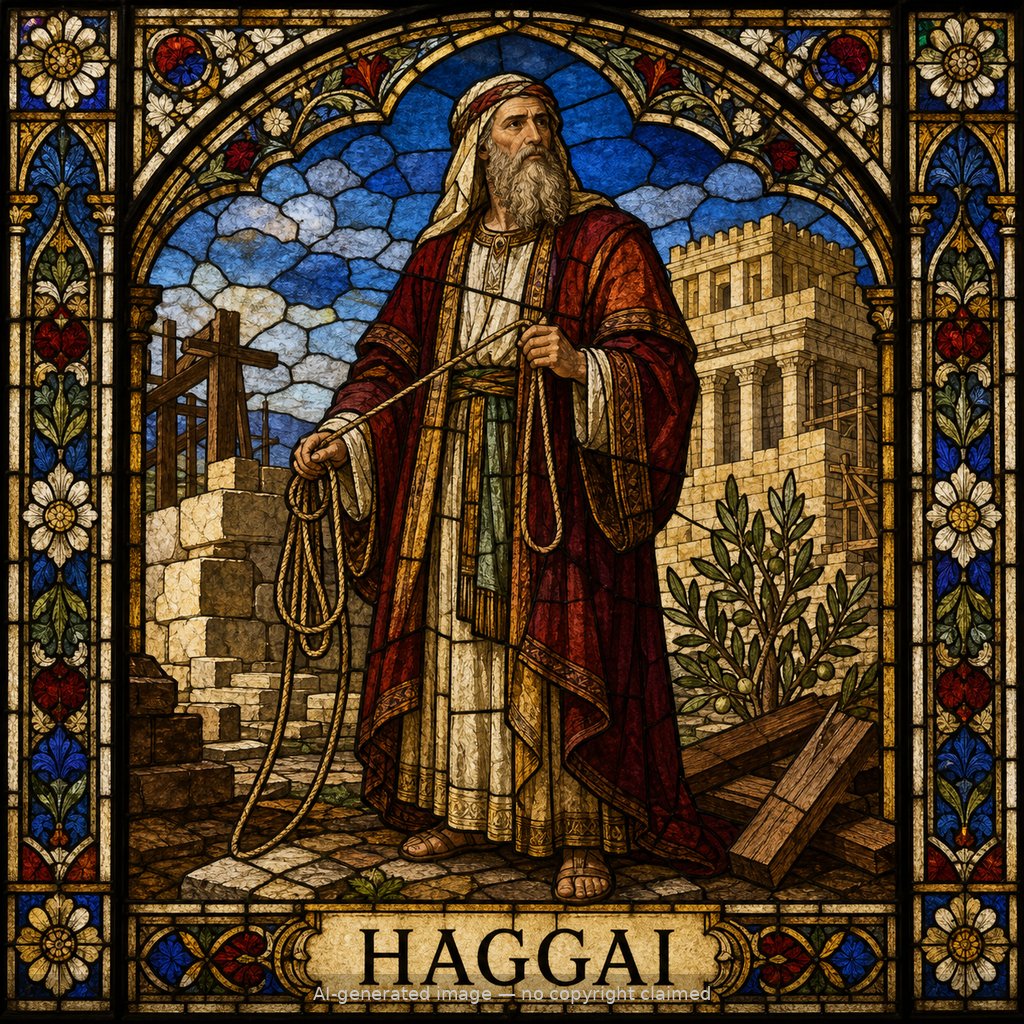
Haggai (M)
First named in Ezra 5:1
Haggai prophesied for just a few months in 520 BC, the second year of the Persian king Darius, a date fixed with unusual precision by four oracles each dated to a specific day (Haggai 1:1, 15; 2:1, 10, 20). Nearly two decades after the first exiles had returned from Babylon, the temple's foundation still lay unfinished while the people had built "paneled houses" for themselves — Haggai's blunt message was that their hardship ("you have sown much, and harvested little") was a direct consequence of putting their own comfort ahead of God's house (Haggai 1:2-11). His preaching, alongside the prophet Zechariah, worked: governor Zerubbabel and high priest Joshua led the people to resume construction within weeks (Haggai 1:12-15; Ezra 5:1-2; 6:14-15). To those discouraged that the new temple looked modest compared to Solomon's, Haggai promised that "the latter glory of this house shall be greater than the former," and that God would again "shake the heavens and the earth" so "the desire of all nations shall come" — words Hebrews later applies to the greater, unshakeable kingdom established through Christ (Haggai 2:3-9; Hebrews 12:26-28). Haggai's final oracle, addressed to Zerubbabel, promises he would be made like a signet ring — a sign that God's covenant purposes for David's line were still intact (Haggai 2:20-23).
Thought for Today
Haggai promised the new temple's glory would outshine the old one. Jesus is that greater glory, worth more than any building could ever be.
References: Ezra 5:1; Ezra 6:14; Haggai 1:1-13; Haggai 2:1-20