 Lives of Scripture
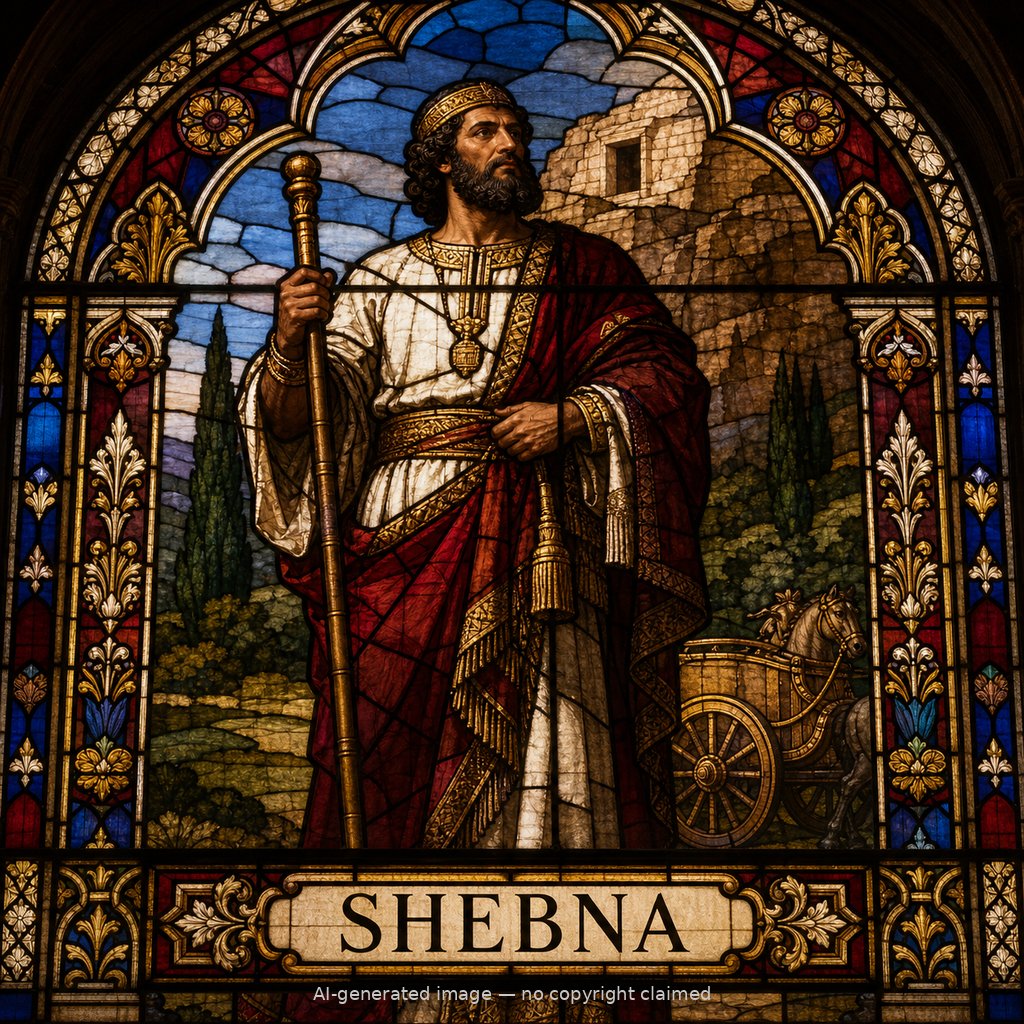
Shebna (M)
First named in 2 Kings 18:18-37
Shebna held the powerful position 'over the household' in Hezekiah's court in Jerusalem -- essentially the palace's chief steward -- when Isaiah confronted him directly with God's specific displeasure: Shebna had carved himself a lavish tomb high in the rock and gloried in his splendid chariots, using a position meant for humble service to build a monument to himself (Isaiah 22:15-18). God's judgment through Isaiah was pointed: 'the LORD is about to hurl you headlong, O man... I will depose you from your office, and I will pull you down from your station' (22:17-19), and the very next verses describe God raising up Eliakim to take his place instead, given the honor of being 'a peg in a firm place' for his household in exactly the way Shebna had sought for himself through self-glorification (22:20-23). By the time of Sennacherib's siege of Jerusalem some years later, Shebna does still appear among Hezekiah's officials, but now holding the lesser title of secretary rather than steward of the household, standing alongside Eliakim (now in the position Shebna once held) and Joah the recorder to meet the Assyrian field commander Rabshakeh at the city wall (2 Kings 18:18, 26, 37). Shebna's demotion, while not removing him from service entirely, stands in Scripture as a clear warning that self-serving pride, even in high office, invites God's direct correction rather than lasting honor.
Thought for Today
Shebna carved himself a lavish tomb and gloried in his chariots, using a position meant for service to build a monument to himself. Jesus, given all authority, used His position to wash feet and lay down His life instead -- the opposite instinct from Shebna's.
References: 2 Kings 18:18-37; 2 Kings 19:2; Isaiah 22:15-19; Isaiah 36:3-22; Isaiah 37:2