Lives of Scripture
Joah (M)
First named in 2 Kings 18:18-37
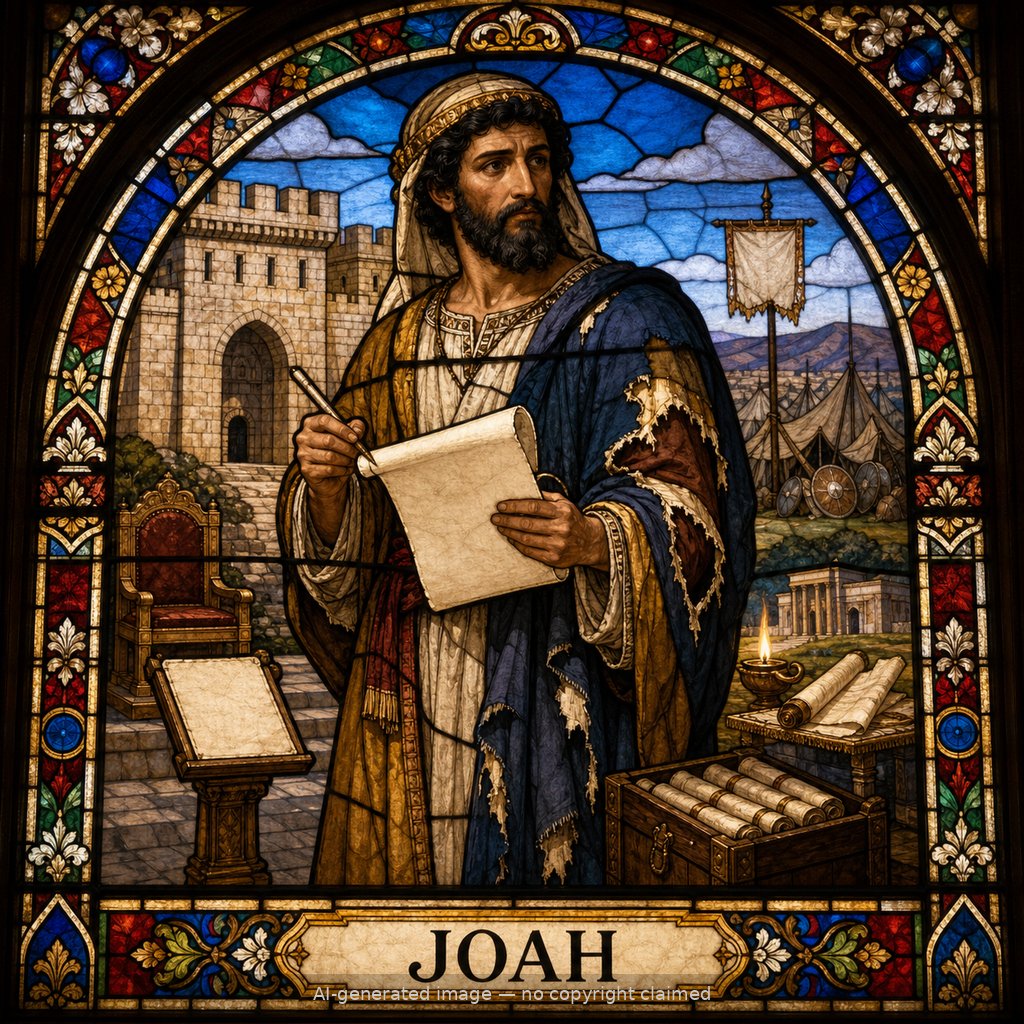
Joah, son of Asaph, served as recorder in King Hezekiah's court in Jerusalem, one of the administrative offices responsible for maintaining official records of the kingdom's affairs (2 Kings 18:18). When the Assyrian king Sennacherib besieged Jerusalem and sent his field commander Rabshakeh to demand surrender, Joah was one of three officials -- alongside Eliakim, the palace administrator, and Shebna, the secretary -- sent out to meet him at the wall (18:18, 37). Rabshakeh's speech was designed to terrify and demoralize, delivered loudly in Hebrew so the ordinary people on the wall could hear his claims that neither Hezekiah nor the LORD could save them from Assyria, listing other nations whose gods had failed to protect them (18:19-35). Eliakim requested that Rabshakeh speak Aramaic instead so the common people would not panic, a request Rabshakeh refused, intensifying the psychological pressure of the moment directly on the city's population (18:26-27). Joah and his fellow officials tore their clothes, a customary sign of deep distress, and brought the full report faithfully back to Hezekiah rather than concealing or softening the threat (18:37). Hezekiah's response to hearing this report -- tearing his own clothes, going to the temple, and sending for the prophet Isaiah -- set in motion God's deliverance of the city from Sennacherib's army (19:1-7, 35-36). Joah's role, though brief, models faithful reporting of hard truth to a leader who needed it.
Thought for Today
Joah faithfully reported the enemy's terrifying threats to Hezekiah instead of softening or hiding them. Jesus wants the whole truth brought to him too, however frightening it seems.
References: 2 Kings 18:18-37; Isaiah 36:3-22