 Lives of Scripture
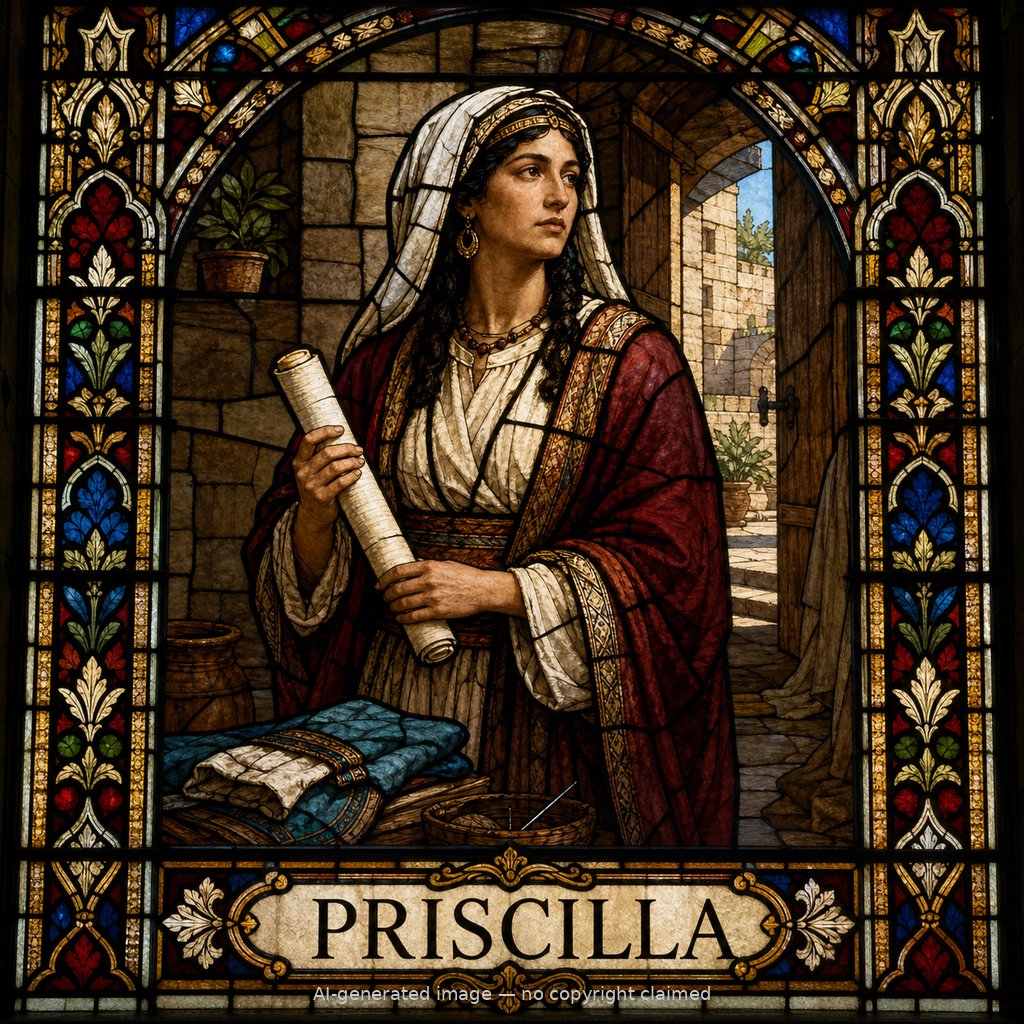
Priscilla (F)
First named in Acts 18:2-26
Priscilla and her husband Aquila, both tentmakers, met Paul in Corinth after the emperor Claudius had ordered all Jews to leave Rome; Paul, sharing their trade, stayed and worked with them (Acts 18:1-3). The couple accompanied Paul to Ephesus and remained there when he moved on, and it was there that they encountered Apollos, an eloquent and scripturally learned preacher who nonetheless knew "only the baptism of John" -- an incomplete understanding of the gospel; "they took him aside and explained to him the way of God more accurately" (18:18-26), a striking picture of a husband-and-wife team correcting and completing the theology of a gifted public teacher, done privately and without public embarrassment. They hosted a church in their home, first apparently in Ephesus and later again in Rome once they had returned there (Romans 16:3-5; 1 Corinthians 16:19). Paul calls them "my fellow workers in Christ Jesus, who risked their own necks for my life," indicating some unrecorded moment of real danger they faced on his behalf (Romans 16:3-4). Notably, Priscilla is named before her husband in four of the six New Testament references to the couple, an unusual ordering by ancient convention that many readers take as a sign of her particular prominence or giftedness in teaching and ministry alongside Aquila (Acts 18:18, 26; Romans 16:3; 2 Timothy 4:19).
Thought for Today
Priscilla and Aquila took Apollos aside and quietly explained the way of God more accurately, correcting a gifted preacher's incomplete gospel without public shame. Jesus builds His church through ordinary, humble teaching like that, not only from a pulpit.
References: Acts 18:2-26; Romans 16:3; 1 Corinthians 16:19; 2 Timothy 4:19
Genealogy
Connections
New Testament Churches
- Corinth — host and fellow tentmaker; later helped instruct Apollos more accurately
Acts 18:1-3; Acts 18:26
- Ephesus — taught Apollos more accurately here; hosted a church in their house
Acts 18:18-26; 1 Corinthians 16:19
- Rome — risked their lives for Paul; hosted a church in their house
Romans 16:3-5