 Lives of Scripture
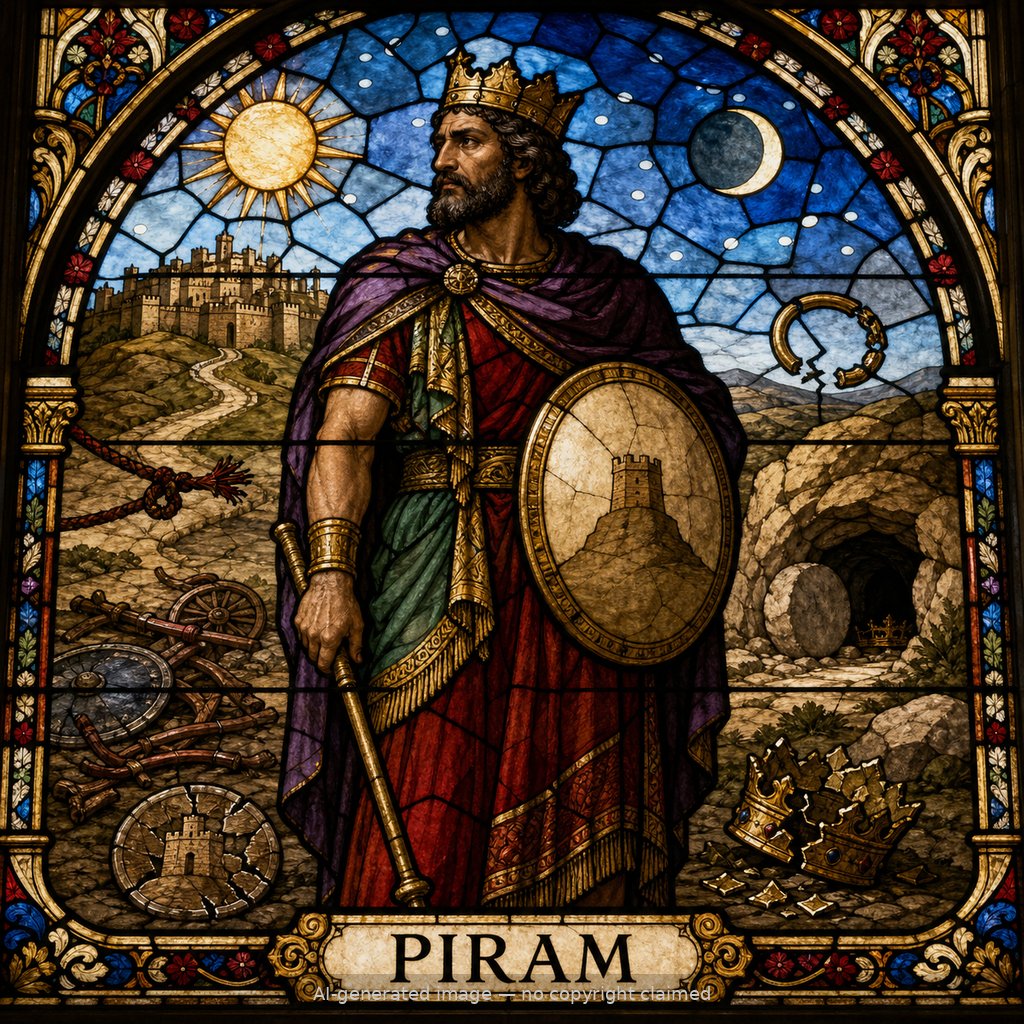
Piram (M)
First named in Joshua 10:3-23
Piram, king of Jarmuth, was one of five Amorite kings -- alongside Adoni-zedek of Jerusalem, Hoham of Hebron, Japhia of Lachish, and Debir of Eglon -- who joined a coalition, organized by Adoni-zedek, to attack Gibeon after that city made a peace treaty with Israel (Joshua 10:1-5). Gibeon appealed to Joshua for help, and Joshua's forces marched through the night from Gilgal to relieve the siege (10:6-9). The LORD threw the five kings' armies into confusion, sent large hailstones that killed more of the enemy than Israel's swords did, and, at Joshua's word, held the sun and moon still until Israel finished the victory (10:10-14). Piram and the other four kings fled and hid in a cave at Makkedah. Joshua had the cave sealed with stones until the battle was won, then had the kings brought out, had his army commanders symbolically place their feet on the kings' necks as a sign of total defeat, and personally struck the kings down, hanging their bodies on trees until evening before they were buried in the same cave where they had hidden (10:16-27). Piram's city of Jarmuth was later recalled in Joshua's roll call of thirty-one defeated Canaanite kings (12:10). His downfall, alongside his allies, is presented in Joshua as clear proof that the LORD Himself was fighting for Israel.
Thought for Today
Piram and his allies fell the day God made the sun stand still to fight for Israel. Jesus still fights and wins battles His people could never win.
References: Joshua 10:3-23; Joshua 12:10