 Lives of Scripture
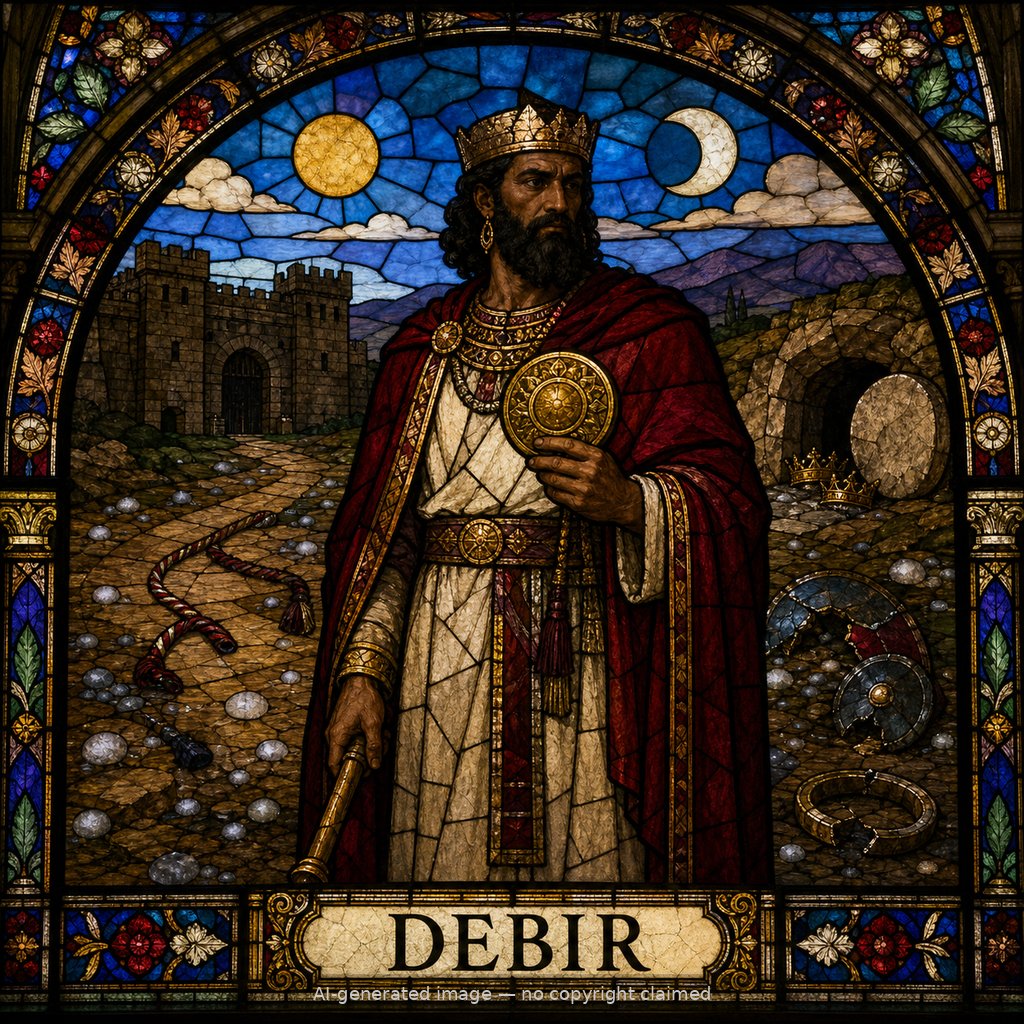
Debir (M)
First named in Joshua 10:3-23
Debir, king of Eglon, was one of five Amorite kings -- along with Adoni-zedek of Jerusalem, Hoham of Hebron, Piram of Jarmuth, and Japhia of Lachish -- who formed a coalition to attack Gibeon after that city made a peace treaty with Israel (Joshua 10:1-5). Gibeon appealed to Joshua for help, and Joshua's forces marched through the night from Gilgal to relieve the siege (10:6-9). The LORD threw the five kings' armies into confusion, and as Israel pursued them, He sent large hailstones that killed more of the enemy than the sword did, while Joshua famously called on the sun and moon to stand still until Israel had finished avenging itself on its enemies (10:10-14). Debir and the other four kings fled and hid in a cave at Makkedah; Joshua had the cave sealed until the battle was finished, then had the kings brought out, had his army commanders symbolically put their feet on the kings' necks, and personally struck them down, hanging their bodies on trees until evening before burying them in the same cave where they had hidden (10:16-27). Debir's city of Eglon was then captured and destroyed along with the others in Joshua's southern campaign (10:34-39; 12:11-12). His account is part of a larger pattern in Joshua of decisive, complete judgment on Canaan's resisting kings.
Thought for Today
Joshua's commanders placed their feet on the necks of defeated kings like Debir, echoing the later promise that Jesus' enemies would become His footstool.
References: Joshua 10:3-23; Joshua 12:11