 Lives of Scripture
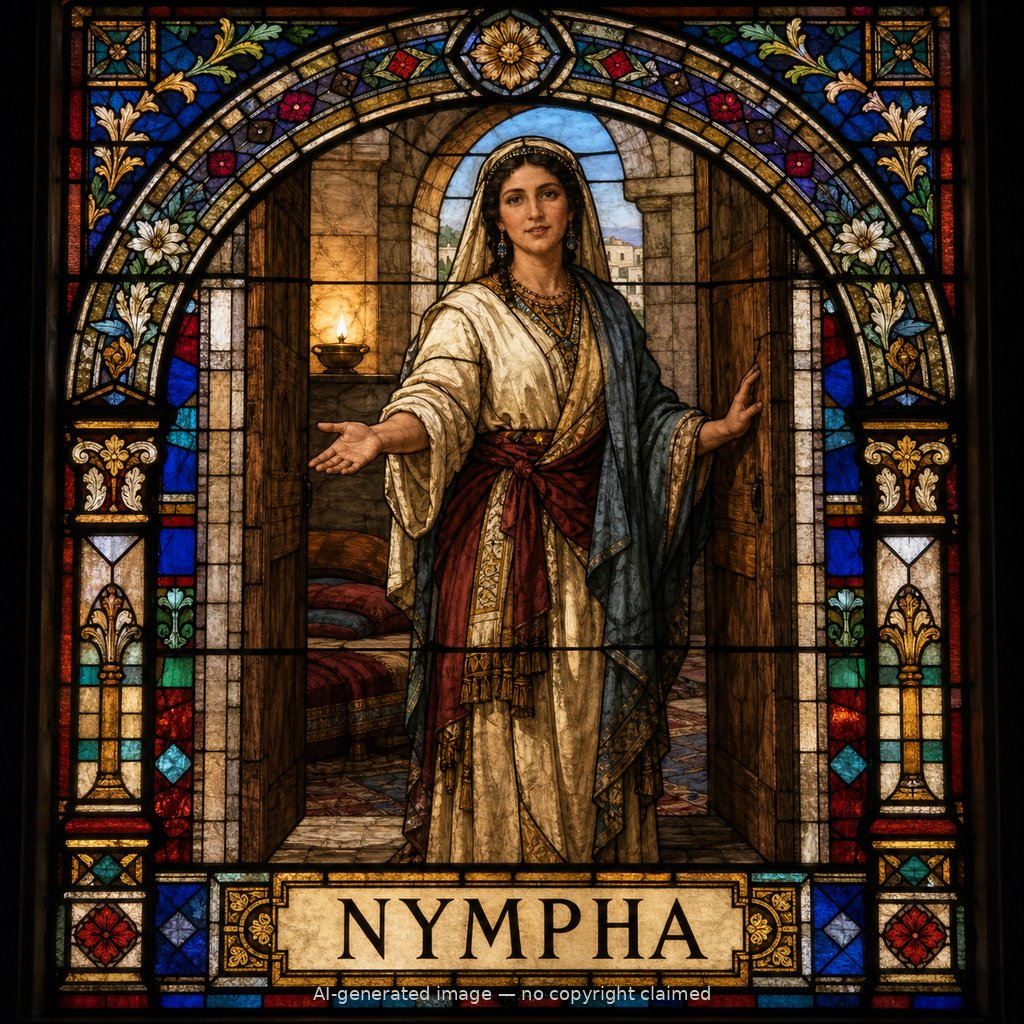
Nympha (F)
First named in Colossians 4:15
Nympha is named only once in Scripture, in Paul's closing greetings to the Colossian church: "Greet the brethren who are in Laodicea and also Nympha and the church that is in her house" (Colossians 4:15). Laodicea and Colossae were neighboring cities in the Lycus Valley, and Paul's letter instructs that it be read aloud in both congregations, alongside a now-lost letter to Laodicea (4:16) -- placing Nympha's household church among a small network of early congregations Paul was directly shepherding by correspondence. Like Lydia in Philippi, Priscilla and Aquila in Rome and Ephesus, and Philemon in Colossae itself, Nympha represents the New Testament pattern of the early church meeting not in dedicated buildings but in believers' homes, with the homeowner's hospitality effectively sustaining a congregation's existence. The Greek text underlying "her house" is genuinely ambiguous in the manuscript tradition -- some manuscripts and translations read "his house" (as though the name were the masculine Nymphas) rather than "her house," and this uncertainty is reflected across different English translations. Whichever the case, Scripture credits this single figure with providing a gathering place for a body of believers in the Lycus Valley, a quiet but essential form of ministry that the rest of the New Testament shows was common, valuable, and often carried out by women of means and faith.
Thought for Today
Nympha simply opened her home so a whole congregation could gather and worship. Jesus still builds His church through the ordinary hospitality of people like her.
References: Colossians 4:15
Genealogy
Father
—Mother
—Spouse(s)
—Children
—New Testament Church
- Laodicea — hosted a house church here
Colossians 4:15
Places
- Laodicea — hosted a house church that Paul greets in the letter to the Colossians
Colossians 4:15