 Lives of Scripture
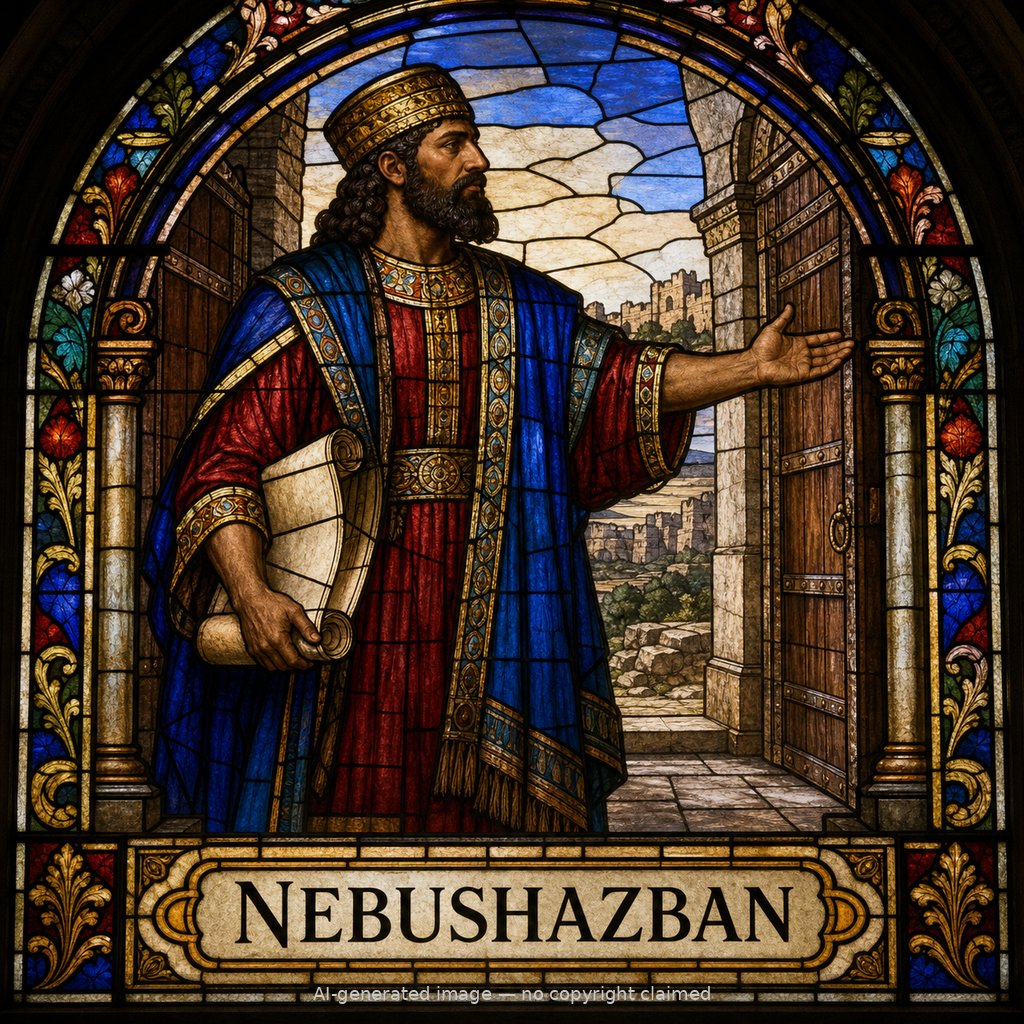
Nebushazban (M)
First named in Jeremiah 39:13
Nebushazban appears in Scripture only in the account of Jerusalem's fall to Babylon in 586 BC. He carried the title "Rab-saris," a senior court office often translated "chief chamberlain," placing him among the ranking Babylonian officials who oversaw the city's capture (Jeremiah 39:1-3). After the breach, King Zedekiah was captured fleeing, his sons executed before his eyes, and he was blinded and bound for exile to Babylon -- among the darkest hours in Judah's history (39:4-7). In the midst of that judgment, Nebuchadnezzar issued a specific, contrasting order about the prophet Jeremiah, who had been imprisoned by Judah's own officials for prophesying the city's fall and urging surrender: he was to be sought out, treated well, and given his choice of where to go rather than deported with the rest of the captives (39:11-12; compare 40:1-4). Nebushazban was named among the officials -- alongside Nebuzaradan the captain of the guard and Nergal-sar-ezer the Rab-mag -- who carried out that order, retrieving Jeremiah from the guard's courtyard and delivering him safely into the care of Gedaliah, the governor newly appointed over the remnant left in the land (39:13-14). A foreign official's hands became the instrument of God's care for His prophet, even amid the collapse of Jerusalem.
Thought for Today
Nebushazban, a foreign official, helped rescue God's prophet Jeremiah from Jerusalem's fall. God still uses unlikely people to care for His own, just as He does through Jesus.
References: Jeremiah 39:13