 Lives of Scripture
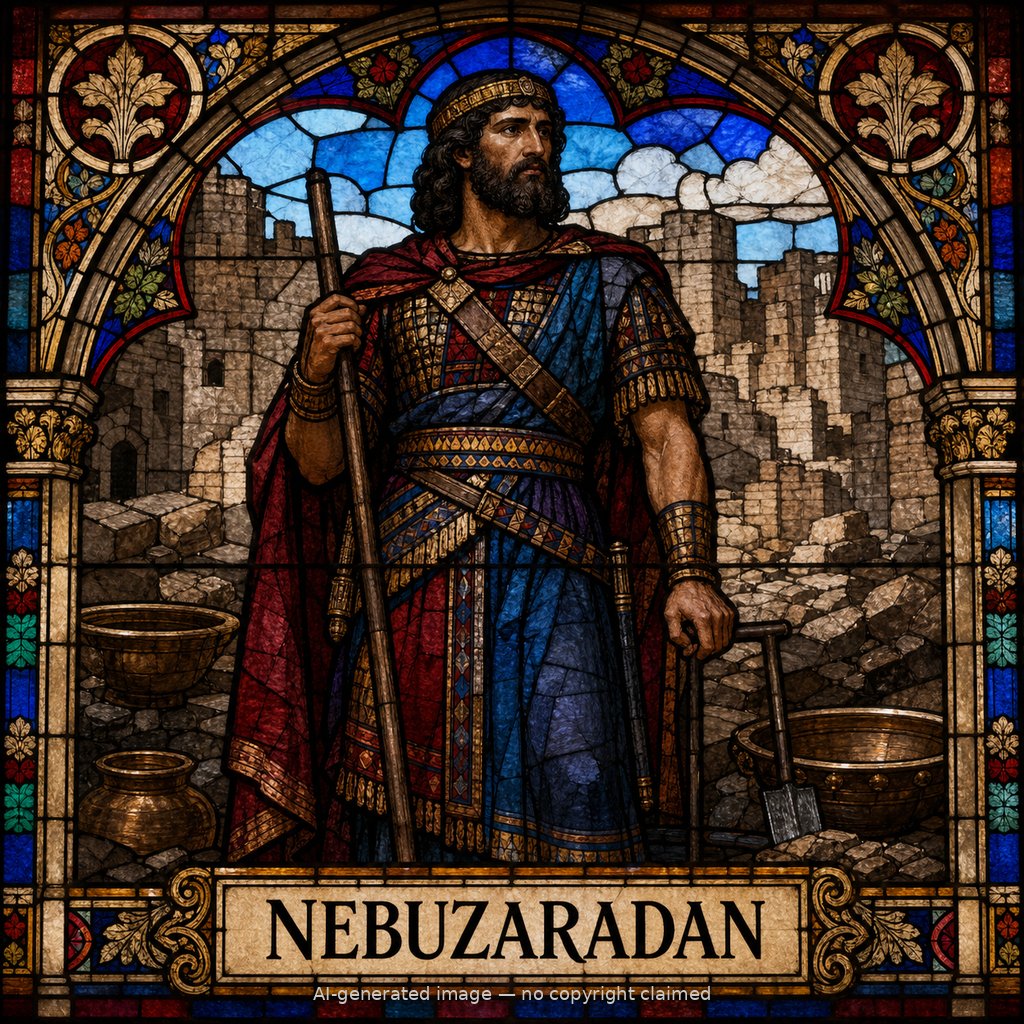
Nebuzaradan (M)
First named in 2 Kings 25:8-20
Nebuzaradan served as captain of the guard for King Nebuchadnezzar of Babylon and was the officer sent to carry out the final destruction of Jerusalem after its long siege (2 Kings 25:8). He burned the temple of the LORD, the king's palace, and every great house in the city, and had the Babylonian army break down Jerusalem's walls (25:9-10). He deported the remaining population, though he left some of the poorest people in the land to work as vinedressers and farmers (25:11-12). His forces also stripped the temple of its remaining bronze, silver, and gold furnishings, taking them to Babylon (25:13-17), and he executed a number of Judah's chief priests, officials, and military officers at Riblah before the king of Babylon (25:18-21). Amid this destruction, Nebuzaradan showed marked personal kindness to Jeremiah, who had been imprisoned during the siege for prophesying Jerusalem's fall. Acting on Nebuchadnezzar's specific instructions to 'look after him and do nothing harmful to him' (Jeremiah 39:11-12), Nebuzaradan had Jeremiah brought to him, released him from his chains, and offered him the choice of accompanying the exiles to Babylon under his care or remaining in the land; Jeremiah chose to stay and was placed under the protection of the newly appointed governor Gedaliah (40:1-6). Nebuzaradan's role thus combines the harsh instrument of God's judgment on Jerusalem with an unexpected moment of personal mercy toward God's prophet.
Thought for Today
Nebuzaradan carried out Jerusalem's destruction, burning the temple and executing Judah's officials, yet under Nebuchadnezzar's own instruction he personally freed Jeremiah from his chains and offered him real care. Jesus can be at work in mercy even inside the hands of people we'd never expect to show it.
References: 2 Kings 25:8-20; Jeremiah 39:9-13; Jeremiah 40:1; Jeremiah 41:10; Jeremiah 43:6; Jeremiah 52:12-30