 Lives of Scripture
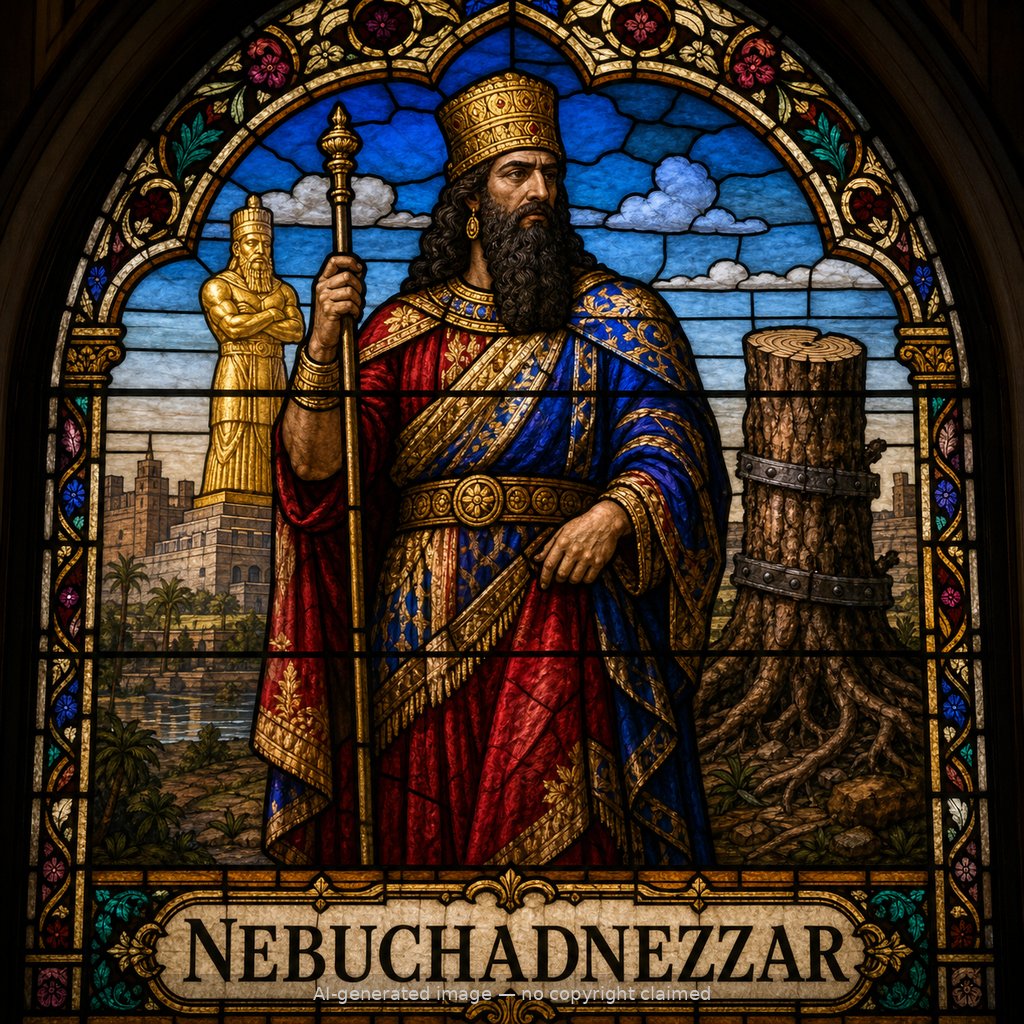
Nebuchadnezzar (M)
First named in 2 Kings 24:1-17
Nebuchadnezzar II, king of Babylon, dominates the biblical narrative of Judah's final decades as an independent kingdom. He besieged Jerusalem multiple times, first making King Jehoiakim his vassal, then deporting King Jehoiachin along with the temple treasures and thousands of Judah's elite when Jehoiachin rebelled (2 Kings 24:1-17), and finally, after King Zedekiah's rebellion, destroying Jerusalem entirely -- burning the temple and palace, breaking down the city walls, and deporting most of the remaining population (2 Kings 25:1-21; 2 Chronicles 36:17-20). Jeremiah repeatedly identifies Nebuchadnezzar's conquest, however brutal, as an instrument of God's judgment on Judah's persistent covenant unfaithfulness, even calling him God's 'servant' in this specific capacity (Jeremiah 25:9; 27:6). Within Babylon, Nebuchadnezzar features prominently in the book of Daniel: he had Daniel and three Judean companions trained for his court (Daniel 1), was troubled by a dream of a great statue that Daniel alone could recall and interpret, revealing a succession of coming kingdoms (Daniel 2), and set up a golden image demanding worship, casting Shadrach, Meshach, and Abednego into a furnace when they refused -- only to see them emerge unharmed and to praise their God as a result (Daniel 3). Most strikingly, Daniel 4 records, in Nebuchadnezzar's own voice, a second dream warning of his coming humbling for pride; when the warning went unheeded, he was driven from human society and 'ate grass like cattle' for a period until, at its end, 'I raised my eyes toward heaven, and my reason returned to me, and I blessed the Most High... His kingdom endures from generation to generation' (Daniel 4:34) -- Scripture's own record of the proudest king of his age brought low and, at least in this account, brought to acknowledge the true God.
Thought for Today
Nebuchadnezzar destroyed Jerusalem and burned God's temple, yet Jeremiah calls him God's own instrument of judgment on Judah's unfaithfulness. Even a pagan king's ambition serves purposes only Jesus, greater than any earthly throne, can finally explain and redeem.
References: 2 Kings 24:1-17; 2 Kings 25:1-24; 1 Chronicles 6:15; 2 Chronicles 36:6-17; Ezra 1:7; Ezra 2:1; Ezra 5:12-14; Ezra 6:5; Nehemiah 7:6; Esther 2:6; Jeremiah 20:4; Jeremiah 21:2-10; Jeremiah 22:25; Jeremiah 24:1; Jeremiah 25:1-26; Jeremiah 27:6-20; Jeremiah 28:2-14; Jeremiah 29:1-22; Jeremiah 32:1-36; Jeremiah 34:1-21; Jeremiah 35:11; Jeremiah 36:29; Jeremiah 37:1-19; Jeremiah 38:3-23; Jeremiah 39:1-13; Jeremiah 40:5-11; Jeremiah 41:2-18; Jeremiah 42:11; Jeremiah 43:10; Jeremiah 44:30; Jeremiah 46:2-26; Jeremiah 49:28-30; Jeremiah 50:17-43; Jeremiah 51:31-34; Jeremiah 52:3-30; Ezekiel 17:12; Ezekiel 19:9; Ezekiel 21:19-21; Ezekiel 24:2; Ezekiel 26:7; Ezekiel 29:18-19; Ezekiel 30:25; Ezekiel 32:11; Daniel 1:1-18; Daniel 2:1-46; Daniel 3:1-28; Daniel 4:1-37; Daniel 5:2-18
Genealogy
Connections
- Nebuchadnezzar (M) — begot → Belshazzar (M)
- Daniel (M) — interpreted dreams for → Nebuchadnezzar (M)
Daniel interpreted Nebuchadnezzar's dream of a great statue representing successive kingdoms, then later his dream of a great tree foretelling the king's coming madness.
Daniel 2; Daniel 4