 Lives of Scripture
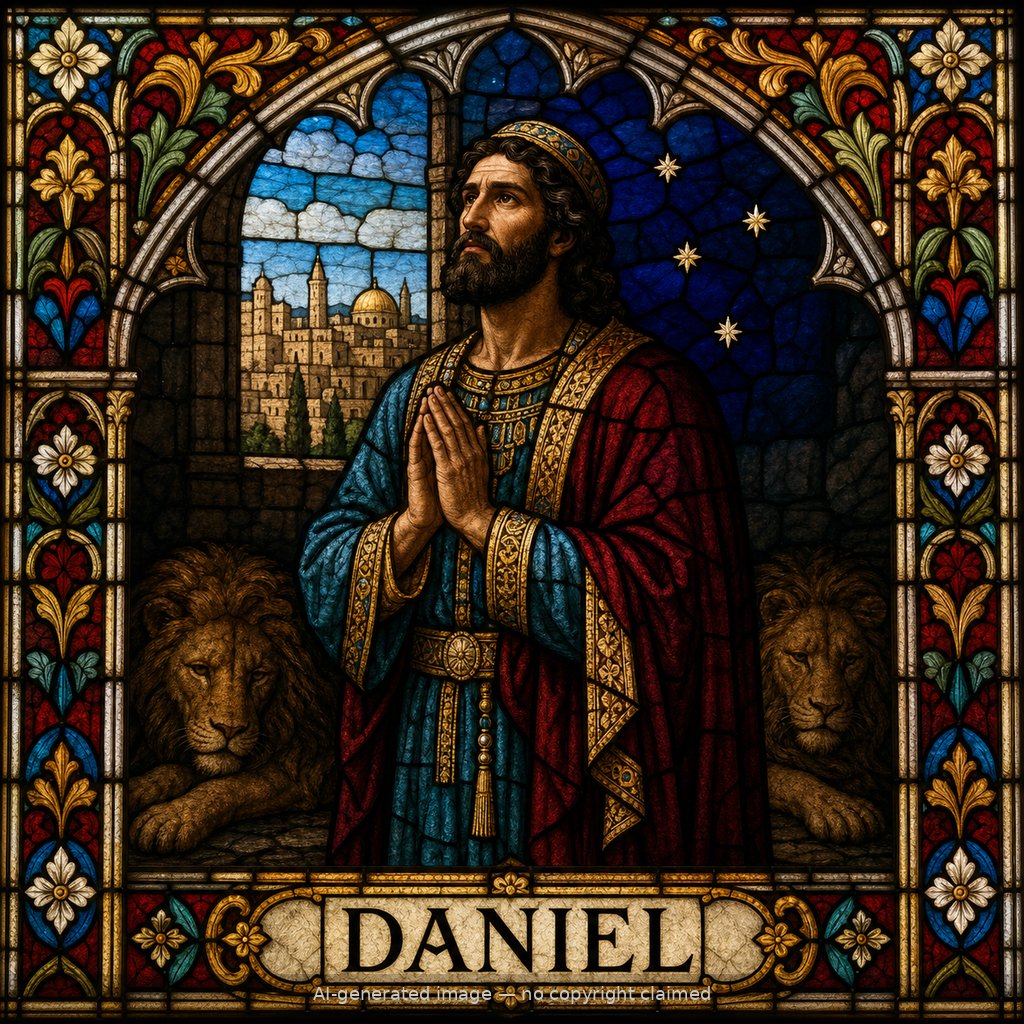
Daniel (M)
First named in Ezekiel 14:14-20
Daniel was among the young Judean nobles taken to Babylon after Nebuchadnezzar's first siege of Jerusalem, where he and three companions — renamed Belteshazzar, Shadrach, Meshach, and Abednego — resolved not to defile themselves with the king's food, and God gave them wisdom "ten times better" than all the royal magicians (Daniel 1). Daniel alone could recall and interpret Nebuchadnezzar's forgotten dream of a great statue representing successive kingdoms, struck down by a stone "cut out without hands" — a picture of God's eternal kingdom breaking into human history (Daniel 2). His three friends survived being thrown into a fiery furnace for refusing to worship Nebuchadnezzar's golden image, emerging without even the smell of smoke on them (Daniel 3). Decades later, under Belshazzar, Daniel alone could interpret mysterious handwriting on the palace wall announcing the kingdom's fall that night (Daniel 5). Under Darius the Mede, jealous officials tricked the king into banning prayer to anyone but himself; Daniel kept praying openly toward Jerusalem anyway and was thrown into a den of lions, but God shut the lions' mouths and he emerged unharmed (Daniel 6). Daniel also received visions of seventy "weeks" of years counting toward the Messiah's coming and being "cut off," and a coming "son of man" given everlasting dominion — language Jesus applied directly to Himself (Daniel 7:13-14; 9:24-27; Matthew 26:64).
Thought for Today
Daniel kept praying toward Jerusalem even with lions waiting for him. May God give us that same courage to stay faithful, whatever it costs us.
References: Ezekiel 14:14-20; Ezekiel 28:3; Daniel 1:6-21; Daniel 2:13-49; Daniel 4:8-19; Daniel 5:12-29; Daniel 6:2-28; Daniel 7:1-28; Daniel 8:1-27; Daniel 9:2-22; Daniel 10:1-12; Daniel 12:4-9; Matthew 24:15
Genealogy
Father
—Mother
—Spouse(s)
—Children
—Connections
- Prophesied of Christ (Matthew 26:64)
- Daniel (M) — interpreted dreams for → Nebuchadnezzar (M)
Daniel interpreted Nebuchadnezzar's dream of a great statue representing successive kingdoms, then later his dream of a great tree foretelling the king's coming madness.
Daniel 2; Daniel 4
- Daniel (M) — interpreted the judgment for → Belshazzar (M)
Daniel alone could read and interpret the mysterious handwriting on the palace wall announcing that Belshazzar's kingdom would fall that very night.
Daniel 5:13-31
- Daniel (M) — was delivered before → Darius (M)
Darius reluctantly had Daniel thrown into a den of lions for praying to God rather than to him, then rejoiced to find Daniel unharmed and decreed that all should fear Daniel's God.
Daniel 6:1-27